
www.aero-defence.tech
17
'26
Written on Modified on
BAE Systems Advances NASA’s PRIMA Mission into Next Phase
NASA Jet Propulsion Laboratory mission to survey the history and evolution of the universe and bridge current scientific gaps.
www.baesystems.com
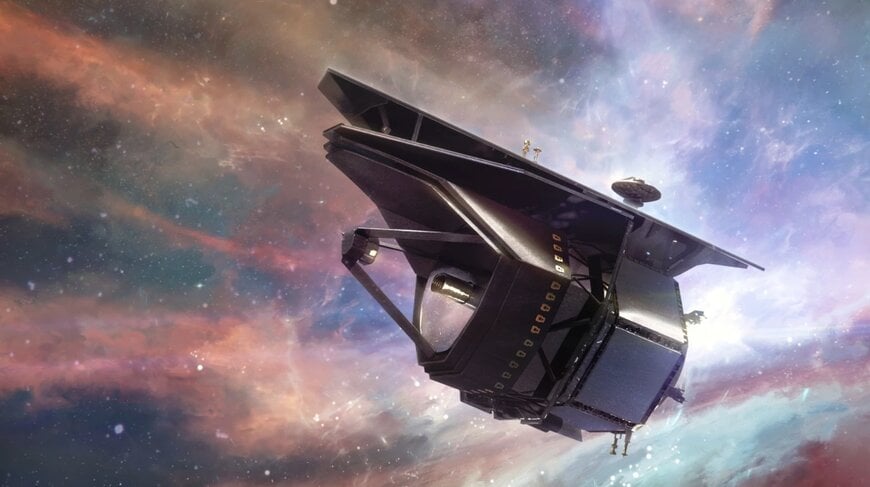
Modern observational astrophysics faces a major spectral gap between the near- and mid-infrared wavelengths observed by the James Webb Space Telescope (JWST) and the submillimeter and millimeter wavelengths accessible to ground-based radio interferometers such as ALMA. Earth's atmosphere absorbs nearly all incoming far-infrared radiation, preventing ground-based observatories from studying the cold gas and interstellar dust clouds where stars, planetary systems, and supermassive black holes form. Since the retirement of the Herschel Space Observatory and the Stratospheric Observatory for Infrared Astronomy (SOFIA), astrophysicists have lacked a dedicated space-borne far-infrared facility. However, building a next-generation far-infrared space observatory under NASA’s cost-capped Probe Explorers class presents severe thermal and cryogenic engineering challenges: the primary mirror and focal-plane detectors must be actively cooled to near absolute zero so that the observatory's own thermal emissions do not overwhelm faint cosmic signals, all while adhering to strict mass, power, and schedule constraints.
Spacecraft Bus Architecture and Observatory Integration Leadership
To bridge this observational gap under NASA’s new Probe Explorers astrophysics mission class, BAE Systems announced that the Jet Propulsion Laboratory (JPL)-led PRIMA team has been selected by NASA to advance into the next development phase. Under the partnership, BAE Systems will supply its Evolve+ spacecraft bus, lead full observatory assembly, integration, and test (AI&T) workflows, and serve as the mission operations and ground systems lead supporting JPL’s overall mission management.
Bonnie Patterson, Vice President and General Manager of Civil Space for BAE Systems, highlighted the continuation of the company’s multi-decade collaboration with JPL, noting that PRIMA will complement existing NASA flagship missions—including JWST, Hubble, Chandra, and the Nancy Grace Roman Space Telescope—by capturing obscured cosmic phenomena. Equipped with a 1.8-meter primary telescope, PRIMA is engineered to penetrate dense interstellar dust clouds in far-infrared wavelengths, enabling astronomers to trace the evolution of galaxies, the assembly of planetary architectures, and the cosmic history of water from the early universe to the present day.
Development Roadmap and International Industrial Collaboration
Currently progressing through Phase B preliminary design and technology completion, the PRIMA mission is scheduled to undergo a formal NASA confirmation review before transitioning into full-scale hardware implementation (Phase C/D). The five-year astrophysics mission is targeted for launch in 2033.
Executing the complex cryogenic and optical architecture relies on a broad international aerospace coalition. Alongside BAE Systems and JPL in the United States, specialized instrument subsystems, detector arrays, and cryogenic coolers are being contributed by space agencies and industrial partners across France, Italy, Canada, South Korea, Japan, and the United Kingdom.
Additional Context
This section details technical specifications and competitive benchmarking not included in the original product announcement.
In spaceborne far-infrared astronomy spanning wavelengths from roughly 24 to 240 micrometers, achieving background-limited sensitivity requires cooling the 1.8-meter aluminum primary mirror to approximately 4.5 Kelvin while maintaining focal-plane detector arrays below 0.1 Kelvin (100 millikelvin) using multi-stage mechanical cryocoolers paired with adiabatic demagnetization refrigerators (ADRs). Unlike JWST, which relies on passive sunshield cooling at the Sun-Earth L2 Lagrange point to reach ~40 Kelvin, far-infrared instruments require active closed-cycle cryocooling to eliminate thermal self-emission and enable ultra-sensitive Kinetic Inductance Detectors (KIDs). Structurally, BAE Systems’ Evolve+ bus—derived from its proven BCP (Ball Commercial Platform) spacecraft heritage following BAE Systems' acquisition of Ball Aerospace—provides high-precision three-axis attitude determination and control, solar power generation, Ka-band high-rate downlink telemetry, and vibration isolation to prevent cryocooler microphonics from degrading optical pointing stability.
Within the NASA Probe Explorers astrophysics competition and space-based observatory sector, PRIMA competed directly against the Advanced X-ray Imaging Satellite (AXIS), led by the University of Maryland and Northrop Grumman, during NASA’s Phase A concept down-select (following an initial competitive pool that also included high-energy and infrared concepts such as HEX-P, LEM, and FIRSST). While Northrop Grumman leads major flagship observatory buses such as JWST and Chandra, and Lockheed Martin Space builds deep-space and astrophysics platforms including Spitzer and IRIS, BAE Systems (integrating Ball Aerospace’s civil space portfolio) has established a dominant niche in cryogenically cooled space telescopes—having built the cryogenics and optical systems for Spitzer, WISE, and JWST. By pairing its flight-proven Evolve+ spacecraft bus with end-to-end observatory AI&T and ground operations for JPL, BAE Systems positions PRIMA as a scalable, lower-risk template for future NASA $1 billion-class Probe Explorers missions.
Edited by Romila DSilva, Induportals Editor, with AI assistance.
www.baesystems.com
