
www.aero-defence.tech
03
'26
Written on Modified on
Sentinel A4 Radar Advances Toward Full-Rate Production
Lockheed Martin has delivered the first LRIP 2 Sentinel A4 radar to the U.S. Army following initial operational testing.
www.lockheedmartin.com
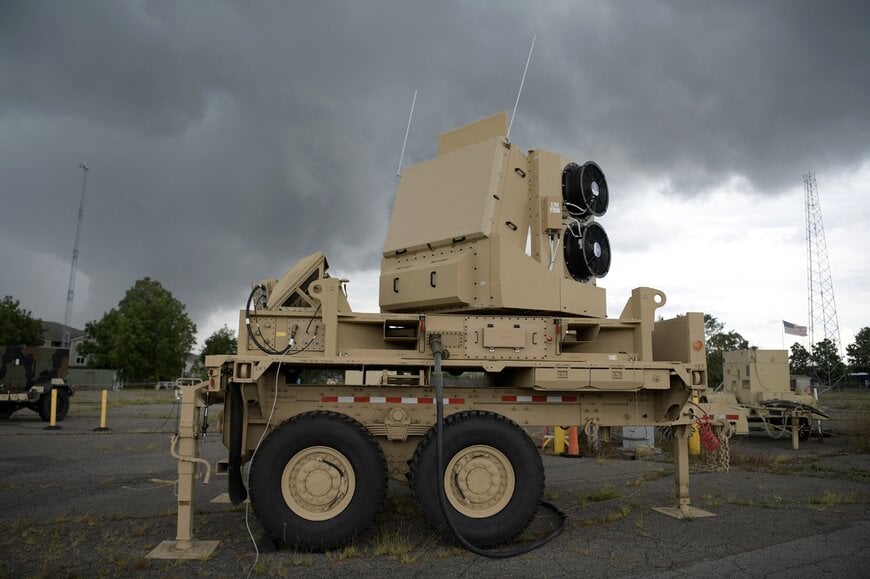
Lockheed Martin has delivered the first Sentinel A4 radar from Low-Rate Initial Production (LRIP) 2 and completed Phase I of Initial Operational Test and Evaluation, advancing the system toward full-rate production for U.S. Army air defense units.
Program milestone and production status
The delivery marks the first of 19 Sentinel A4 systems under the LRIP 2 contract. Completion of Initial Operational Test and Evaluation (IOT&E) Phase I confirms that the radar meets key performance and integration objectives required to progress toward full-rate production. LRIP deliveries are intended to support operational testing, doctrine development, and validation under representative field conditions.
Replacement of legacy Sentinel A3 capability
Sentinel A4 is designed to replace the legacy Sentinel A3 radar currently fielded by the U.S. Army. The system introduces a modern 360-degree Active Electronically Scanned Array (AESA) sensor, providing continuous azimuth coverage without mechanical rotation. AESA architecture enables faster beam steering, improved target tracking, and enhanced reliability through solid-state components.
The radar is intended to detect and track a wide range of aerial threats, including cruise missiles, unmanned aircraft systems, rotary-wing and fixed-wing aircraft, as well as rockets, artillery, and mortars. This multi-mission capability supports layered air defense operations in complex and contested environments.
Interoperability and open-architecture validation
During IOT&E Phase I, Sentinel A4 was integrated with Forward Area Air Defense Command and Control (FAAD-C2). This integration validated the radar’s open-architecture design and its ability to exchange data across multiple command-and-control networks.
Open-architecture interoperability is a critical requirement for modern integrated air and missile defense, enabling sensor data to be shared across distributed systems and supporting faster threat identification and engagement decisions.
Operational relevance and next steps
Following the initial delivery, Lockheed Martin will continue to supply additional Sentinel A4 systems in line with the U.S. Army’s fielding plan. These systems will be used to refine tactics, techniques, and procedures, and to further assess radar performance under real-world operational conditions.
Fielded testing data will inform final production decisions and ensure the radar meets operational readiness requirements prior to full-rate production. The program reflects the U.S. Army’s broader effort to modernize air defense sensors with scalable, networked systems capable of countering evolving aerial threats.
Context within integrated air defense
Sentinel A4 contributes to the Army’s integrated air and missile defense architecture by providing mobile, all-environment surveillance with high commonality across radar systems. Its design supports deployment with maneuver forces and integration into joint and coalition command networks, aligning sensor modernization with the operational demands of contemporary air defense missions.
www.lockheedmartin.com
