
www.aero-defence.tech
05
'26
Written on Modified on
Sensor Systems for F-16: Legion-ES Integration Contract
Lockheed Martin and U.S. Government Partner on Legion-ES Sensor Deployment for Taiwan Air Force aircraft.
www.lockheedmartin.com
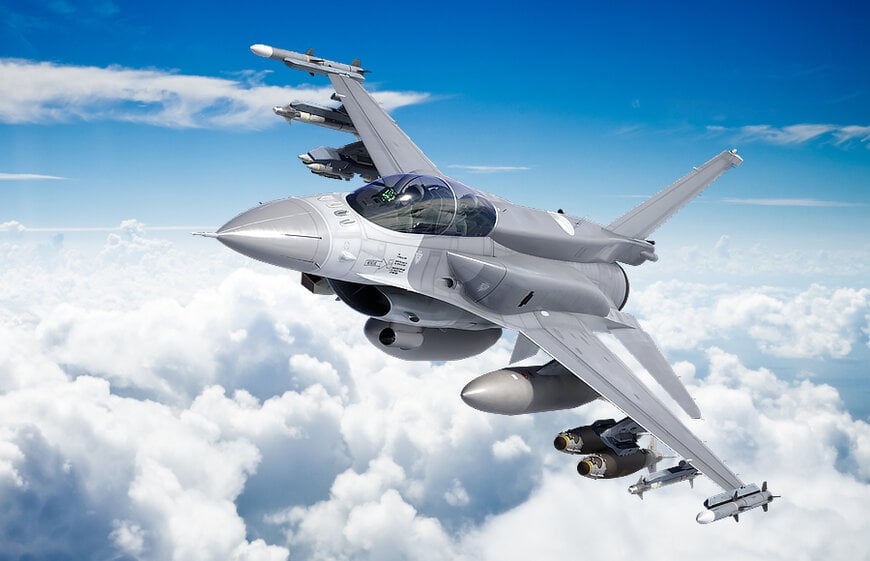
Lockheed Martin has secured a Foreign Military Sales (FMS) contract with the U.S. government to produce Legion-ES infrared search-and-track sensor systems for integration on F-16 aircraft, supporting enhanced airborne surveillance and threat detection capabilities.
Lead Summary
The contract delivers Legion-ES, an embedded long-wave infrared sensor suite based on Lockheed Martin’s IRST21 architecture, for Taiwan Air Force F-16s. The passive sensor system is intended to improve situational awareness and target tracking without active emissions in contested operational environments.
Context of the Cooperation
Lockheed Martin Corporation, a U.S. aerospace and defense technology provider, is the prime contractor responsible for the design and production of the Legion-ES sensor system. The contract is executed under a U.S. government FMS arrangement with the Taiwan Air Force, making Taiwan the first international recipient of this configuration.
The tactical challenge addressed by this cooperation is the need for passive airborne target detection and tracking that complements active radar sensors, especially in electronic warfare or radar-denied environments where emitting systems could reveal platform position or be subject to jamming. Infrared search-and-track (IRST) technology identifies heat signatures at extended ranges, providing an additional sensor layer for F-16 mission systems.
Technical Solution and Responsibilities
The Legion-ES system is a derivative of the IRST21 sensor architecture. It uses long-wave infrared detectors to passively detect, classify, and track airborne targets by their thermal signatures. The integration emphasizes embedded installation and system fusion with onboard avionics to complement existing radar, navigation, and flight control systems on F-16 platforms.
Lockheed Martin’s responsibilities include manufacturing the Legion-ES sensors, associated processing units, and integration hardware. The contractor will also conduct testing and readiness activities to ensure that the sensor interfaces with F-16 avionics and mission computers according to relevant military standards for data buses and sensor fusion architectures.
Deployment and Implementation
Work on the contract is planned to be conducted through Lockheed Martin’s facilities, with deliveries covering a defined number of sensor units and support hardware. According to industry reporting, the agreement includes 55 Legion-ES pods and ancillary components, with delivery scheduled through mid-2031. Integration will be phased, working alongside aircraft modification and avionics integration teams to install and certify the systems on the F-16 airframes.
Applications and Use Cases
The primary application is for tactical fighter aviation, where passive target detection significantly enhances situational awareness. Use cases include air-to-air threat detection beyond radar line-of-sight, tracking in electronically contested environments, and augmenting radar data to reduce operator workload and decision latency. These capabilities are particularly relevant for advanced tactical operations involving complex air defense threats.
Expected Impact
The Legion-ES system’s passive detection capability allows aircraft to detect and monitor airborne targets without the radar signature associated with active sensors. The embedded sensor improves survivability and operational flexibility by enabling pilots to maintain a reduced electromagnetic signature while retaining comprehensive threat awareness. Integration with existing avionics and mission systems is intended to streamline data fusion for faster tactical decisions.
Quantitative performance parameters, such as detection range or tracking fidelity relative to specific threat profiles, have not been publicly disclosed; however, the system’s design leverages long-wave infrared physics to achieve sensitivity under a range of atmospheric and operational conditions typical of fighter missions.
www.lockheedmartin.com
