
www.aero-defence.tech
26
'26
Written on Modified on
Integrated Systems for Next-Generation Cable Lay Vessel
Kongsberg Maritime and LS Marine Solution equip a new ultra-large cable lay vessel at Tersan Shipyard to support HVDC and subsea cable installation.
www.kongsberg.com
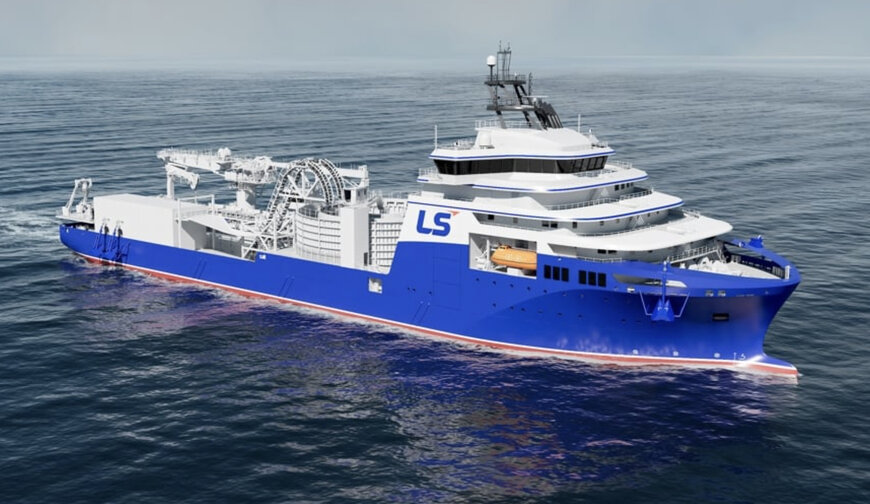
Kongsberg Maritime will deliver a fully integrated propulsion, positioning and power package for an ultra-large cable lay vessel (CLV) being built for LS Marine Solution at Tersan Shipyard in Türkiye. The vessel is designed for subsea high-voltage direct current (HVDC) and fibre-optic cable installation supporting offshore energy and digital infrastructure projects.
Vessel Concept and Industrial Context
The newbuild, measuring 148.4 metres in length and 31 metres in beam, will have a cable carrying capacity of 13,000 tonnes and a total displacement of 18,800 tonnes. It is intended for long-distance HVDC interconnectors and offshore wind export cables, where precise station-keeping and continuous lay operations are critical.
LS Marine Solution acts as vessel owner and operator, focusing on subsea power transmission projects. Tersan Shipyard is responsible for hull construction and vessel integration. Kongsberg Maritime provides the integrated technology package, combining propulsion, power generation, dynamic positioning and control systems.
The cooperation addresses increasing demand for subsea transmission capacity driven by offshore renewable energy projects and cross-border grid interconnectors. Vessel scale, energy efficiency requirements and mission system integration necessitated coordinated engineering between owner, yard and system integrator.
Integrated Power, Propulsion and Positioning
Kongsberg Maritime’s delivery includes K-Pos dynamic positioning (DP) systems, integrated navigation and vessel control systems, main propulsion units and azimuth thrusters equipped with permanent magnet motors.
The propulsion architecture is based on a battery hybrid DC power system. By distributing power via a DC bus, the configuration enables variable-speed generator operation and optimized load sharing. The battery system supports peak shaving and spinning reserve functions, reducing the number of engines required during low-load or standby conditions.
A high-capacity shore connection, integrated with the Energy Control System, enables zero-emission operations during port stays and cable loading. This arrangement reduces fuel consumption, greenhouse gas emissions and engine running hours, contributing to lower OPEX and maintenance intervals.
The K-Pos DP system ensures station-keeping accuracy during cable lay operations, compensating for wind, wave and current forces. High redundancy levels and integrated thruster control are designed to meet classification society requirements for DP operations in offshore construction.
Operational Capabilities and Future Applications
The vessel design supports mobilisation of Remote Cable Pull-In systems for floating wind farms. These systems enable pull-in and hang-off of dynamic cables without crane-based handling or personnel transfer to offshore structures, reducing operational risk.
Integration of mission systems, propulsion and energy management within a single supplier scope simplifies interface management and reduces installation complexity at the yard stage.
Construction at Tersan Shipyard is scheduled over approximately three years, with entry into operation planned for 2028. The vessel is intended to support expanding HVDC grid infrastructure and offshore wind developments requiring high-capacity, energy-efficient cable installation assets.
www.kongsberg.com
