
www.aero-defence.tech
02
'26
Written on Modified on
AGM-190A Expands Air-Launched Strike Options
Leidos supports the U.S. Air Force with the AGM-190A small cruise missile, designated to enhance precision strike flexibility and survivability in contested airspace.
www.leidos.com
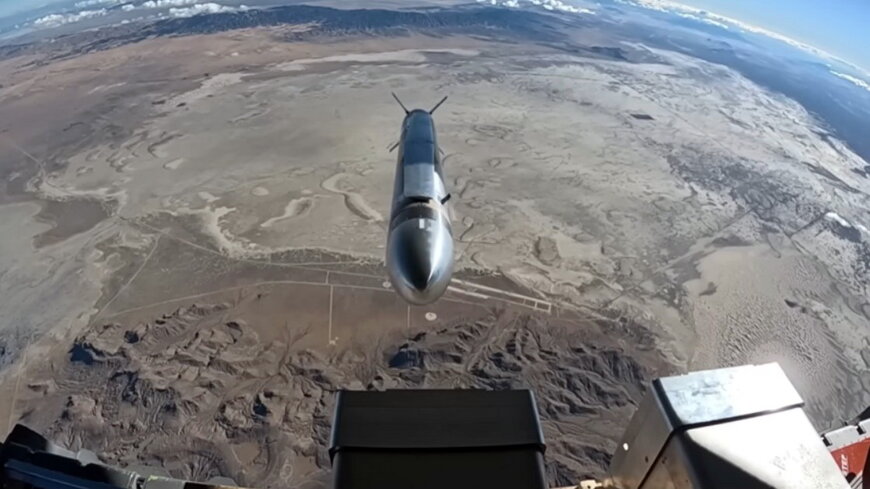
In February 2026 the U.S. Air Force formally assigned the designation AGM-190A to the Leidos Small Cruise Missile (SCM) — also known by Leidos as the Black Arrow — marking its transition from a developmental program into an officially recognized stand-off strike weapon system. The designation recognises the missile’s potential to fill a capability niche for affordable, adaptable long-range strike in contested environments.
Design and Capabilities
The AGM-190A is a 200-pound-class cruise missile with a demonstrated standoff range exceeding 400 nautical miles (about 740 km) when launched from a C-130 family aircraft. It is powered by a Pratt & Whitney TJ150-7 turbojet engine, enabling sustained subsonic flight at roughly Mach 0.8 and operation up to around 30,000 feet altitude.
The system’s modular hardware and open-software architecture support rapid configuration changes for different mission profiles, including both kinetic and non-kinetic effects, and facilitate upgrades without extensive redesign. This design approach deliberately emphasises adaptability and future-proofing to meet evolving operational needs.
Operational Context and Testing
Development of the platform traces back to 2021, building on Leidos’ prior work with small glide munitions. In 2024 and 2025 guided flight tests from U.S. Air Force AC-130J aircraft validated integration with airborne platforms and key performance parameters, including guidance accuracy, aircraft compatibility, and system interoperability. The 400+ nm range figure emerged from these flight evaluations.
These tests also confirmed that the missile can be deployed through multiple launch methods — including palletised configurations or ramp ejection from cargo aircraft — giving operators flexibility in how they integrate the system with existing airframes.
Differentiation and Strategic Role
The AGM-190A addresses a distinct operational gap between heavier, more expensive long-range cruise missiles and smaller tactical munitions. Priced and sized to offer affordable stand-off reach from utility platforms such as C-130s and potentially other light aircraft, it contrasts with larger, higher-cost systems that are typically integrated on front-line fighters or strategic bombers. The modular open-architecture design further differentiates the AGM-190A by enabling mission tailoring and incremental capability growth without wholesale redesign.
This configuration supports a strategy of scalable strike capabilities, allowing forces to apply precision effects at extended ranges without incurring the logistical and budgetary burdens associated with heavier classes of missiles. Aligning with broader U.S. defence goals, the system supports flexible responses to emerging threats while potentially reducing lifecycle costs.
Industry and Development Framework
Leidos’ approach to the AGM-190A reflects a broader industry trend toward systems designed for rapid upgrade and integration. Using model-based systems engineering and standards such as the Air Force Research Laboratory’s Weapon Open System Architecture, developers are creating platforms that can evolve as threats and mission requirements change. Such methodologies support sustained relevance over extended service lives.
www.leidos.com
