
www.aero-defence.tech
16
'26
Written on Modified on
Modular spacecraft enables multi-orbit logistics operations
BAE Systems expands spacecraft portfolio to support automotive data ecosystem-like integration across defence and exploration missions.
www.baesystems.com
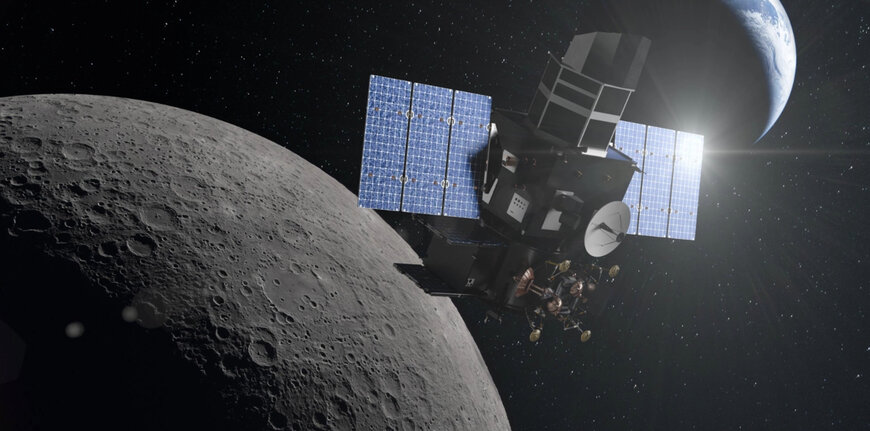
A modular spacecraft platform has been introduced to support multi-orbit logistics, payload deployment, and in-space mobility for defence and exploration applications. The system is designed to operate across low Earth orbit, geostationary orbit, and cislunar space while enabling flexible mission configurations.
Expanding capabilities in dynamic space operations
The newly introduced Ascent spacecraft extends an existing spacecraft product line with capabilities focused on maneuverability and in-space logistics. It is engineered to support dynamic mission profiles, including transport, deployment, and servicing of payloads across multiple orbital regimes.
Key technical features include high-thrust propulsion and in-orbit refueling capability, enabling extended mission durations and orbital transfers. These characteristics are essential for operations beyond geostationary orbit, where conventional satellites lack repositioning flexibility.
The platform is designed to function in low Earth orbit (LEO), medium Earth orbit (MEO), geostationary orbit (GEO), and cislunar space, addressing increasing operational demands in both defence and civil space missions.
Multi-payload rideshare and deployment architecture
A central design feature is its rideshare capability, allowing multiple payloads to be hosted and deployed from a single launch vehicle. This reduces launch costs per payload and enables coordinated mission execution.
The spacecraft can transport and deploy small satellites and cargo, including support for lunar missions where payload delivery and orbital staging are required. This architecture aligns with evolving mission models that depend on distributed satellite systems rather than single large spacecraft.
The approach reflects a shift toward a digital supply chain in space systems, where modular payload integration and standardised spacecraft interfaces enable faster mission configuration and deployment.
Space tug functionality and logistics role
The spacecraft is designed to operate as a “space tug,” transferring payloads between orbits. This capability supports logistics operations such as repositioning satellites, delivering cargo to lunar orbit, and enabling staged exploration missions.
Such functionality is increasingly relevant for cislunar operations, where sustained presence requires reliable transport between Earth orbit and lunar destinations. High maneuverability and propulsion efficiency are critical for these missions, particularly when supporting repeated or long-duration transfers.
Integration within a modular spacecraft portfolio
The platform forms part of a broader spacecraft family that includes multiple standardized variants. These platforms are designed to provide scalable performance while maintaining compatibility with different payload types and mission requirements.
This modular approach enables integration across spacecraft bus design, payload systems, and ground operations. It also supports coordinated development timelines, which are critical for defence programs and large-scale space infrastructure projects.
Industrial and mission context
The introduction of this spacecraft responds to increasing demand for flexible, rapidly deployable space systems in both defence and exploration sectors. Multi-mission platforms capable of logistics, deployment, and servicing are becoming essential as orbital environments grow more congested and operationally complex.
The first pathfinder spacecraft is scheduled for delivery by 2027, indicating a near-term transition from concept to operational capability.
Edited by an industrial journalist Sucithra Mani with AI assistance.
www.baesystems.com
