
www.aero-defence.tech
12
'26
Written on Modified on
Rolls-Royce Unveils Hybrid Powertrain and Expanded mtu Platform
New hybrid propulsion system and scalable mtu Series 199 platform support next-generation military mobility across Europe.
www.rolls-royce.com
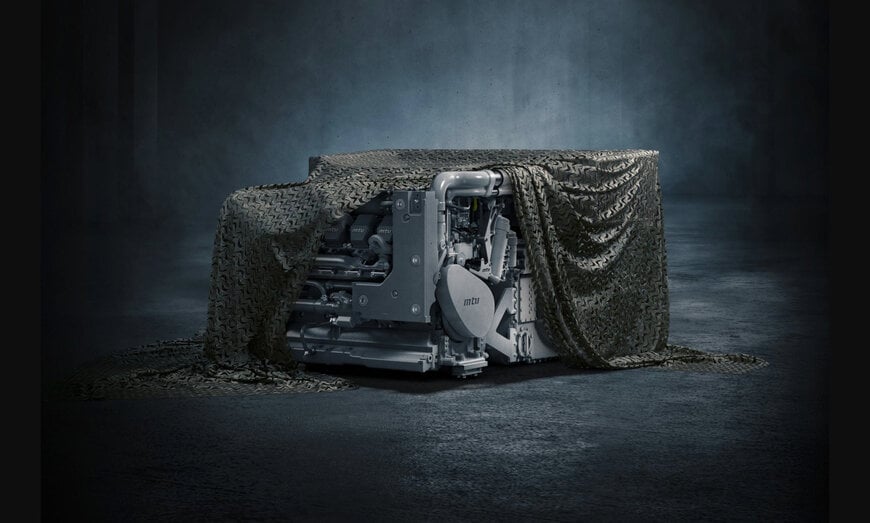
As a global developer of industrial propulsion solutions, Rolls-Royce Power Systems manufactures high-performance drive systems designed to meet rigorous operational standards. Through its specialized defense portfolio, the company designs, integrates, and scales technological architectures that support heavy vehicle fleets and multinational alliances. In this initiative, the manufacturer is transitioning its established engine components into fully unified, multi-vehicle propulsion baselines engineered to optimize modern combat mobility.
The continuous standardization of military aggregates directly impacts the digital supply chain and the operational availability of combat vehicles. By expanding a uniform internal combustion engine architecture into a scalable propulsion system, procurement cycles can be shortened and technical interfaces within the NATO alliance standardized. This technological harmonization addresses increasing vehicle weights as well as the growing electrical power requirements for sensor suites, electronic warfare, and active protection systems.
Platform Architecture and Powertrain Output Ranges
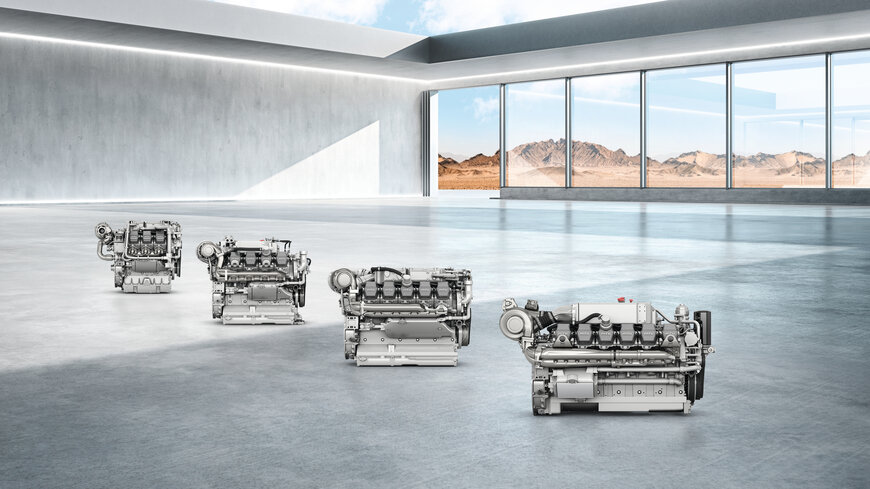
The mechanical structure of the mtu Series 199 is based on a modular design featuring four cylinder configurations, encompassing 6-, 8-, 10-, and 12-cylinder variants. This modularity allows the system to cover a power spectrum from 260 kW to 1,350 kW. The technological alignment of identical components across different cylinder configurations reduces the variety of required spare parts within the automotive data ecosystem and simplifies field maintenance during multinational deployments.
The propulsion platform is utilized both for the initial equipment of new vehicle generations and for the repowering of existing fleets. Integrated compact propulsion units, known as powerpacks, are developed on this engine foundation, combining the engine, transmission, and cooling system into a single, rapidly exchangeable functional unit. This architecture is integrated into wheeled and tracked vehicles such as the Boxer armored personnel carrier, the ACSV multi-purpose platform, the ASCOD and Borsuk infantry fighting vehicles, as well as variants of the Eitan and Fuchs 2. For instance, the Boxer utilizes an 8-cylinder mtu 8V 199 TE21 configuration delivering 600 kW. In total, more than 4,500 units of this engine family are in operational service across 16 NATO member states.
Hybrid Propulsion Integration and Thermal Signature Reduction
The expansion of the platform to include a combined combustion and electric drive addresses shifting tactical requirements in field operations. Developed for heavy military tracked vehicles, the hybrid system links the diesel engine with a battery-electric storage unit and an electric motor. The electrotechnical component functions as an acceleration booster during combined driving operations or enables purely electric driving modes at low speeds.
For silent watch operations in concealed positions, the energy storage units supply the vehicle's onboard electronics and sensors directly. This eliminates the need to run the main engine at idle, minimizing acoustic emissions and lowering the thermal signature of the vehicle due to the absence of hot exhaust gases. The high-performance batteries are recharged by the diesel engine during regular driving operations. The integrated hybrid powerpack is compactly dimensioned to maximize the usable internal volume for the crew and mission equipment.
Industrial Scaling and Capital Expenditure
The defense sector structurally accounts for approximately one quarter of the total revenue of Rolls-Royce Power Systems. To meet the increased demand resulting from European procurement programs, the company is investing a high three-figure million sum into its global manufacturing infrastructure. These funds are directed toward expanding industrial capacities, modernizing existing production sites, and strengthening supply chains to ensure the series production launch of the new engine generations and reliable delivery schedules. The presentation of these systems, including the live unveiling of the heavy hybrid powertrain, takes place at the Eurosatory defense exhibition in Paris from 15 to 19 June 2026 in Hall 6, Stand J335.
Additional Context:
This section details technical specifications and competitive benchmarking not included in the original product announcement
The performance classes of the mtu Series 199 compete directly with standardized military engines from other global manufacturers within the defense technology market. Direct technical benchmarking can be established based on power density, displacement, and cylinder arrangement in the segment of medium and heavy transport vehicles and infantry fighting vehicles.
In the power class up to 800 kW, the 8-cylinder mtu 8V 199 variant competes with the Scania DC16 V8 diesel engine, which is utilized in Scandinavian infantry fighting vehicles of the CV90 family. While the Scania DC16 achieves a maximum output of approximately 735 kW with a displacement of 16.4 liters and is primarily derived from civil mass-production engines, the mtu Series 199 is specifically optimized for highly compact military installation spaces to guarantee superior shock resistance and deep-wading capabilities.
In the heavy performance segment exceeding 1,000 kW for tracked vehicles and main battle tanks weighing up to 70 tons, the 12-cylinder mtu 12V 199 variant under development provides a direct alternative to the established Cummins V903 engine series and propulsion systems within the Caterpillar Defense interfaces. The Cummins V903 delivers around 500 to 600 kW in current configurations for infantry fighting vehicles like the Bradley IFV, placing its mechanical output below the heavier mtu configurations. For heavy platforms, the historical technological benchmark is the mtu Series 880 (such as the mtu MT883 with up to 1,200 kW). The development of the mtu 12V 199 aims to realize a more favorable power-to-weight ratio combined with a smaller installation volume than older engine generations by utilizing design principles of modern digitally controlled common-rail injection systems.
Regarding hybridization, the market demonstrates parallel developments in United States modernization programs. The approach applied there for the Bradley infantry fighting vehicle utilizes an powertrain electrification system tested by Cummins. The technical distinction lies in system integration: while US architectures frequently rely on separate, modular electric motors bolted directly into the transmission line, the mtu hybrid powerpack integrates the electric motor and thermal management directly into the housing design of the aggregate. This allows the system to fit into the standardized installation space of Western European armored vehicle hulls without requiring structural welding modifications.
Edited by Natania Lyngdoh, Induportals editor, assisted by AI.
www.rolls-royce.com
