
www.aero-defence.tech
16
'26
Written on Modified on
Integrating Uncrewed Aerial Systems into Transatlantic Digital Infrastructure
Northrop Grumman and Airbus Defence and Space have partnered to support the expansion of NATO intelligence, surveillance, and reconnaissance capabilities.
www.northropgrumman.com
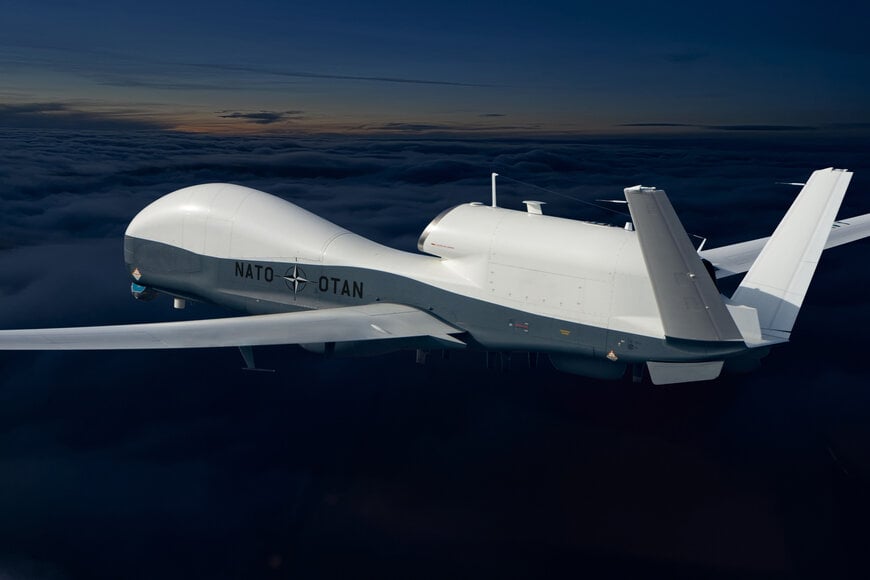
Northrop Grumman Corporation and Airbus Defence and Space have signed a Memorandum of Understanding to collaborate on incorporating the MQ-4C Triton uncrewed aircraft system into the NATO Intelligence, Surveillance, and Reconnaissance Force. This initiative aims to enhance transatlantic security operations through modernized airborne platforms and associated ground support systems.
Industrial Challenge and Collaboration
The modernization of multinational intelligence networks requires highly integrated, secure communication and data-processing systems. Deploying and managing high-altitude, long-endurance platforms like the MQ-4C Triton requires complex integration across diverse national systems.
Northrop Grumman, the developer of the platform, is partnering with Airbus Defence and Space to leverage regional European engineering expertise, facilitating rapid deployment and alignment with European operational requirements. To ensure widespread interoperability, the companies are coordinating with regional partners, including Kongsberg Defence & Aerospace in Norway, Insta Advance in Finland, Terma in Denmark, and Exence in Poland.
Technical Solution and Systems Integration
The technical framework centers on the MQ-4C Triton airborne platform and its corresponding ground control segments. Under the agreement, Northrop Grumman and Airbus will evaluate opportunities to design, integrate, and maintain critical subsystems.
The primary division of responsibilities involves evaluating complementary capabilities in digital infrastructure and technical services.
Key areas of focus include:
- Airborne and ground-segment communications architectures.
- Data processing, exploitation, and dissemination systems.
- Integrated command and control services.
This division utilizes Northrop Grumman's platform-specific technical parameters alongside Airbus's expertise in regional secure communications and systems integration.
Infrastructure Compatibility and Implementation
The implementation strategy builds upon the technical and operational foundation established over the last decade by the current NATO ISR Force's RQ-4D Phoenix fleet. By utilizing existing maintenance protocols, communication interfaces, and operational frameworks, the partners aim to streamline the integration of the MQ-4C Triton.
This approach reduces the requirement for entirely new ground infrastructure, allowing the incoming fleet to interface directly with existing NATO command structures. Localized support from regional partners ensures that telemetry, data links, and cybersecurity standards conform to specific national and Alliance-wide military specifications.
Operational Impact and Use Cases
The primary application of this cooperative system is high-altitude, long-endurance maritime and coastal surveillance. Establishing a unified data pipeline from airborne sensors to ground-based command centers improves situational awareness and process stability in joint operations. The integration of advanced communication payloads ensures continuous data dissemination under variable environmental conditions, enhancing overall operational efficiency and system maintainability.
Edited by Evgeny Churilov, Induportals Media - Adapted by AI.
www.northropgrumman.com
Infrastructure Compatibility and Implementation
The implementation strategy builds upon the technical and operational foundation established over the last decade by the current NATO ISR Force's RQ-4D Phoenix fleet. By utilizing existing maintenance protocols, communication interfaces, and operational frameworks, the partners aim to streamline the integration of the MQ-4C Triton.
This approach reduces the requirement for entirely new ground infrastructure, allowing the incoming fleet to interface directly with existing NATO command structures. Localized support from regional partners ensures that telemetry, data links, and cybersecurity standards conform to specific national and Alliance-wide military specifications.
Operational Impact and Use Cases
The primary application of this cooperative system is high-altitude, long-endurance maritime and coastal surveillance. Establishing a unified data pipeline from airborne sensors to ground-based command centers improves situational awareness and process stability in joint operations. The integration of advanced communication payloads ensures continuous data dissemination under variable environmental conditions, enhancing overall operational efficiency and system maintainability.
Edited by Evgeny Churilov, Induportals Media - Adapted by AI.
www.northropgrumman.com
