
www.aero-defence.tech
20
'26
Written on Modified on
CFM's open fan engine advances toward flight testing in 2026
New milestone in open fan demonstrator program paves the way for flight tests that will validate a next-generation aircraft engine designed to significantly improve fuel efficiency and reduce emissions.
www.safran-group.com
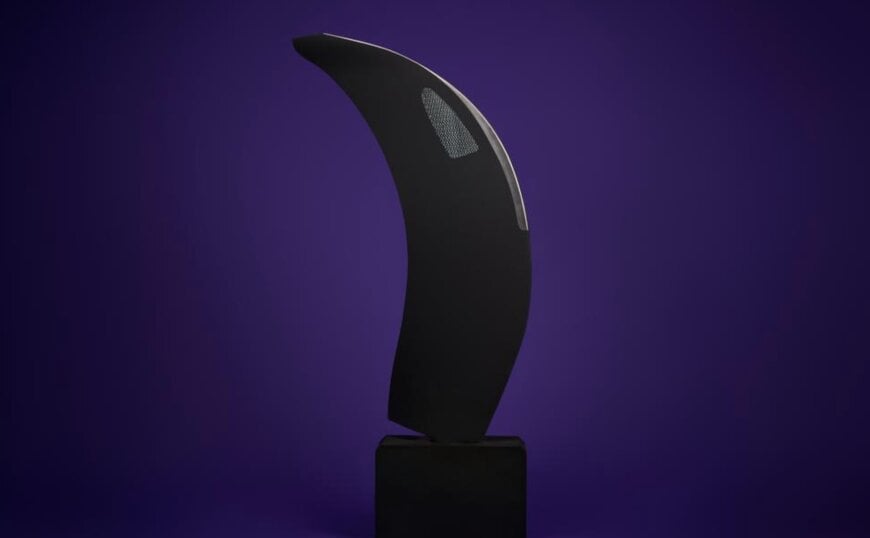
CFM International, the joint venture between Safran Aircraft Engines and GE, has reached new design and testing milestones for its Revolutionary Innovation for Sustainable Engines (RISE) program ahead of the Farnborough International Airshow 2026, held from July 20 to 24 in Farnborough, United Kingdom. The development program encompasses a suite of technologies, including open fan, compact core, and hybrid electric architectures, designed for next-generation aircraft propulsion systems.
Open Fan Testing and Aerodynamic Validation
Since the program's unveiling, approximately 500 test campaigns have evaluated the advanced engine architectures. Recent module reviews for key Open Fan and compact core systems confirmed baseline design concepts as technologies progress toward ground and flight tests.
Mechanical and material testing is underway on Open Fan blades and Outlet Guide Vanes (OGVs), covering impact resistance, bird ingestion, structural fatigue, endurance, load tolerance, icing performance, and dynamic vibration response. Initial aerodynamic testing in wind tunnel facilities demonstrated aeroacoustic performance exceeding initial technology maturation targets. Preliminary Design Reviews (PDR) for the Open Fan and OGV airfoils are complete, drawing on composite turbofan blade experience and turboprop structure expertise for blade retention, variable pitch mechanisms, and propeller frames. Additionally, a high-speed low-pressure turbine component within the fan system completed over 1,000 hours of testing, validating its aerodynamic design and aerothermal performance parameters.
Compact Core Development and Dust Ingestion Campaigns
Durability testing is being conducted early in the development cycle to refine hardware configurations. The Open Fan architecture incorporates core thermal management advantages and adaptive cycle technology designed for particle extraction.
Teams completed the Preliminary Design Review for the compact core systems and executed over 2,000 cycles of dust ingestion testing to evaluate high-pressure turbine (HPT) airfoil performance within an engine core. A secondary dust ingestion test campaign inserting RISE program HPT components into a LEAP-1B engine is evaluating how these next-generation technologies perform within a representative fleet environment.
Hybrid Electric Propulsion Demonstrations
Ground testing of hybrid electric propulsion architectures is being conducted across both parent companies within the RISE framework. Safran Aircraft Engines initiated the PHILEAS ground testing campaign at its Istres facility in France, utilizing a full-scale engine demonstrator equipped with two electric machines engineered for short- and medium-range aircraft applications. Concurrently, GE Aerospace completed two ground tests over the past year, evaluating the feasibility of hybrid electric engine operations with and without integrated energy storage systems.
Additional Context
This section details technical specifications not included in the original news release.
The Open Fan architecture under the RISE program utilizes an un-ducted, single-stage variable-pitch fan paired with stationary downstream Outlet Guide Vanes (OGVs). By eliminating the standard nacelle housing, the design elevates the engine's bypass ratio from typical 10:1 or 11:1 turbofan levels up to 80:1, lowering thrust-specific fuel consumption and cutting carbon emissions by up to 20%. The variable-pitch mechanism dynamically adjusts blade angle-of-attack across flight phases to balance aerodynamic efficiency and aeroacoustic noise limits. Simultaneously, the compact core leverages Ceramic Matrix Composites (CMCs) and additive cooling channels to withstand higher operating temperatures and pressures, maximizing overall thermodynamic efficiency.
Edited by Romila DSilva, Induportals Editor, with AI assistance.
www.safran-group.com
