
www.aero-defence.tech
23
'26
Written on Modified on
RTX's Pratt & Whitney advances hybrid-electric technology development
Ground testing of flight-standard engine and propeller for RTX Hybrid-Electric Flight Demonstrator begins in Quebec.
www.rtx.com
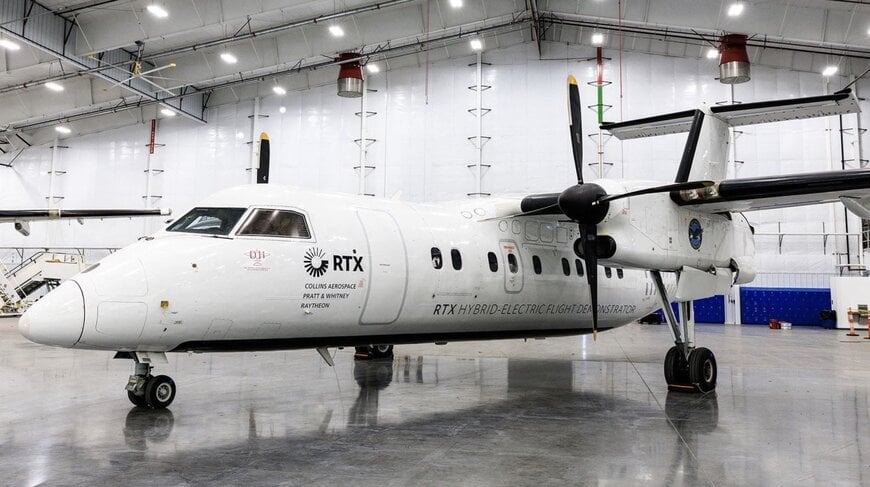
Pratt & Whitney Canada has commenced ground testing of its flight-standard hybrid-electric propulsion system and propeller at its facility in Longueuil, Quebec. The technology integrates a fuel-burning thermal engine with an electric motor to improve fuel efficiency and performance across regional turboprop applications.
Flight Demonstrator Architecture and Testing Milestones
Following the completion of the ground testing phase in Longueuil, the hybrid-electric propulsion system will be integrated onto a De Havilland Canada Dash 8-100 experimental flight test aircraft. The aircraft's initial test flight is scheduled to take place in 2027.
Jean Thomassin, Executive Director of New Products and Services Introduction at Pratt & Whitney Canada, stated that assembling the flight-standard propulsion unit advances the validation of hybrid-electric technology in flight. Thomassin noted that advancing thermal engine and hybrid-electric technologies holds the potential to enhance fuel efficiency and performance across future aircraft platforms.
Powertrain Hardware and Efficiency Targets
The hybrid-electric propulsion system integrates three primary energy and power components:
- Thermal Engine: An advanced gas turbine thermal engine developed by Pratt & Whitney Canada.
- Electric Motor and Controller: A 1-megawatt electric motor and integrated motor controller designed by Collins Aerospace.
- Energy Storage System: An aviation-grade battery system supplied by Swiss energy storage developer H55 S.A.
The operational architecture utilizes the electric motor to supply supplemental mechanical power during high-demand flight segments, specifically aircraft taxi, takeoff, and initial climb. By supplementing power during peak loads, the thermal engine operates at optimal efficiency throughout the remaining flight profile. The project targets a fuel efficiency improvement of up to 30% on a standard 250-nautical-mile regional turboprop flight profile.
Industry Collaboration and Institutional Funding
The RTX Hybrid-Electric Flight Demonstrator initiative involves cross-industry and academic research collaboration. Participating entities include De Havilland Aircraft of Canada, GKN Aerospace, AeroTEC, Ricardo, the National Research Council of Canada, and the Innovative Vehicle Institute.
The development program receives public financial and institutional support from the federal government of Canada and the provincial government of Quebec. Operational verification testing for the propulsion system is supported by Strix, the management entity for Canada's Initiative for Sustainable Aviation Technology (INSAT), backed by fifth-wave research grant funding from the Government of Canada.
Additional Context
This section details technical specifications not included in the original news release.
Parallel hybrid-electric aircraft powertrains combine mechanical torque from a thermal gas turbine and an electric motor onto a shared propeller shaft through a reduction gearbox. Standard turboprops must size gas turbines for short-duration peak thrust during takeoff and climb, causing the engine to operate below optimal thermodynamic efficiency during cruise. By supplementing up to 1 MW of power from an electric motor during high-demand phases, the core thermal engine can be downsized and calibrated for peak efficiency at cruise, lowering fuel burn.
Integrating high-voltage electrical machinery into aircraft nacelles introduces thermal and dielectric challenges. Megawatt-class motors require direct liquid cooling within stator windings to manage resistive heat. Concurrently, high-voltage DC buses at altitude require specialized insulation to prevent electrical arcing, while battery enclosures use thermal barriers and pressure-relief vents to prevent thermal runaway propagation.
Edited by Romila DSilva, Induportals Editor, with AI assistance.
Industry Collaboration and Institutional Funding
The RTX Hybrid-Electric Flight Demonstrator initiative involves cross-industry and academic research collaboration. Participating entities include De Havilland Aircraft of Canada, GKN Aerospace, AeroTEC, Ricardo, the National Research Council of Canada, and the Innovative Vehicle Institute.
The development program receives public financial and institutional support from the federal government of Canada and the provincial government of Quebec. Operational verification testing for the propulsion system is supported by Strix, the management entity for Canada's Initiative for Sustainable Aviation Technology (INSAT), backed by fifth-wave research grant funding from the Government of Canada.
Additional Context
This section details technical specifications not included in the original news release.
Parallel hybrid-electric aircraft powertrains combine mechanical torque from a thermal gas turbine and an electric motor onto a shared propeller shaft through a reduction gearbox. Standard turboprops must size gas turbines for short-duration peak thrust during takeoff and climb, causing the engine to operate below optimal thermodynamic efficiency during cruise. By supplementing up to 1 MW of power from an electric motor during high-demand phases, the core thermal engine can be downsized and calibrated for peak efficiency at cruise, lowering fuel burn.
Integrating high-voltage electrical machinery into aircraft nacelles introduces thermal and dielectric challenges. Megawatt-class motors require direct liquid cooling within stator windings to manage resistive heat. Concurrently, high-voltage DC buses at altitude require specialized insulation to prevent electrical arcing, while battery enclosures use thermal barriers and pressure-relief vents to prevent thermal runaway propagation.
Edited by Romila DSilva, Induportals Editor, with AI assistance.
