
www.aero-defence.tech
06
'26
Written on Modified on
Northrop Grumman to Help Build NASA’s Moon Base
Lunar Infrastructure Demo missions to mature essential technology needed to survive the lunar night using HALO‑derived systems.
www.northropgrumman.com
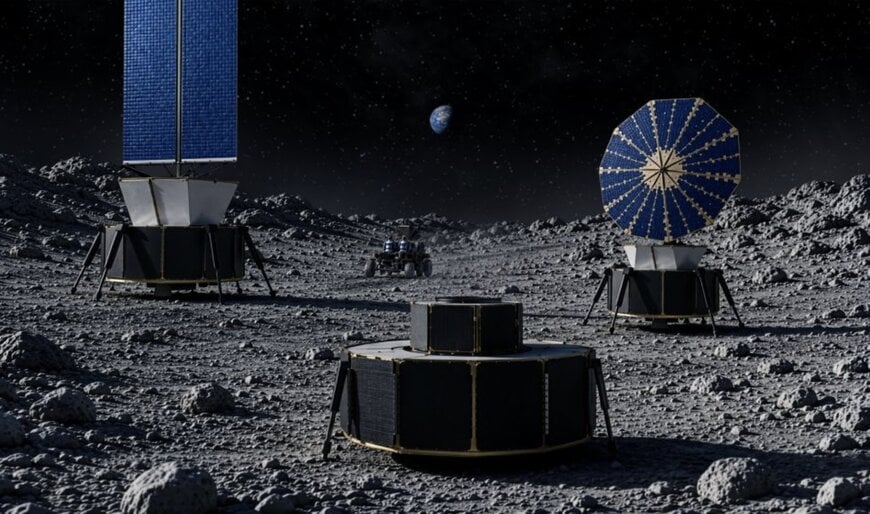
Northrop Grumman Corporation is developing a series of Lunar Infrastructure Demo (LID) missions to mature power and data infrastructure for NASA's Moon Base at the lunar South Pole.
HALO Hardware Adaptation and Development Objectives
Northrop Grumman is reusing hardware and technologies derived from the Habitation and Logistics Outpost (HALO) program. Reusing existing HALO hardware, including its power, data, and mechanical interfaces, is intended to accelerate lunar infrastructure deployment, minimize risk, and support NASA's Artemis mission readiness by gathering real lunar surface performance data.
LID Mission Series and Operational Capabilities
The LID mission series encompasses the LID-1, LID-2, and LID-3 missions designed to prove and scale surface infrastructure for Artemis crews and robotic explorers. The missions focus on demonstrating technology capable of surviving the lunar night and operating within lunar shadow conditions.
By evaluating how surface assets remain powered, protected, and connected through extended lunar night cycles, the LID missions will provide surface performance data to inform Artemis surface campaigns and long-duration lunar operations.
Additional Context
This section details technical specifications not included in the original news release.
Operating infrastructure on the lunar surface requires managing extreme environmental conditions, particularly during the lunar night, which lasts approximately 14.5 Earth days. During this period, surface temperatures at the lunar South Pole can drop below -180°C to -230°C in permanently shadowed regions (PSRs). Surviving these thermal regimes without continuous solar power generation requires advanced thermal control systems, including vacuum insulation panels, radioisotope heater units (RHUs), or regenerative fuel cells, to prevent battery freezing and electronic component degradation.
The Habitation and Logistics Outpost (HALO) module, initially engineered as an early cabin element for NASA's Lunar Gateway in cislunar orbit, incorporates standardized power distribution and communication architectures. Adapting orbital HALO avionics for surface deployment involves utilizing Command and Data Handling (C&DH) architectures, high-efficiency solar array wings, lithium-ion battery storage arrays, and S-band or Ka-band surface-to-orbit communication links. Standardizing electrical and mechanical interfaces across surface power nodes and data relays ensures interoperability with lunar rovers, landers, and habitat systems operating across the South Pole region.
Edited by Romila DSilva, Induportals Editor, with AI assistance.
www.northropgrumman.com
