
www.aero-defence.tech
11
'26
Written on Modified on
L3Harris Conducts Successful Hot-Fire Test for Next Generation Interceptor Program
Test validates advanced solid rocket motor performance, supporting NGI development and future missile defense capabilities through full-duration simulated high-altitude testing.
www.l3harris.com
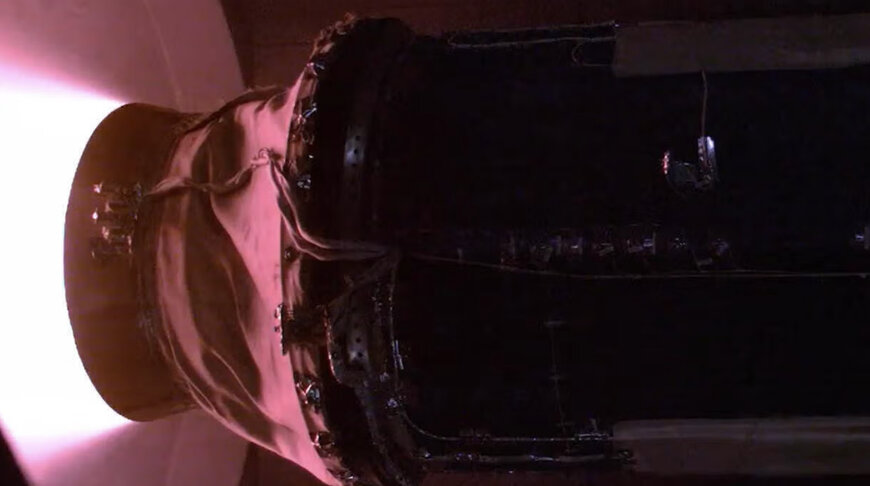
L3Harris conducts successful hot fire test of the stage two solid rocket motor for Lockheed Martin’s Next Generation Interceptor program.
L3Harris Technologies and Lockheed Martin have successfully conducted a full-duration hot-fire test of the stage two advanced large solid rocket motor designed for the United States Missile Defense Agency's Next Generation Interceptor. This milestone advances the development of missile defense propulsion capabilities by verifying operational integrity under simulated high-altitude vacuum conditions.
Simulated High-Altitude Vacuum Testing
The recent hot-fire test evaluated the system's performance in environments replicating the upper layers of the Earth's atmosphere. By igniting the solid rocket motor in a vacuum chamber, engineers confirmed a full-duration burn and collected data on critical performance characteristics. This procedure evaluates combustion stability, thrust, and the motor's ability to withstand extreme thermal and pressure stresses. Gathering these measurable performance metrics is a necessary step before conducting advanced flight testing and integrating the hardware into the broader Ground-Based Midcourse Defense architecture.
Propulsion And Intercept Control Mechanisms
As the primary propulsion and control systems provider for the Next Generation Interceptor, L3Harris Technologies supplies both the stage one and stage two large solid rocket motors used to boost the missile. Beyond primary propulsion, the architecture incorporates a dedicated Attitude Control System (ACS) and a Divert and Attitude Control System (DACS). These supplementary maneuver mechanisms are necessary to achieve the precise trajectory corrections required to intercept incoming intercontinental ballistic missile threats. Scott Alexander, President of Propulsion Systems and Missile Solutions at L3Harris, stated that the company will continue to execute development plans to support the interceptor's first flight test.
Distributed Manufacturing And Supply Chain Integration
To fulfill the production requirements of the interceptor program, the manufacturing supply chain leverages a distributed industrial base. The specialized ACS and DACS elements are manufactured at facilities in California and Virginia. Production of the advanced large solid rocket motors occurs in Alabama and Arkansas, establishing a decentralized manufacturing network to support continuous component delivery for the missile defense initiative.
Additional Context:
This section details technical specifications and competitive benchmarking not included in the original product announcement
Within the missile defense propulsion sector, the L3Harris Next Generation Interceptor solid rocket motor competes with alternative interceptor architectures developed by Northrop Grumman. While L3Harris partners with Lockheed Martin to deliver the stage one and stage two propulsion systems featuring integrated Divert and Attitude Control Systems, Northrop Grumman has independently tested a stage three solid rocket motor designed for similar high-altitude defense applications. Both defense contractors utilize full-scale static fire testing within specialized vacuum chambers to validate ballistic predictions, combustion stability, and thermal resilience prior to qualification testing. However, the L3Harris configuration emphasizes its distributed supply chain model, physically separating the manufacturing of primary solid rocket motors in Alabama and Arkansas from the precision control systems engineered in California and Virginia to support the final interceptor integration.
Edited by Natania Lyngdoh, Induportals editor, assisted by AI.
www.l3harris.com
L3Harris Technologies and Lockheed Martin have successfully conducted a full-duration hot-fire test of the stage two advanced large solid rocket motor designed for the United States Missile Defense Agency's Next Generation Interceptor. This milestone advances the development of missile defense propulsion capabilities by verifying operational integrity under simulated high-altitude vacuum conditions.
Simulated High-Altitude Vacuum Testing
The recent hot-fire test evaluated the system's performance in environments replicating the upper layers of the Earth's atmosphere. By igniting the solid rocket motor in a vacuum chamber, engineers confirmed a full-duration burn and collected data on critical performance characteristics. This procedure evaluates combustion stability, thrust, and the motor's ability to withstand extreme thermal and pressure stresses. Gathering these measurable performance metrics is a necessary step before conducting advanced flight testing and integrating the hardware into the broader Ground-Based Midcourse Defense architecture.
Propulsion And Intercept Control Mechanisms
As the primary propulsion and control systems provider for the Next Generation Interceptor, L3Harris Technologies supplies both the stage one and stage two large solid rocket motors used to boost the missile. Beyond primary propulsion, the architecture incorporates a dedicated Attitude Control System (ACS) and a Divert and Attitude Control System (DACS). These supplementary maneuver mechanisms are necessary to achieve the precise trajectory corrections required to intercept incoming intercontinental ballistic missile threats. Scott Alexander, President of Propulsion Systems and Missile Solutions at L3Harris, stated that the company will continue to execute development plans to support the interceptor's first flight test.
Distributed Manufacturing And Supply Chain Integration
To fulfill the production requirements of the interceptor program, the manufacturing supply chain leverages a distributed industrial base. The specialized ACS and DACS elements are manufactured at facilities in California and Virginia. Production of the advanced large solid rocket motors occurs in Alabama and Arkansas, establishing a decentralized manufacturing network to support continuous component delivery for the missile defense initiative.
Additional Context:
This section details technical specifications and competitive benchmarking not included in the original product announcement
Within the missile defense propulsion sector, the L3Harris Next Generation Interceptor solid rocket motor competes with alternative interceptor architectures developed by Northrop Grumman. While L3Harris partners with Lockheed Martin to deliver the stage one and stage two propulsion systems featuring integrated Divert and Attitude Control Systems, Northrop Grumman has independently tested a stage three solid rocket motor designed for similar high-altitude defense applications. Both defense contractors utilize full-scale static fire testing within specialized vacuum chambers to validate ballistic predictions, combustion stability, and thermal resilience prior to qualification testing. However, the L3Harris configuration emphasizes its distributed supply chain model, physically separating the manufacturing of primary solid rocket motors in Alabama and Arkansas from the precision control systems engineered in California and Virginia to support the final interceptor integration.
Edited by Natania Lyngdoh, Induportals editor, assisted by AI.
www.l3harris.com
