
www.aero-defence.tech
23
'26
Written on Modified on
Public Flight Demonstrations for Urban Electric Air Mobility Architecture
Archer Aviation schedules piloted flight demonstrations of its Midnight aircraft at the Salinas air show to validate intercity transit profiles.
www.archer.com
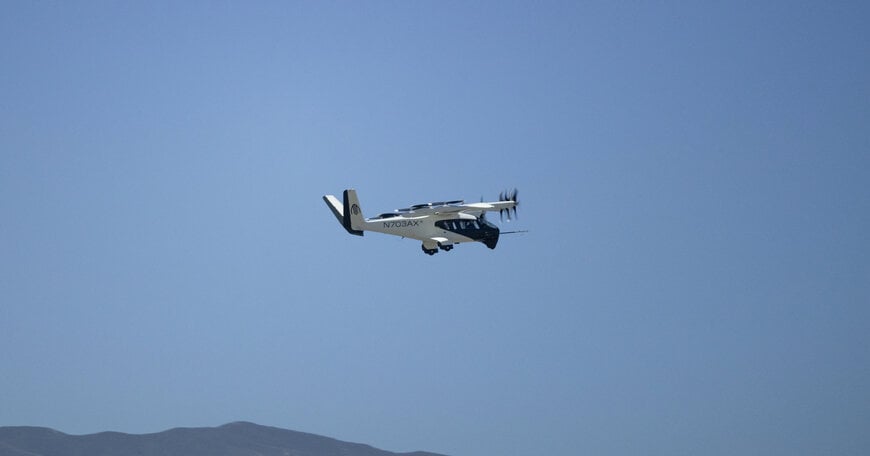
Archer Aviation announced plans to operate flight demonstrations of its Midnight electric vertical takeoff and landing aircraft at the 2026 California International Air Show in Salinas, California, scheduled for September 26 to 27. The flight displays form part of the ongoing flight test campaign and regional transit tour, targeting short-haul intercity passenger transit and advanced air mobility integration across metropolitan transport corridors.
Flight Demonstration Parameters and Flight Test Progression
The public aerial demonstrations mark the second consecutive year the Midnight platform will execute scheduled flight routines at the Salinas event. The flight profile operates within an exhibition roster comprising military and vintage jet aircraft, including the United States Air Force Thunderbirds demonstration team, Goulian Aerosports, and historic airframes such as the MiG-17, T-33 Shooting Star, and Cessna A-37 Dragonfly.
Salinas Municipal Airport has served as the primary operational test base for Archer Aviation since 2021. Personnel from the company’s flight test division, systems engineering teams, and ground operations units will support the public flight series, providing operational demonstrations ahead of scheduled expansion into broader metropolitan airspace across the San Francisco Bay Area.
Intercity Route Validation and Transit Time Reduction
The flight demonstrations expand upon the initial stages of the regional flight route validation campaign. On September 4, the Midnight aircraft completed a piloted roundtrip mission between Salinas Municipal Airport and Hollister Municipal Airport under direct coordination with the Federal Aviation Administration (FAA).
The flight leg spanned more than 40 miles, achieving an operational cruise altitude of 3,550 feet above mean sea level and a sustained transit speed of 125 mph. The direct flight time registered at approximately 12 minutes per leg, contrasting with a ground vehicular commute that averages 40 minutes or more along existing roadway corridors.
Following the public air show in Salinas, the aircraft is scheduled to execute consecutive flight trials across Northern California, with routes connecting San Martin, San Jose, Oakland, and San Francisco. Subsequent phases of the regional flight program will extend to urban corridors in the Los Angeles basin, Texas, and Florida. The operational model targets congested urban routes spanning 60 to 90 minutes by road, substituting ground transit with direct, point-to-point electric aerial transport designed for rapid turnaround between consecutive flights.
Additional Context:
This section details technical specifications and competitive benchmarking not included in the original product announcement
The Archer Midnight is engineered around a lift-plus-cruise distributed electric propulsion configuration. The airframe incorporates 12 wing-mounted electric rotors: six forward-facing tiltrotors on the leading edge that transition from vertical thrust to horizontal alignment for wing-borne cruise, and six fixed aft rotors that provide vertical lift during hover before locking in place during forward flight. Midnight features a maximum takeoff weight of 7,000 pounds (3,175 kilograms) and accommodates a single pilot alongside four passengers with a useful payload rating exceeding 1,000 pounds (453 kilograms). The propulsion architecture achieves a design cruise speed of 150 mph (241 km/h) at a nominal altitude of 2,000 feet, supported by lithium-ion battery packs optimized for rapid 10-minute turnaround intermediate charging over repeated 20-mile to 50-mile stage lengths, with a maximum operational range of 100 miles. The acoustic profile during forward cruise is engineered to reach approximately 45 dBA at ground level.
The primary direct competitor to Archer Midnight is the Joby Aviation S4. Both aircraft accommodate a 1-plus-4 occupant layout and share an identical 1,000-pound payload threshold. However, their aerodynamic architectures and performance parameters diverge:
The Joby S4 utilizes a full tiltrotor configuration with six tilting five-blade props mounted across the wing leading edge and V-tail, meaning all propulsion units contribute to both vertical lift and forward propulsion. This unified aerodynamic configuration allows the S4 to achieve a higher top cruise speed of 200 mph (173 knots) and an extended single-charge range of up to 150 miles.
In contrast, the Archer Midnight prioritizes manufacturing simplification and powertrain separation by fixing its six aft lift rotors during cruise flight. While this configuration adds passive drag in forward flight, reducing maximum cruise velocity to 150 mph and practical ferry range to 100 miles, it decreases mechanical complexity in rotor-tilt mechanisms. Another comparable platform is the Beta Technologies ALIA-250, which operates a pure lift-plus-cruise layout with five distinct motors (four dedicated horizontal lifting props on outriggers and one pusher propeller at the tail), optimized for a 1,400-pound payload but with lower maximum cruise speeds of 138 mph. Archer’s architecture specifically prioritizes high-frequency, short-distance airport-to-city-center shuttles requiring rapid intermediate battery charging over extended cross-country cruise efficiency.
Edited by Natania Lyngdoh, Induportals editor, assisted by AI.
www.archer.com
