
www.aero-defence.tech
24
'26
Written on Modified on
Anduril Achieves Open Architecture Compliance on Autonomous Cruise Missiles
Independent verification by the Munition Open Architecture Test and Evaluation Laboratory confirms modular subsystem compliance for scalable defense munitions.
www.anduril.com
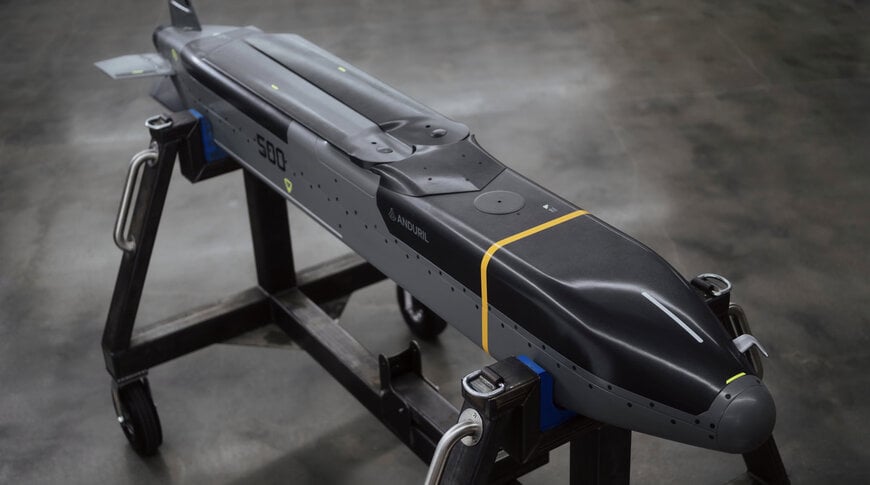
Anduril Industries has received official Weapon Open Systems Architecture verification from the Air Force Research Laboratory for its Barracuda modular cruise missile family. The compliance benchmark establishes interoperability across 14 technical subsystems, validating software-defined updates and commercial supply-chain integration for defense procurement programs.
Independent Architecture Assessment and Interface Verification
The Air Force Research Laboratory Air Warfare Directorate conducted the four-day assessment through its Munition Open Architecture Test and Evaluation Laboratory (MOATEL). The laboratory evaluates tactical weapons against published Weapon Open Systems Architecture (WOSA) standards, replacing vendor-submitted compliance declarations with independent hardware-in-the-loop and software test procedures.
The technical evaluation covered 14 functional WOSA subsystem domains:
- Mission Autonomy
- Optical and Radio Frequency Seekers
- Inertial Measurement Units (IMU)
- Global Positioning System (GPS)
- Air-Data Sensors
- Propulsion Modules
- Airframe Control Actuation
- Target State Estimators
- Altimeter-Aided Navigation
- System Clocks
- Autopilot Control Loops
- Guidance Algorithms
- Navigation Processing
- Munitions Data Bus (MDB)
Testing verified modular data translation between internal subsystem networks and external Munitions Data Bus implementations. This separation allows software routines, guidance algorithms, and mission hardware to be modified or upgraded without triggering airframe redesigns or extensive re-certification cycles.
Industrial Scaling and Lifecycle Upgrades
Traditional precision-guided munitions rely on proprietary hardware designs that restrict subsystem replacement to original manufacturers, creating multi-year development delays when addressing electronic warfare countermeasures or supply disruptions. By decoupling the underlying software stack from specific hardware components, compliant munitions can integrate upgraded guidance packages or commercial alternative components directly onto assembly lines.
Delivery Schedules and High-Rate Manufacturing
The verified software-defined architecture underpins production contracts across defense agencies, supporting delivery projections of several thousand munitions annually. Manufacturing operations are active, with initial customer handovers scheduled for early 2027 to support multi-service operational testing and field deployments.
Additional Context:
This section details technical specifications and competitive benchmarking not included in the original product announcement
The Barracuda-M series consists of three primary variants: the Barracuda-100 (range of approximately 120 nautical miles, 35-pound payload capacity), Barracuda-250 (range exceeding 200 nautical miles, 35-pound payload, designed for internal fifth-generation fighter bays), and Barracuda-500 (range exceeding 500 nautical miles, 100-pound payload, compatible with palletized Rapid Dragon airlift systems). The airframes utilize turbojet propulsion to sustain subsonic cruise speeds around Mach 0.74, pull maneuvers up to 5g, and sustain loitering flight profiles up to 120 minutes.
In the open-architecture and low-cost precision strike sector, the platform benchmarks against both legacy stand-off weapons and emerging Enterprise Test Vehicle (ETV) candidates:
Legacy Precision Stand-Off Missiles:
Industrial Scaling and Lifecycle Upgrades
Traditional precision-guided munitions rely on proprietary hardware designs that restrict subsystem replacement to original manufacturers, creating multi-year development delays when addressing electronic warfare countermeasures or supply disruptions. By decoupling the underlying software stack from specific hardware components, compliant munitions can integrate upgraded guidance packages or commercial alternative components directly onto assembly lines.
Delivery Schedules and High-Rate Manufacturing
The verified software-defined architecture underpins production contracts across defense agencies, supporting delivery projections of several thousand munitions annually. Manufacturing operations are active, with initial customer handovers scheduled for early 2027 to support multi-service operational testing and field deployments.
Additional Context:
This section details technical specifications and competitive benchmarking not included in the original product announcement
The Barracuda-M series consists of three primary variants: the Barracuda-100 (range of approximately 120 nautical miles, 35-pound payload capacity), Barracuda-250 (range exceeding 200 nautical miles, 35-pound payload, designed for internal fifth-generation fighter bays), and Barracuda-500 (range exceeding 500 nautical miles, 100-pound payload, compatible with palletized Rapid Dragon airlift systems). The airframes utilize turbojet propulsion to sustain subsonic cruise speeds around Mach 0.74, pull maneuvers up to 5g, and sustain loitering flight profiles up to 120 minutes.
In the open-architecture and low-cost precision strike sector, the platform benchmarks against both legacy stand-off weapons and emerging Enterprise Test Vehicle (ETV) candidates:
Legacy Precision Stand-Off Missiles:
- AGM-158 JASSM (Lockheed Martin): Features long operational stand-off range (200 to 500+ nautical miles) and low-observable shaping with a 1,000-pound penetrating warhead, but costs exceed 1 million to 1.5 million dollars per unit with long manufacturing lead times and proprietary hardware architectures.
- Tomahawk Block V (Raytheon): Long-range (over 900 nautical miles) subsonic cruise missile with robust maritime strike and loiter capabilities, carrying a 1,000-pound class warhead at unit costs between 1.5 million and 2 million dollars, dependent on specialized defense-exclusive supply chains.
Low-Cost Collaborative Munition and ETV Competitors:
- Leidos Dynetics / Kratos: Developing modular, attritable cruise missile concepts focusing on common mission systems and high-rate manufacturing envelopes.
- Integrated Solutions for Systems (IS4S) and Zone 5 Technologies: Competitors selected under the Air Force and Defense Innovation Unit Enterprise Test Vehicle initiative to validate open, modular cruise vehicles priced under 150,000 to 200,000 dollars per unit in high-rate production.
The primary technical differentiator validated by the MOATEL trial is compliance with the open WOSA protocol at industrial production volume. While legacy cruise missiles require extensive proprietary engineering changes to switch out a sensor or navigation suite, WOSA-compliant munitions use standardized digital message formats across the Munitions Data Bus. This configuration reduces integration timelines for new radar, electro-optical, or autonomous swarm algorithms from multiple years down to weeks.
Edited by Natania Lyngdoh, Induportals editor, assisted by AI.
www.anduril.com
Edited by Natania Lyngdoh, Induportals editor, assisted by AI.
www.anduril.com
