
www.aero-defence.tech
25
'26
Written on Modified on
Pratt & Whitney Reengineers GTF Advantage for Longer Life and Higher Thrust
Aerodynamic upgrades increase airflow, extend time on wing up to twofold and deliver up to 8% more takeoff thrust.
www.rtx.com
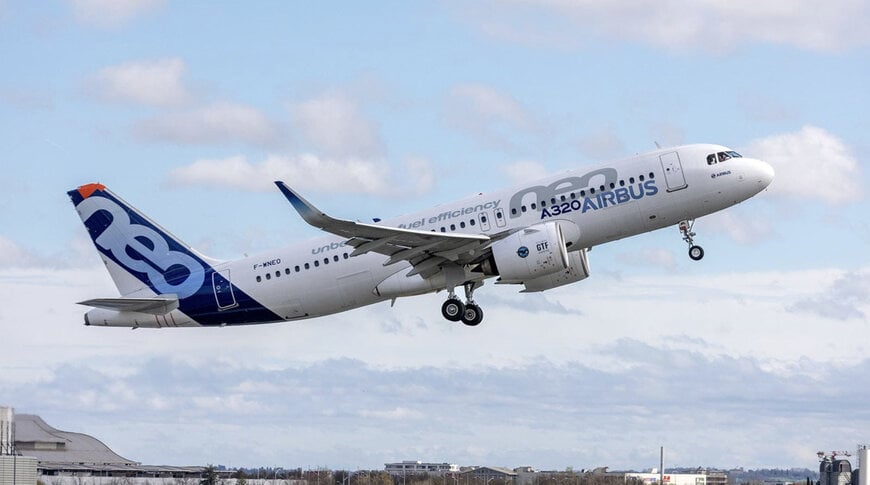
Pratt & Whitney, an RTX business, is preparing its GTF Advantage commercial turbofan engine to enter revenue service aboard the Airbus A321XLR passenger aircraft operated by United Airlines. The propulsion system represents an architectural evolution of the baseline PW1100G-JM engine, engineered to deliver increased thermal endurance and mechanical performance across extended-range flight profiles.
Aerodynamic Compressor Optimization and Thermal Management
Engineers addressed component degradation in the high-pressure turbine by optimizing core aerodynamics to increase mass airflow starting at the compressor stage. Enhancing airflow through the compressor lowers operating temperatures within the downstream combustion chamber and turbine sections without altering external interface geometry.
Analytical models for the redesign integrated operational data collected from more than 50 million flight hours across more than 5,000 baseline GTF engines in service. Engineering teams mapped real-world data against digital twin profiles of individual fielded engines, pairing computational fluid dynamics calculations with ground-based rig tests and endurance testing conducted in both particulate-heavy and clean environments.
Turbine Airfoil Cooling and Surface Coating Re-Engineering
To prevent thermal fatigue within the hot section, turbine blades incorporate reconfigured internal cooling channels and revised casting profiles. These aerodynamic cooling passages maintain structural blade integrity at gas temperatures exceeding the base melting threshold of the superalloy substrate.
Environmental degradation from atmospheric contaminants is mitigated through advanced surface coatings engineered for sandy and saline operating environments. Operators of baseline PW1100G-JM powerplants can incorporate these hot-section refinements via a field-retrofittable maintenance upgrade designated as Hot Section Plus during scheduled engine depot overhauls.
Takeoff Thrust Kinematics and Extended Maintenance Cycles
Compressor aerodynamic modifications yield up to a 100 percent increase in time on wing relative to baseline configurations. The resulting airflow increases sea-level takeoff thrust by 4 percent and delivers up to an 8 percent thrust increase at high-elevation airfields.
Matt Teicholz, Vice President and Chief Engineer for Commercial Engines at Pratt & Whitney, stated that the technical refinements combine mature individual technologies into an integrated hot-section architecture that maintains external parity with the PW1100G-JM. He noted that the higher thrust output expands single-aisle aircraft payload and stage-length margins under high-density-altitude operations, particularly for commercial carriers operating across the Asia-Pacific theater.
Additional Context:
This section details technical specifications and competitive benchmarking not included in the original product announcement
The Pratt & Whitney GTF Advantage operates within the narrowbody propulsion category alongside the CFM International LEAP-1A, with both powerplants serving as dual-source engine options for the Airbus A320neo family. The GTF Advantage retains the geared turbofan architecture, utilizing a planetary reduction gearbox between the low-pressure shaft and the front fan to decouple rotational velocities. This architecture enables an ultra-high bypass ratio of 12.5:1 with an 81-inch fan diameter, delivering maximum takeoff thrust ratings between 24,000 and 34,000 pounds-force.
In comparison, the CFM LEAP-1A utilizes a direct-drive, twin-spool architecture with an 11:1 bypass ratio and a 78-inch fan diameter, delivering a takeoff thrust envelope ranging from 24,500 to 35,000 pounds-force. The LEAP-1A manages hot-section temperatures through ceramic matrix composite shrouds in the two-stage high-pressure turbine and a 10-stage high-pressure compressor delivering a 22:1 compressor pressure ratio.
While the direct-drive LEAP-1A avoids the mechanical complexity of an epicyclic gearbox, the geared system of the GTF Advantage enables the high-pressure spool to run at higher optimal rotational speeds while the fan rotates at roughly one-third speed, reducing fan-tip aerodynamic shock waves and core fuel burn. The baseline GTF architecture achieved an approximate 16 percent reduction in fuel burn compared to previous-generation CFM56 powerplants; the GTF Advantage configuration increases baseline fuel efficiency by an additional 1 percent while closing previous high-altitude takeoff thrust gaps against the LEAP-1A.
Edited by Natania Lyngdoh, Induportals editor, assisted by AI.
www.rtx.com
