
www.aero-defence.tech
07
'26
Written on Modified on
GA-ASI demonstrates autonomous mission planning with U.S. Navy collaboration
The Gray Flag 2026 demonstration used A-GRA and TacACE to coordinate autonomous aircraft missions alongside human-crewed teammates in simulated battles.
www.ga.com
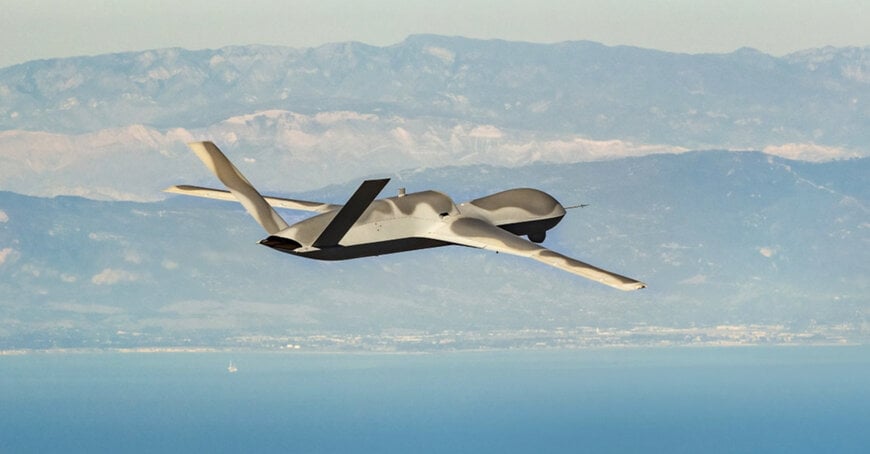
Modern air operations demand rapid tactical coordination between crewed strike platforms and uncrewed aerial systems operating in contested multi-domain environments. To address the challenge of translating high-level command directives into machine-executable actions without continuous operator micro-management, General Atomics Aeronautical Systems, Inc. (GA-ASI) collaborated with the U.S. Navy Strike Planning and Execution Systems program office (PMX-281) to demonstrate collaborative autonomous mission planning across defense aviation networks.
Open Architecture Integration for Dynamic Kill-Chain Execution
During the test, engineering teams interfaced the U.S. Navy baseline mission planning infrastructure with Autonomy Government Reference Architecture (A-GRA)-compliant data products. This integration supplied mission context directly to the onboard autonomy software, translating commander intent into dynamic tactical logic. The architecture allowed the autonomous mission system to exercise algorithmic judgment, evaluating multi-ship sensor data and environmental variables to execute complex maneuvers against simulated air, land, and maritime threats across the complete kill chain.
Operating Principles of the Tactical Autonomy Ecosystem
The core operational mechanism relied on GA-ASI’s Tactical Autonomy Ecosystem (TacACE) software integrated aboard the jet-powered MQ-20 Avenger Autonomous Collaborative Platform (ACP). TacACE ingested high-level constraints, target priorities, and threat models from Navy planners, processing the data to adapt mission parameters in real time. The software serves as an integrated software suite handling human-machine teaming, dynamic route recalculation, sensor payload management, and post-mission telemetry debriefing. By abstracting mission planning data into standardized reference formats, the system decouples autonomous software decision loops from specific aircraft flight-control computers, streamlining deployment across heterogeneous fleets.
Operational Evaluation Through Live, Virtual, and Constructive Environments
The flight demonstration was conducted under the simulated operational exercise Gray Flag 2026, linking flight facilities at Gray Butte near Palmdale, California, with the Mission Operations Center in Poway, California. To validate human-machine teaming across representative operational scales without requiring an entire physical fleet, engineers deployed a Live, Virtual, and Constructive (LVC) testing architecture.
The LVC environment established bidirectional telemetry linking the physical MQ-20 Avenger with simulated aerial platforms and constructive computer-generated entities. This setup allowed operators to assess real-time timeline compliance, task handoffs between human pilots and autonomous uncrewed platforms, and collaborative target tracking using passive sensors. Michael Roberts, Advanced Programs Emerging Technology Director at GA-ASI, noted that adding A-GRA-compliant mission context into established operational planning allows autonomy software to understand tactical intent, coordinate heterogeneous uncrewed aircraft, and adapt flight plans dynamically alongside human pilots.
Additional Context:
This section details technical specifications and competitive benchmarking not included in the original product announcement.
The flight trial represents a key validation phase for the Pentagon’s broader Collaborative Combat Aircraft (CCA) initiatives and Modular Open Systems Approach (MOSA) guidelines. The Department of War established A-GRA and Airborne Mission Systems Government Reference Architecture (AMS GRA) as open standards designed to separate airframe procurement from mission autonomy software development, preventing single-vendor lock-in.
The primary testbed, the GA-ASI MQ-20 Avenger (formerly Predator C), is a Group 5 turbofan-powered uncrewed aerial system featuring a 66-foot wingspan, a maximum takeoff weight of 18,200 pounds, a service ceiling of 50,000 feet, and an internal payload capacity of 3,500 pounds. Powered by a Pratt & Whitney Canada PW545B turbofan engine delivering approximately 3,991 pounds of thrust, the platform reaches cruise speeds around 400 knots with an operational endurance of up to 18 hours.
Within the collaborative autonomous systems sector, comparable testbed architectures include the Kratos XQ-58A Valkyrie and Anduril’s Fury platform. The XQ-58A Valkyrie serves a similar role for evaluating AI-driven tactical autonomy, operating with a smaller maximum takeoff weight of approximately 6,000 pounds, an internal bay capacity of 600 pounds, and cruise speeds of Mach 0.72. While platforms such as the XQ-58 provide lower-cost runway-independent launch configurations, the larger MQ-20 provides greater electrical power generation, higher internal sensor payload volume, and expanded compute margins, which are critical for hosting complex autonomy architectures and wideband tactical datalinks during collaborative mission evaluation.
Edited by Natania Lyngdoh, Induportals editor, with AI assistance.
www.ga.com
