
www.aero-defence.tech
14
'26
Written on Modified on
Air & Missile Defense Command Shelters Advance Battlefield Mobility
Northrop Grumman will engineer an expandable vehicle variant of the Integrated Battle Command System to enhance field mobility and tactical protection.
www.northropgrumman.com
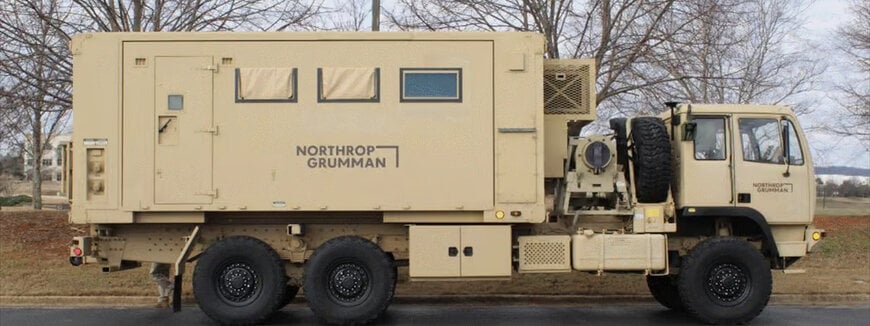
Modern integrated air and missile defense networks require command facilities that can relocate rapidly to avoid counter-battery detection while maintaining continuous data fusion across distributed sensors and effectors. Northrop Grumman has received a 21 million dollar contract from the United States Army to engineer and deliver two prototype manufacturing units of an expandable van-based variant for the Integrated Battle Command System by June 2027. This initiative transitions the tactical operational center away from soft-walled tent configurations toward a hardened, vehicle-integrated shelter designed for rapid maneuver warfare and expeditionary air defense missions.
Engineering Requirements for Tactical Command Relocation
Distributed integrated air defense operations depend on command and control nodes that aggregate radar, electro-optical, and interceptor telemetry into a unified engagement network. In contested operating environments, stationary tactical operations centers create distinct thermal, electromagnetic, and acoustic signatures. Legacy installations rely heavily on modular tent systems that require extensive physical setup time, manual tear-down cycles, and external power distribution cabling, which limits how quickly an air defense unit can displace after radiating signals.
The new technical approach addresses these vulnerability profiles by embedding the command post within a self-contained, expandable van shelter. The platform incorporates mechanized slide-out sidewalls that deploy directly from the primary vehicle chassis. This mechanical actuation broadens the usable interior floorplan in the field without expanding the road-march footprint during transport. The design provides physical shell shielding against fragmentation and environmental extremes, reducing displacement intervals and reinforcing the survivability of mission-critical crew and computing assets.
Shelter Architecture and Workspace System Design
The expandable Integrated Collaborative Environment functions as an integrated node within the open, modular architecture of the Integrated Battle Command System. Internally, the expanded vehicle layout accommodates ten dedicated workstations, structured as six primary operator terminals and four supplementary staff operation stations. These consoles link directly to high-throughput processing racks capable of running fire-control algorithms and multi-source battle management software.
By standardizing physical console interfaces and power distribution within the vehicle structure, the layout eliminates manual cable routing during deployment. Technicians and fire control officers interface with unified tactical displays showing fused multi-domain sensor feeds. The architecture maintains an open-system design to process telemetry from disparate military branches and international partners, following the doctrine of pairing any qualified sensor to the optimal effector. The consolidated interior facilitates concurrent mission planning, radar diagnostic tracking, and intercept trajectory verification within a single protected workspace.
Operational Integration and Air Defense Modernization
The mobile shelter variant is engineered to support both expeditionary field deployment and fixed installations within broader regional defense perimeters. The Integrated Battle Command System forms the primary command architecture for the United States Army modernization roadmap in air and missile defense, replacing legacy point-to-point networks that linked dedicated batteries strictly to proprietary radars.
Fielded units in operational theaters—including European Combatant Commands, Indo-Pacific installations, and operational units in Poland—rely on this integrated command framework to link disparate air and missile assets. Implementing an expandable mobile vehicle footprint allows air defense artillery units to conduct rapid displace-and-operate sequences during high-intensity conflict. Northrop Grumman has incorporated internal investment capital alongside defense contract funding to streamline component assembly and hardware-software integration across the two prototype units.
Additional Context:
This section details technical specifications and competitive benchmarking not included in the original product announcement.
Tactical command shelter design across modern defense engineering has increasingly shifted toward standardized container and vehicle envelopes complying with international transport and environmental standards, such as ISO 668 dimensions and MIL-STD-810 climatic and vibration testing parameters. Historically, mobile operations centers relied on Standardized Integrated Command Post System equipment and trailer-mounted tent extensions. While modular, these systems typically require between 45 and 90 minutes for full operational setup and tear-down, creating significant exposure windows under modern counter-battery and drone-directed targeting cycles.
In contrast, automated expandable shelters utilizing hydraulic or electromechanical slide-outs can achieve full mission operational capability within 10 to 15 minutes of vehicle halt. Similar mobile shelter paradigms are utilized in platforms such as the mobile Tactical Operations Centers developed on the Family of Medium Tactical Vehicles chassis and medium-weight ISO shelter platforms used across NATO ground forces. The structural transition incorporates improved electromagnetic interference shielding compliant with MIL-STD-461 standards, attenuating radiated electronic emissions to counter modern radio-frequency direction-finding threats.
Edited by Natania Lyngdoh, Induportals editor, with AI assistance.
www.northropgrumman.com
