
www.aero-defence.tech
16
'26
Written on Modified on
Electronic Support Measures Integration for UAS Modernization
General Atomics Aeronautical Systems and SNC integrate long-range passive detection onto MQ-1C aircraft to identify radar emissions outside threat engagement envelopes.
www.ga.com
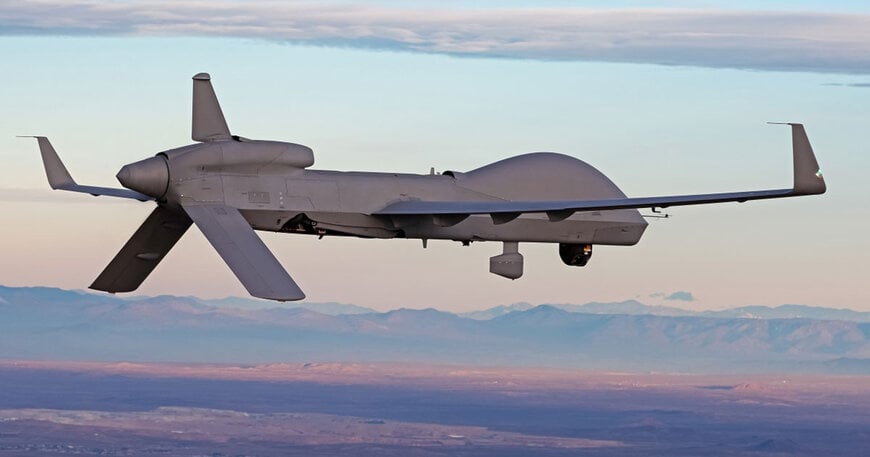
General Atomics Aeronautical Systems, Inc. (GA-ASI) and Sierra Nevada Corporation (SNC) completed flight demonstrations integrating passive electronic warfare avionics into military uncrewed systems. The program equips uncrewed aircraft with signal collection capabilities to detect, geolocate, and target integrated air defense systems across multi-domain operational zones.
Integration Architecture and Operational Roles
The technical initiative combines the airframe capabilities of the GA-ASI MQ-1C Gray Eagle Extended Range (ER) system with the specialized signal intelligence payload from SNC. Under this cooperation, GA-ASI serves as the aircraft original equipment manufacturer and primary system integrator, while SNC supplies the dedicated sensor package.
Air defense modernization requires reconnaissance platforms to detect emitter networks without exposing crewed assets to surface-to-air interceptors. Implementing passive collection on extended-range uncrewed platforms enables long-range sensing beyond hostile weapon engagement zones. By operating outside direct surface-to-air missile ranges, the payload gathers critical targeting coordinates, maintaining intelligence collection while mitigating airframe attrition.
Payload Architecture and Systems Interoperability
The SNC electronic support measures system consists of a compact sensor payload designed for radio frequency spectrum detection and emitter parameter collection. The system identifies hostile emitter signatures, classifying radar frequency bands and operational modes across the electromagnetic spectrum.
Integration relies directly on the open systems architecture implemented within the MQ-1C Gray Eagle platform. Standardized hardware mounting provisions and digital interfaces allow the external payload to process and transmit emitter data into the primary mission avionics without requiring extensive airframe redesign. This digital infrastructure facilitates sensor modularity, reduces integration cycles, and maintains software-level sensor control protocols.
"Combining long-range detection with the range and persistence of the Gray Eagle ensures that commanders always know when an adversary's IADS is operating," stated David R. Alexander, President of GA-ASI.
Flight Testing and Military Systems Deployment
The flight test series verified sensor functionality, aerodynamic compatibility, and real-time electronic intelligence telemetry relay during typical operational flight profiles. These evaluations build on operational assessments conducted across U.S. European Command exercises, Vanguard maneuvers, and the Project Convergence Capstone 5 trial framework.
The deployed configuration operates within crewed-uncrewed teaming architectures. In operational practice, the sensor-equipped uncrewed aircraft functions as a forward passive radar detection node. The system relays radar tracking coordinates and emitter parameters to ground command posts and crewed strike platforms, supporting survivable ingress vectors and targeting solutions.
Edited by Evgeny Churilov, Induportals Media - Adapted by AI.
www.ga.com
