
www.aero-defence.tech
03
'26
Written on Modified on
Synthetic Aperture Sonar Mine Countermeasures Integration
Advanced Acoustic Concepts delivers synthetic aperture sonar modules to enable remote acoustic mine classification for naval defense operations.
www.thalesgroup.com
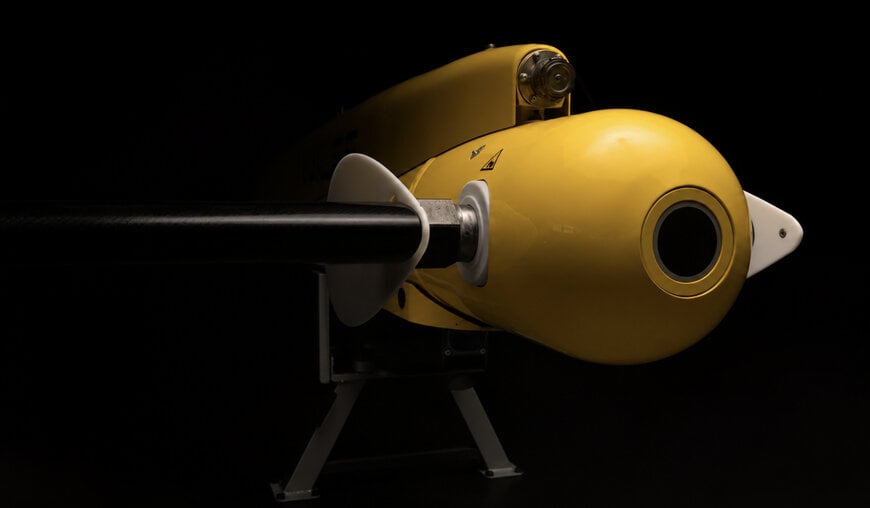
The United States Navy has contracted Advanced Acoustic Concepts, a subsidiary of Thales, to manufacture and deliver two integrated Remote Mine Hunting modules alongside supporting engineering infrastructure. The modular architecture interfaces directly with maritime defense assets to deploy standoff sonar detection, automated target classification, and mission management across contested littoral environments.
Undersea Operational Challenges and Acoustic Demands
Naval mine countermeasures traditionally require surface vessels and personnel to operate within lethal engagement zones established by moored, bottom, and buried maritime munitions. Conventional hull-mounted sonar and legacy mine-hunting systems present operational limitations in detection resolution, high false-alarm rates, and constrained swath coverage in dynamic acoustic channels. Eliminating operational exposure requires relocating human operators outside the threat area while maintaining high-probability detection and classification cycles through remote payload integration.
Engineering Division and System Architecture
The engineering structure utilizes Advanced Acoustic Concepts for domestic manufacturing, integration, and deployment support, combining parent entity Thales sensor intellectual property with American naval defense production standards. Advanced Acoustic Concepts serves as the primary system integrator, configuring the modular assemblies for both crewed surface combatants and unmanned surface vessel architectures.
The technical solution operates via an integrated sensor payload centered on a towed multiview Synthetic Aperture Sonar array. Synthetic aperture processing synthesizes a virtual array length along the tow path, generating constant along-track acoustic resolution independent of range and acoustic frequency. The sensor payload streams multidimensional acoustic backscatter data directly into mission management software containing artificial intelligence-based Automatic Target Recognition algorithms. These algorithmic pipelines filter clutter, extract spatial features, and perform real-time target identification to support the standard Find, Fix, and Finish operational sequence.
Deployment Parameters and System Integration
Initial deployment covers two complete module units under a 53.9 million dollar baseline contract, with scalable options covering additional units up to a cumulative value of 196.2 million dollars. System engineering emphasizes modularity, enabling rapid installation and electrical interfacing with standard deck footprints and handling equipment on target naval platforms.
The sensor payload communicates via high-bandwidth encrypted data conduits, routing raw and pre-processed acoustic imagery to mission operators at standoff ranges. This architectural decoupling allows continuous seabed mapping, automatic track generation, and tactical localization without requiring vessels to enter unverified corridors. Future iterations incorporate command interfaces designed to cue remote neutralization vehicles directly from classified contacts.
Operational Capabilities and Fleet Impact
Towed synthetic aperture sonar deployment reduces false-target contact rates compared to conventional sidescan arrays by delivering sub-centimeter acoustic imagery across wide search swaths. The integrated target recognition software accelerates data processing timelines, compressing the latency between initial acoustic ping acquisition, target fix confirmation, and subsequent remediation workflows.
Standardizing remote module integration across unmanned and manned surface vessels isolates naval operators from blast zones, mitigates operational platform vulnerability, and enhances mine clearance velocity in critical shipping channels and contested maritime theaters.
Edited by Sucithra Mani, Induportals editor – adapted by AI.
www.thalesgroup.com
