
www.aero-defence.tech
13
'26
Written on Modified on
L3Harris Demonstrates Maritime Interoperability with FleetLink Communications
FleetLink is a high-speed, modular communications solution that brings together L3Harris radios and waveforms to replace legacy communication systems and integrates data rapidly from multiple sources.
www.l3harris.com
Modern naval task forces operating across contested maritime theaters depend on resilient, jam-resistant, and interoperable communications to coordinate distributed surface combatants, submarines, aircraft, and uncrewed platforms. Historically, naval vessels relied on disparate, single-purpose stovepiped radio racks and legacy analog-era transceivers to manage high-frequency (HF) beyond-line-of-sight links, ultra-high-frequency (UHF) satellite communications, and line-of-sight tactical data networks. Maintaining these fragmented radio rooms imposes severe Size, Weight, and Power (SWaP) penalties aboard warships, complicates shipboard antenna management, increases spare parts logistics, and slows cross-domain data routing between tactical commanders. Furthermore, aging cryptographic modules struggle to keep pace with evolving electronic warfare threats and modern National Security Agency (NSA) encryption mandates. Overcoming these fleet connectivity bottlenecks requires software-defined, modular radio clusters capable of simultaneously hosting multiple secure waveforms, automating cross-band data integration, and consolidating multi-channel communications hardware into standardized shipboard racks.
Shipboard Operational Validation and Modular Multi-Band Architecture
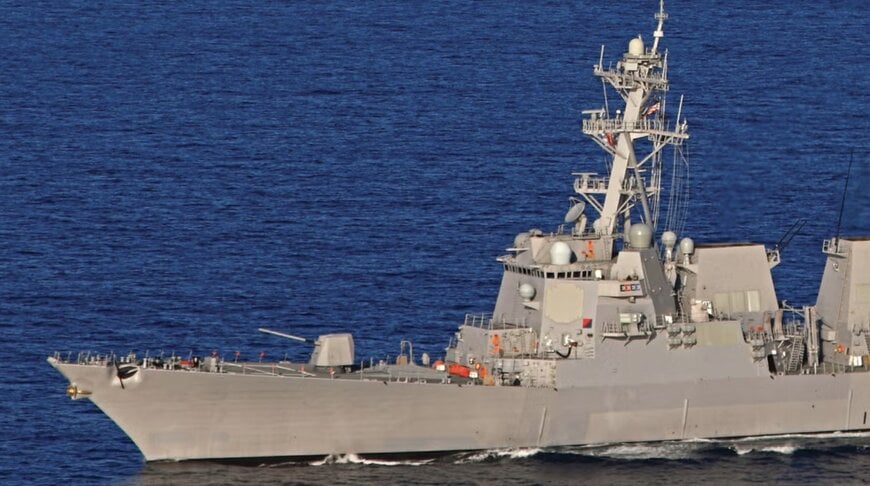
To modernize naval fleet command, control, and communications (C3) infrastructure, L3Harris Technologies completed U.S. Navy operational testing of its FleetLink communications system aboard an active Arleigh Burke-class guided-missile destroyer. Developed under the U.S. Navy’s Scalable, Modular, Radio Cluster (SMRC) contract awarded in 2023, FleetLink consolidates L3Harris software-defined radios and advanced waveforms into a unified, high-speed modular system engineered to replace aging shipboard communications suites.
During real-world at-sea evaluation profiles, the system demonstrated rapid multi-source data integration and cross-platform interoperability across surface and subsurface domains. To safeguard classified tactical traffic against interception and cyber-electronic exploitation, FleetLink incorporates the latest NSA-certified Type 1 cryptographic capabilities, strengthening information assurance across distributed naval networks. Faisal Munir, President of Mission Critical Communications, Communications & Spectrum Dominance at L3Harris, emphasized that interoperability represents a foundational requirement for complex maritime operations, noting that the destroyer trials confirmed FleetLink’s real-world combat readiness and ability to provide commanders with seamless surface and undersea connectivity.
Platform Configurations Across Surface and Subsurface Fleets
Engineered for scalable deployment across diverse hull classes, the FleetLink product family is structured into three standardized hardware configurations: a four-channel high-frequency (HF) variant for long-range beyond-line-of-sight atmospheric propagation, a four-channel multi-band variant for flexible tactical line-of-sight and satellite links, and a dedicated submarine multi-band variant tailored to the strict space, acoustic, and hull-penetration constraints of undersea platforms. By standardizing on common modular receiver-exciter modules, power amplifiers, and software-defined waveforms across all three configurations, the architecture simplifies fleet-wide crew training, reduces shipboard sparing footprints, and allows rapid software-only waveform upgrades as naval tactical networks evolve.
Additional Context
This section details technical specifications and competitive benchmarking not included in the original product announcement.
In naval tactical communications governed by U.S. Department of Defense Joint Tactical Networking Center (JTNC) standards, MIL-STD-188-110D for high-frequency data modems, and NSA Type 1 cryptographic modernization mandates, transitioning from legacy rack-mounted radios—such as the AN/URC-109, AN/WSC-3, and legacy Digital Modular Radio (DMR) installations—requires multi-channel software-defined radio architectures compliant with the Software Communications Architecture (SCA). Modern naval multi-band clusters combine wide-band RF transceivers covering HF (2 to 30 MHz), VHF, UHF line-of-sight, and UHF SATCOM (including Mobile User Objective System, or MUOS, waveforms) with Automatic Link Establishment (ALE) protocols. Third-generation and fourth-generation ALE algorithms continuously sound ionospheric propagation channels in real time to establish high-throughput, low-probability-of-intercept (LPI) beyond-line-of-sight HF links when satellite communications are degraded or denied in contested electromagnetic environments. Embedding programmable cryptographic engines directly within the radio cluster eliminates external inline network encryptor bottlenecks, reducing rack height and heat dissipation in cramped shipboard radio spaces and submarine control rooms.
Within the naval software-defined radio and maritime C4ISR sector, L3Harris’s FleetLink benchmarks directly against tactical naval communications systems from General Dynamics Mission Systems (which developed the legacy AN/USC-61(C) Digital Modular Radio widely deployed across U.S. Navy surface combatants and submarines), Northrop Grumman (tactical networking and multifunction RF systems), Rohde & Schwarz (M3SR Series 4100 and Series 4400 naval software-defined radios deployed across NATO and allied navies), and Leonardo (naval integrated communications systems). While Rohde & Schwarz dominates European naval integrated communications suites with its multi-role M3SR architecture and General Dynamics holds a large installed base of legacy DMR systems, L3Harris leverages its dominance in tactical ground and airborne software-defined radios (such as the Falcon III and Falcon IV families) to bring unified multi-channel waveforms, wideband HF networking, and next-generation NSA cryptographic modules directly to the U.S. Navy’s SMRC program, establishing a common communications baseline across surface destroyers, amphibious ships, and attack submarines.
Edited by Romila DSilva, Induportals Editor, with AI assistance.
www.l3harris.com
