
www.aero-defence.tech
20
'26
Written on Modified on
Pratt & Whitney Develops Valox Engine Family Using Digital Engineering
Pratt & Whitney is applying digital thread methodologies and additive manufacturing to produce lightweight engines for small munitions and uncrewed aircraft.
www.rtx.com
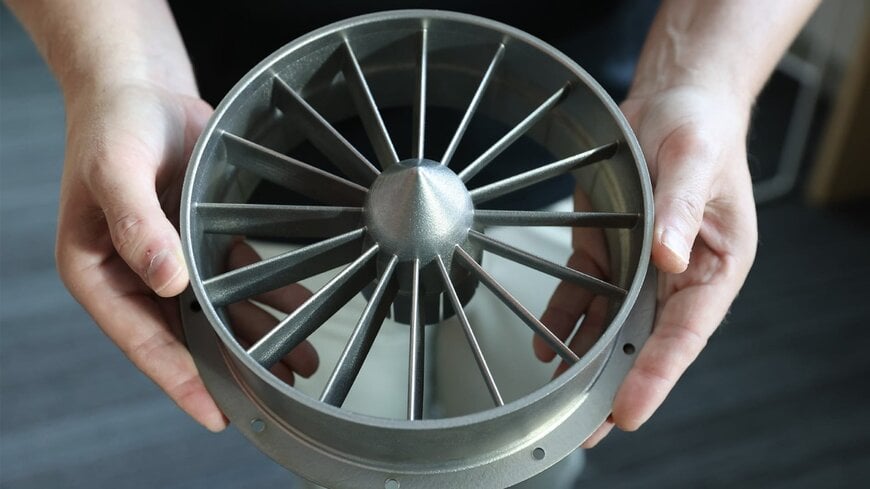
Pratt & Whitney, an RTX business, is developing the Valox family of lightweight aircraft engines using digital engineering and additive manufacturing technologies. Unlike traditional fighter jet engines that require multi-year development cycles and operate for decades, the Valox propulsion systems are engineered for rapid fielding and platforms with short operational lifespans, such as small munitions and uncrewed aircraft.
Thrust Capabilities and Operational Applications
The Valox engine family—named after the Latin root velox (swift) and the Greek-derived ox (sharp)—is designed to address a propulsion gap in the small engine segment. The engines deliver between 500 and 1,800 pounds of thrust and are adaptable across multiple airframes, ranging from small munitions to large uncrewed aircraft. Designed to advance from a clean-sheet concept to production within months, the simplified engine architectures support scalable manufacturing for effectors and autonomous collaborative platforms—uncrewed aircraft that operate in large numbers alongside manned fighters to extend sensing and communications, overwhelm adversaries, and reduce pilot risk.
Additive Manufacturing and Hardware Integration
At its additive manufacturing facility in East Hartford, Connecticut, Pratt & Whitney utilizes laser powder bed fusion to build engine components layer by layer from metallic powder. This process reduces part production timelines from over a year using traditional manufacturing to less than a week, while allowing validated digital build files to be distributed across suppliers for parallel production.
Across the Valox portfolio, engineers combine conventionally manufactured components with additively printed parts in both the hot and cold sections to integrate complex features and improve performance. The company recently completed demonstration testing on a TJ150 engine—an engine roughly the size of a standard computer keyboard designed for missions lasting 15 minutes or less, which powers systems such as Raytheon's MALD decoy—comprising nearly 60% additively manufactured parts by volume.
Digital Thread and Cross-Company Collaboration
Development relies on Pratt & Whitney's collaborative digital thread, which links the company, customers, and suppliers to a shared set of authoritative data. When customer requirements change, updates propagate through the digital thread in seconds to model impacts on performance, testing, cost, and qualification, allowing teams to run simulations and execute processes in parallel rather than in series.
Representing Pratt & Whitney's eighth digital program, the Valox family draws on a century of historical engine data to validate its digital models, alongside Raytheon's expertise in model-based systems engineering to integrate propulsion systems into Raytheon effectors.
Edited by Romila DSilva, Induportals Editor, with AI assistance.
www.rtx.com
