
www.aero-defence.tech
14
'25
Written on Modified on
Advancements in Unmanned Systems: Where Machines Take the Wheel—And the Wings
K.A. Gerardino explores how unmanned systems are transforming industries, defense, and humanitarian missions with advanced AI, sensors, and autonomous capabilities.
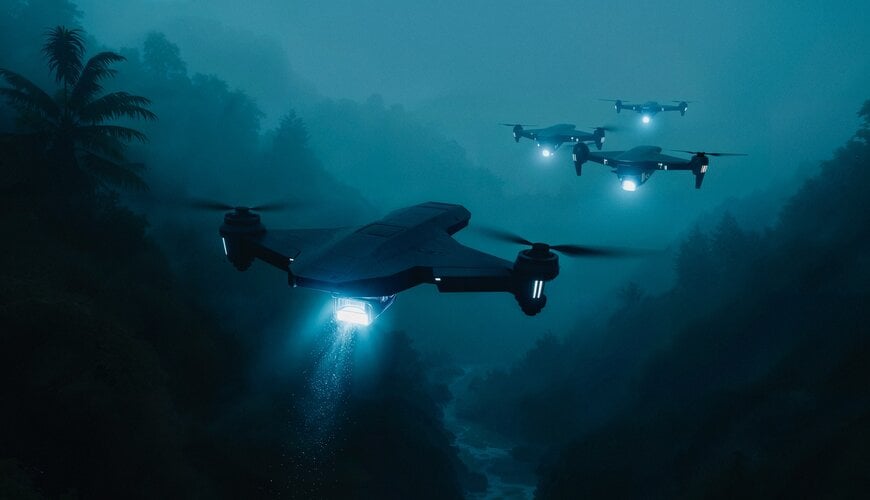
Unmanned systems have emerged as one of the most dynamic frontiers in modern technology, transforming industries, defense strategies, and humanitarian operations alike. Encompassing platforms that operate without direct human control—from aerial drones to autonomous ground vehicles—these systems combine advanced sensors, artificial intelligence, and robust communication networks to execute complex tasks with remarkable speed and precision.
Driven by the need for greater efficiency, safety, and data-driven decision-making, unmanned systems are now deployed in environments too dangerous, remote, or resource-intensive for humans. They conduct search-and-rescue missions in disaster zones, patrol borders, map inaccessible terrains, monitor critical infrastructure, and deliver supplies across challenging landscapes.
What was once a niche, experimental technology is now a multi-sector, multi-domain capability with both strategic and commercial significance. From defense departments investing in ISR (Intelligence, Surveillance, and Reconnaissance) platforms to agriculture companies deploying autonomous drones for precision spraying, the unmanned revolution is reshaping how we work, defend, and respond to crises.
The Road Ahead: Unmanned Systems Market Forecast
The global unmanned systems market is projected to reach US$48.31 billion by 2030, growing at a compound annual growth rate (CAGR) of 10.5% between 2025 and 2030, according to a report by Grand View Research. This momentum reflects a convergence of factors: not only rising defense sector demand, but also widespread commercial adoption across sectors such as logistics, infrastructure inspection, environmental monitoring, and precision agriculture. What was once a niche, military-centric industry is now a cornerstone of modern automation, bridging the gap between national security priorities and civilian innovation.
Geopolitical drivers are playing a significant role in this expansion. Rising tensions in strategic regions, from Eastern Europe to the Indo-Pacific, have prompted governments to fast-track investments in autonomous platforms capable of supporting intelligence, surveillance, and reconnaissance (ISR) missions. The ability to deploy unmanned assets for persistent monitoring, rapid response, and precision targeting is becoming indispensable for defense planners. At the same time, climate change-related disasters and humanitarian crises have underscored the value of unmanned aerial vehicles (UAVs) and ground robots in search-and-rescue operations, real-time mapping, and aid delivery.
On the commercial side, adoption is being fueled by the drive to reduce operational costs, improve safety, and increase productivity. In logistics, for example, last-mile delivery drones are shortening fulfillment times while lowering carbon footprints. In energy and infrastructure, unmanned inspection systems are enabling safer, faster evaluations of power lines, wind farms, bridges, and pipelines—often eliminating the need for hazardous human intervention. Agriculture is undergoing its own unmanned revolution, with precision spraying drones, automated soil analysis, and AI-driven crop monitoring boosting yields while minimizing chemical use.
Regional growth patterns further illustrate the global nature of this market shift. The Asia-Pacific region is expected to post some of the fastest growth rates, driven by aggressive military modernization programs, the rollout of urban air mobility (UAM) initiatives, and the adoption of digital agriculture technologies to meet rising food security demands. Countries like China, Japan, and South Korea are scaling their domestic manufacturing capabilities while investing in AI, machine vision, and robotics research. Meanwhile, North America maintains a lead in core R&D and system integration, particularly in areas like swarm coordination algorithms, multi-domain operational frameworks, and cybersecurity for autonomous platforms. Europe continues to push boundaries in regulatory frameworks, safety standards, and advanced manufacturing for specialized unmanned applications, such as offshore wind farm maintenance and autonomous maritime operations.
Beyond geographic dynamics, technological capability is accelerating faster than many market forecasts anticipate. Advances in AI-driven autonomy are enabling unmanned platforms to make complex, real-time decisions with minimal human oversight. Improvements in battery energy density, hydrogen fuel cells, and hybrid propulsion systems are extending mission endurance and payload capacity, opening opportunities in heavy-lift logistics, long-range maritime surveillance, and high-altitude environmental monitoring. Meanwhile, swarm-enabled operations—where multiple UAVs or unmanned ground vehicles (UGVs) collaborate autonomously—are moving from the research stage into real-world trials in both military and industrial contexts.
With market momentum building and innovation cycles shortening, the industry stands at a pivotal point. The coming years will likely see an intensified race between nations, corporations, and startups to secure technological leadership, intellectual property, and market share. The resulting breakthroughs will not only transform the way we move goods, monitor environments, and defend borders, but will also redefine the very boundaries of human capability in the age of autonomous operations.
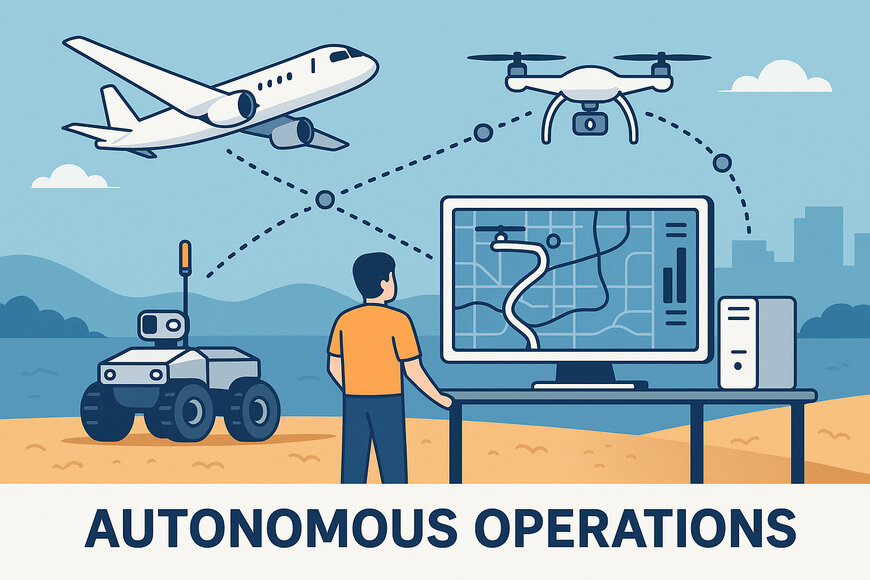
The sections that follow will explore these developments in greater detail—covering UAVs, UGVs, drones, ground robots, and cross-domain autonomous systems—and examine how each is pushing unmanned technology into new frontiers of performance, safety, and operational value.
Breakthroughs Driving the Next Generation of Unmanned Systems
The unmanned systems sector is entering a transformative phase where technological maturity, operational demand, and cross-domain integration are converging to reshape what autonomous platforms can achieve. Once primarily confined to military use, unmanned systems—ranging from nimble micro-drones to rugged ground robots—are now making rapid inroads into civilian industries, disaster response, environmental monitoring, and commercial logistics. This acceleration is fueled by powerful advances in artificial intelligence, sensor fusion, real-time data processing, and machine learning-driven autonomy, enabling systems to operate in increasingly complex and unpredictable environments with minimal human oversight.
In the air, aerial platforms are evolving far beyond their early reconnaissance roles. Today’s UAVs are becoming smarter, more versatile, and more autonomous, expanding their mission profiles from precision agriculture and infrastructure inspection to wildfire suppression, cargo delivery, and deep reconnaissance in contested environments. Many of these platforms now incorporate swarm intelligence, enabling fleets of drones to coordinate without centralized control, while new propulsion systems extend endurance and payload capacity to unprecedented levels.
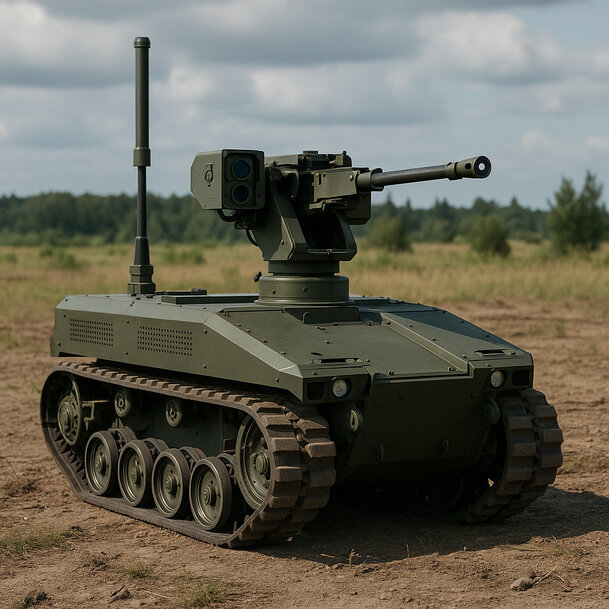
On the ground, UGVs and robotic platforms are being reimagined as highly adaptable, modular systems capable of supporting multi-mission roles in both civilian and defense contexts. They are built to withstand harsh conditions—from desert heat to arctic cold—and can be reconfigured on the fly for logistics support, combat operations, or hazardous material handling. Military theaters are proving to be rapid innovation labs, where frontline feedback drives iterative upgrades and mission-specific customizations at record speed.
Perhaps most transformative is the rise of integrated autonomy, where UAVs and UGVs operate in synchronized, cross-domain teams. This collaboration unlocks new capabilities—such as using ground robots as mobile charging stations for aerial drones, or pairing UAV-based mapping with UGV-based terrain navigation in disaster response scenarios. Such synergy not only increases operational efficiency but also allows for complex missions—spanning inspection, rescue, and surveillance—to be conducted with greater safety and precision.
These converging trends signal a pivotal moment for the industry. With breakthroughs in autonomy, adaptability, and coordination, unmanned systems are stepping into roles once considered beyond reach. The following sections delve into the latest innovations shaping UAVs, UGVs, drones, ground robots, and integrated autonomous operations—revealing how each frontier is redefining the capabilities of unmanned technology and expanding the boundaries of what’s possible.
UAVs (Unmanned Aerial Vehicles) & Drones
- Swarm Intelligence & Decentralized Coordination: Advances in AI-powered swarms allow drones to coordinate autonomously without centralized control—enabling applications from meteorology to agriculture. In Hungary, researchers demonstrated a swarm of 100 drones inspired by animal behavior algorithms, with ambitions to scale up to 5,000 units.
- Beyond Visual Line of Sight (BVLOS) & 5G/Satellite Connectivity: UAVs are achieving greater autonomy using AI for real-time decision-making, GPS-denied navigation, and robust 5G or satellite communication—supporting BVLOS missions and multi-UAV coordination.
- Drone-in-a-Box Systems: Fully automated docking stations streamline drone operations in sectors such as mining, security, and port surveillance. For example, RocketDNA’s docked drones have logged thousands of autonomous flights, carrying out data collection and inspections with minimal human intervention.
- Hybrid VTOL UAVs with Lethal Capability: India’s indigenous Rudrastra UAV is a hybrid VTOL platform capable of penetrating deep into enemy territory (up to 170 km), loitering, and striking with precision payloads—while operating autonomously.
- Wildfire Suppression & Heavy-Lift Applications: Ultra-heavy-lift drones, guided by AI and swarm algorithms, are being developed to combat wildfires by dropping water or fire retardant in hazardous conditions.
- Military-Grade Autonomous Flight: Joby Aviation, in partnership with L3Harris, is developing optionally piloted VTOL drones with gas-turbine hybrids for extended hovering and resilience against electronic warfare—serving both civilian and defense sectors.
- Air–Ground Collaborative Inspection Systems: A tethered “marsupial” system—where a UAV is powered via tether from a UGV—enables prolonged inspections in GNSS-denied environments using LiDAR localization and ROS-based coordination.
UGVs (Unmanned Ground Vehicles) & Ground Robots
- Modular & Multi-Mission Platforms: Estonia’s Milrem THeMIS UGV—used by NATO allies—supports logistics, ISR, combat, and medical evacuation through its modular payload architecture.
- Flamethrower-Equipped UGV: Ukraine’s “Krampus”: Recently approved by Ukraine’s Defense Ministry, Krampus is a tracked UGV armed with thermobaric rocket-propelled munitions, designed for long-duration missions in harsh terrain with jam-resistant controls.
- Lego-Style Field Adaptation: Frontline units in Ukraine are customizing UGVs in real time—adding capsules, weapons, or sensors to base platforms like the D-21 or THeMIS—allowing rapid mission-specific reconfiguration.
- Operational Feedback Driving Innovation: Ground robots are often modified mid-operation to improve performance. While they excel at transport, firepower, and evacuation, scouting effectiveness can be reduced in dense vegetation or muddy terrain—highlighting the importance of iterative, operator-led design changes.
UAV–UGV Collaboration & Autonomous Operations
- Energy-Aware Cooperative Planning: In disaster response, UAVs and UGVs can operate as paired units, with UGVs acting as mobile charging stations to extend UAV flight time—optimized through deep reinforcement learning for efficient route planning.
- Unified Robotic Protocol with Blockchain Security: Communication protocols like URP enable real-time interoperability between ROS (ground) and MAVLink (aerial) platforms, with blockchain providing secure, decentralized task-sharing and payload management.
- Air–Ground Dual Collaboration in Emergencies: Combining UAV mapping with UGV navigation offers comprehensive situational awareness in fire and rescue missions, enabling coordinated, multi-layered responses.
- Comprehensive Reviews of Joint Systems: Research highlights that integrating UAVs and UGVs improves operational capability across fields such as environmental monitoring and precision agriculture—though challenges remain in maintaining connectivity and handling unpredictable terrain.
Regulatory Landscape & Policy Developments
As unmanned systems become more capable and widespread, the regulatory environment is evolving rapidly to ensure safety, security, and ethical compliance. Governments and international agencies are now creating frameworks that balance innovation with oversight.
1. Beyond Visual Line of Sight (BVLOS) Regulations
Operating UAVs beyond the operator’s direct line of sight is essential for applications like long-range inspections, delivery services, and border surveillance. The U.S. Federal Aviation Administration (FAA), the European Union Aviation Safety Agency (EASA), and the Civil Aviation Administration of China (CAAC) are developing clear pathways for BVLOS approvals. This includes requirements for detect-and-avoid systems, remote pilot certifications, and robust communication links.
2. Export Controls & Dual-Use Technology Restrictions
Military-grade drones and autonomous systems are often classified as “dual-use” technologies—capable of both civilian and military applications. Countries such as the U.S., Israel, and China maintain export restrictions to prevent misuse. These measures impact global supply chains and require manufacturers to ensure compliance with the Wassenaar Arrangement and other arms control agreements.
3. Cybersecurity & Data Privacy Laws
With unmanned platforms collecting vast amounts of visual and sensor data, cybersecurity has become a central concern. New regulations in the EU (GDPR) and in Asia-Pacific markets emphasize secure storage, encrypted communication channels, and local data residency for sensitive applications like critical infrastructure monitoring.
4. Urban Air Mobility (UAM) and Airspace Integration
Regulatory bodies are now preparing for urban drone operations, including passenger eVTOL aircraft and high-density delivery drones. This requires integrating unmanned aircraft into controlled airspace, developing Unmanned Traffic Management (UTM) systems, and setting noise/emission standards to maintain public acceptance.
5. International Humanitarian Law & Autonomous Weapons
Debates are ongoing at the United Nations Convention on Certain Conventional Weapons (CCW) about the regulation of Lethal Autonomous Weapons Systems (LAWS). While no global ban exists, some countries advocate for binding treaties to ensure human oversight remains in “meaningful control” of lethal decision-making.
The pace of regulatory evolution will significantly influence the adoption speed of unmanned systems. Markets with clear, flexible rules are likely to see faster commercial deployment than those with fragmented or overly restrictive frameworks.
Key Industry Players & Competitive Landscape
The unmanned systems sector is highly competitive, with a mix of established defense contractors, specialized robotics companies, and agile startups driving innovation.
1. UAVs & Drones
As unmanned systems become more capable and widespread, the regulatory environment is evolving rapidly to ensure safety, security, and ethical compliance. Governments and international agencies are now creating frameworks that balance innovation with oversight.
1. Beyond Visual Line of Sight (BVLOS) Regulations
Operating UAVs beyond the operator’s direct line of sight is essential for applications like long-range inspections, delivery services, and border surveillance. The U.S. Federal Aviation Administration (FAA), the European Union Aviation Safety Agency (EASA), and the Civil Aviation Administration of China (CAAC) are developing clear pathways for BVLOS approvals. This includes requirements for detect-and-avoid systems, remote pilot certifications, and robust communication links.
2. Export Controls & Dual-Use Technology Restrictions
Military-grade drones and autonomous systems are often classified as “dual-use” technologies—capable of both civilian and military applications. Countries such as the U.S., Israel, and China maintain export restrictions to prevent misuse. These measures impact global supply chains and require manufacturers to ensure compliance with the Wassenaar Arrangement and other arms control agreements.
3. Cybersecurity & Data Privacy Laws
With unmanned platforms collecting vast amounts of visual and sensor data, cybersecurity has become a central concern. New regulations in the EU (GDPR) and in Asia-Pacific markets emphasize secure storage, encrypted communication channels, and local data residency for sensitive applications like critical infrastructure monitoring.
4. Urban Air Mobility (UAM) and Airspace Integration
Regulatory bodies are now preparing for urban drone operations, including passenger eVTOL aircraft and high-density delivery drones. This requires integrating unmanned aircraft into controlled airspace, developing Unmanned Traffic Management (UTM) systems, and setting noise/emission standards to maintain public acceptance.
5. International Humanitarian Law & Autonomous Weapons
Debates are ongoing at the United Nations Convention on Certain Conventional Weapons (CCW) about the regulation of Lethal Autonomous Weapons Systems (LAWS). While no global ban exists, some countries advocate for binding treaties to ensure human oversight remains in “meaningful control” of lethal decision-making.
The pace of regulatory evolution will significantly influence the adoption speed of unmanned systems. Markets with clear, flexible rules are likely to see faster commercial deployment than those with fragmented or overly restrictive frameworks.
Key Industry Players & Competitive Landscape
The unmanned systems sector is highly competitive, with a mix of established defense contractors, specialized robotics companies, and agile startups driving innovation.
1. UAVs & Drones
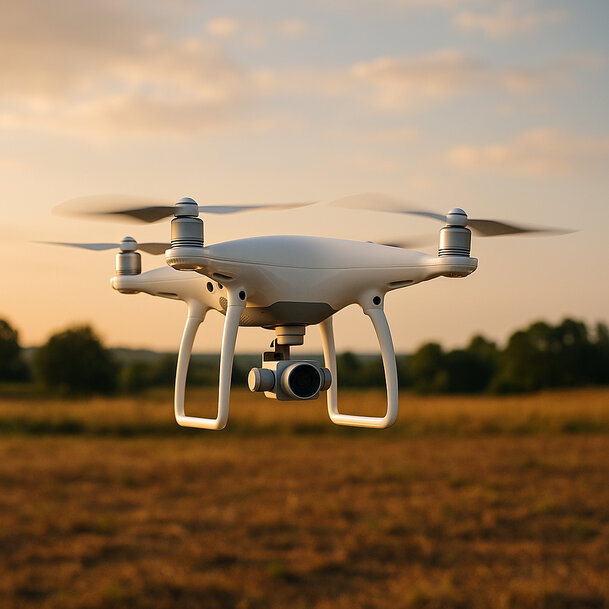
- DJI (China) – The world’s largest commercial drone manufacturer, with dominance in consumer and industrial drone markets. Their Matrice and Mavic Enterprise series lead in inspection and mapping applications.
- Skydio (USA) – Known for AI-powered autonomous drones, particularly in infrastructure inspection and public safety.
- Parrot (France) – Offers both consumer and enterprise drones, with a strong foothold in agricultural and surveying applications.
2. UGVs & Ground Robots
- Milrem Robotics (Estonia) – Creator of the THeMIS UGV platform, widely adopted by NATO forces for multi-role missions.
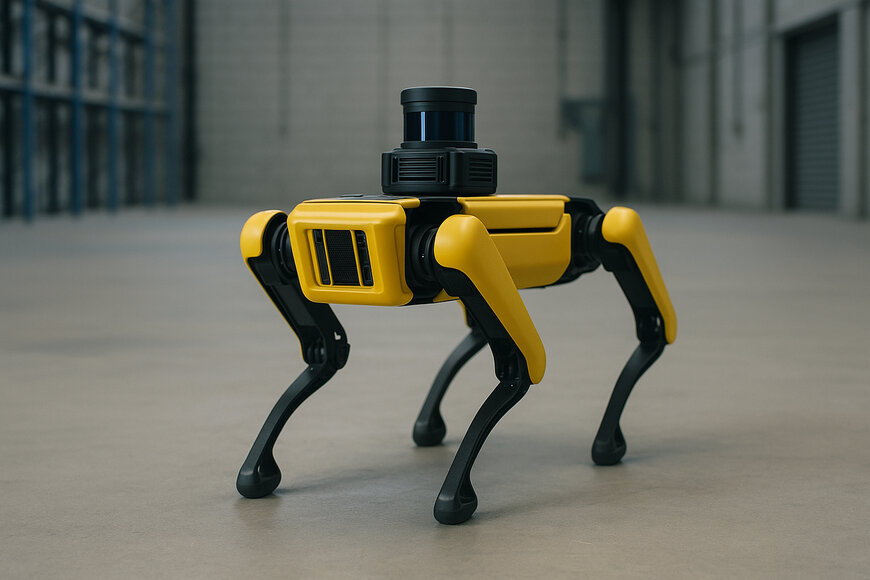
- Boston Dynamics (USA) – Developer of Spot and Stretch robots for industrial, inspection, and logistics tasks.
- Clearpath Robotics (Canada) – Focused on autonomous mobile robots for industrial automation and research.
3. Defense-Focused Leaders
- Anduril Industries (USA) – Specializes in autonomous defense systems, including counter-drone platforms and surveillance towers.
- AeroVironment (USA) – Produces UAVs like Switchblade loitering munitions and Raven ISR drones.
- Elbit Systems (Israel) – Supplies a range of unmanned aerial and ground platforms for defense clients worldwide.
4. Emerging Startups & Niche Innovators
- Volocopter (Germany) – Developing eVTOL passenger drones for urban mobility.
- Percepto (Israel) – Leader in drone-in-a-box solutions for industrial site inspections.
- Roboteam (Israel) – Produces tactical UGVs for defense and law enforcement.
The competitive advantage in this space often comes from AI software capabilities, modular hardware designs, and ecosystem integration—rather than hardware alone. Partnerships between robotics firms and telecom providers (for 5G integration) are also shaping future market leaders.
Sector-Specific Use Cases
While unmanned systems are versatile, their most transformative impact is being felt in specific industries where autonomy solves long-standing operational challenges.
1. Energy & Utilities
UAVs are revolutionizing asset inspection for wind turbines, power lines, and offshore oil platforms. Equipped with thermal imaging and LiDAR, they reduce the need for hazardous manual climbs and enable predictive maintenance scheduling. UGVs complement these operations by inspecting substation equipment and underground pipelines.
2. Agriculture
In precision agriculture, drones conduct crop health mapping, targeted pesticide spraying, and irrigation monitoring. UGVs automate harvesting, soil sampling, and autonomous planting—reducing labor requirements and improving yield efficiency. Companies like DJI Agriculture and XAG are leading in large-scale drone-based spraying systems.
3. Logistics & Last-Mile Delivery
Autonomous delivery drones and ground robots are reshaping e-commerce logistics. Firms like Zipline and Wing deliver medical supplies and parcels in both urban and remote regions. Ground robots, such as Starship Technologies’ small delivery bots, are increasingly common on university campuses and in residential neighborhoods.
4. Mining & Heavy Industry
UGVs are used for autonomous haulage in mines, reducing human exposure to dangerous underground conditions. UAVs perform volumetric analysis of stockpiles, map excavation sites, and monitor environmental compliance.
5. Emergency Response & Disaster Relief
In wildfire zones, drones with thermal sensors identify hotspots invisible to the naked eye. UGVs transport medical supplies through rubble-strewn environments or operate as mobile power stations for UAV fleets. Integrated air–ground teams improve coordination during floods, earthquakes, and hazardous material incidents.
Challenges and Future Outlook
While the unmanned systems industry is advancing at an unprecedented pace, its path to mass adoption across all sectors is not without obstacles. One of the most persistent challenges lies in battery life and endurance—current energy density limitations significantly constrain flight times and mission durations, particularly for heavy-lift UAVs that must carry large payloads. Equally pressing is communication reliability; autonomous platforms remain susceptible to signal interference, jamming, and even cyberattacks, all of which can compromise mission success and safety.
Another hurdle is integration complexity. Coordinating multiple platforms across domains—be it aerial UAVs, ground-based UGVs, or maritime drones—requires robust, interoperable software standards and seamless data fusion to ensure unified operations. The sector also faces ethical and legal concerns, with debates intensifying over the use of autonomous weapons and the privacy implications of persistent aerial surveillance. Finally, public acceptance remains a delicate factor: concerns about noise, operational safety, and potential job displacement can slow both policy approval and real-world deployment.
Looking ahead, the next decade promises to deliver a wave of transformative breakthroughs. AI-enhanced decision-making will enable real-time autonomous task allocation, predictive maintenance, and adaptive navigation, pushing mission efficiency to new heights. Next-generation power sources—from hydrogen fuel cells to advanced batteries and hybrid propulsion—are expected to extend operational ranges and reduce downtime. The rise of swarm-enabled logistics will see coordinated fleets of UAVs and UGVs working in unison to execute complex delivery and inspection tasks in real time. Cities will also move closer to urban integration, with eVTOL aircraft and delivery drones sharing regulated airspace as part of fully operational urban air mobility networks. Meanwhile, cross-domain autonomy will emerge, allowing unified command systems to seamlessly manage air, ground, and maritime assets under a single operational framework.
Closing
In sum, the future of unmanned systems is defined by both remarkable promise and formidable challenges. Overcoming technical, regulatory, and societal barriers will be essential for unlocking their full potential. As advancements in AI, power systems, and integrated operations converge, these platforms will not only reshape industries but also redefine the boundaries of human capability. The organizations that can innovate while building trust—balancing performance with safety, and efficiency with ethics—will lead the charge in bringing this vision to life. The race is no longer about whether unmanned systems will dominate, but about how quickly, responsibly, and inclusively they will transform the way the world moves, works, and connects.
Sector-Specific Use Cases
While unmanned systems are versatile, their most transformative impact is being felt in specific industries where autonomy solves long-standing operational challenges.
1. Energy & Utilities
UAVs are revolutionizing asset inspection for wind turbines, power lines, and offshore oil platforms. Equipped with thermal imaging and LiDAR, they reduce the need for hazardous manual climbs and enable predictive maintenance scheduling. UGVs complement these operations by inspecting substation equipment and underground pipelines.
2. Agriculture
In precision agriculture, drones conduct crop health mapping, targeted pesticide spraying, and irrigation monitoring. UGVs automate harvesting, soil sampling, and autonomous planting—reducing labor requirements and improving yield efficiency. Companies like DJI Agriculture and XAG are leading in large-scale drone-based spraying systems.
3. Logistics & Last-Mile Delivery
Autonomous delivery drones and ground robots are reshaping e-commerce logistics. Firms like Zipline and Wing deliver medical supplies and parcels in both urban and remote regions. Ground robots, such as Starship Technologies’ small delivery bots, are increasingly common on university campuses and in residential neighborhoods.
4. Mining & Heavy Industry
UGVs are used for autonomous haulage in mines, reducing human exposure to dangerous underground conditions. UAVs perform volumetric analysis of stockpiles, map excavation sites, and monitor environmental compliance.
5. Emergency Response & Disaster Relief
In wildfire zones, drones with thermal sensors identify hotspots invisible to the naked eye. UGVs transport medical supplies through rubble-strewn environments or operate as mobile power stations for UAV fleets. Integrated air–ground teams improve coordination during floods, earthquakes, and hazardous material incidents.
Challenges and Future Outlook
While the unmanned systems industry is advancing at an unprecedented pace, its path to mass adoption across all sectors is not without obstacles. One of the most persistent challenges lies in battery life and endurance—current energy density limitations significantly constrain flight times and mission durations, particularly for heavy-lift UAVs that must carry large payloads. Equally pressing is communication reliability; autonomous platforms remain susceptible to signal interference, jamming, and even cyberattacks, all of which can compromise mission success and safety.
Another hurdle is integration complexity. Coordinating multiple platforms across domains—be it aerial UAVs, ground-based UGVs, or maritime drones—requires robust, interoperable software standards and seamless data fusion to ensure unified operations. The sector also faces ethical and legal concerns, with debates intensifying over the use of autonomous weapons and the privacy implications of persistent aerial surveillance. Finally, public acceptance remains a delicate factor: concerns about noise, operational safety, and potential job displacement can slow both policy approval and real-world deployment.
Looking ahead, the next decade promises to deliver a wave of transformative breakthroughs. AI-enhanced decision-making will enable real-time autonomous task allocation, predictive maintenance, and adaptive navigation, pushing mission efficiency to new heights. Next-generation power sources—from hydrogen fuel cells to advanced batteries and hybrid propulsion—are expected to extend operational ranges and reduce downtime. The rise of swarm-enabled logistics will see coordinated fleets of UAVs and UGVs working in unison to execute complex delivery and inspection tasks in real time. Cities will also move closer to urban integration, with eVTOL aircraft and delivery drones sharing regulated airspace as part of fully operational urban air mobility networks. Meanwhile, cross-domain autonomy will emerge, allowing unified command systems to seamlessly manage air, ground, and maritime assets under a single operational framework.
Closing
In sum, the future of unmanned systems is defined by both remarkable promise and formidable challenges. Overcoming technical, regulatory, and societal barriers will be essential for unlocking their full potential. As advancements in AI, power systems, and integrated operations converge, these platforms will not only reshape industries but also redefine the boundaries of human capability. The organizations that can innovate while building trust—balancing performance with safety, and efficiency with ethics—will lead the charge in bringing this vision to life. The race is no longer about whether unmanned systems will dominate, but about how quickly, responsibly, and inclusively they will transform the way the world moves, works, and connects.
