
www.aero-defence.tech
15
'25
Written on Modified on
Integrated Command and Control for Air Defense
Northrop Grumman advances U.S. Army integrated air and missile defense through a networked command and control system validated during operational flight testing.
www.northropgrumman.com
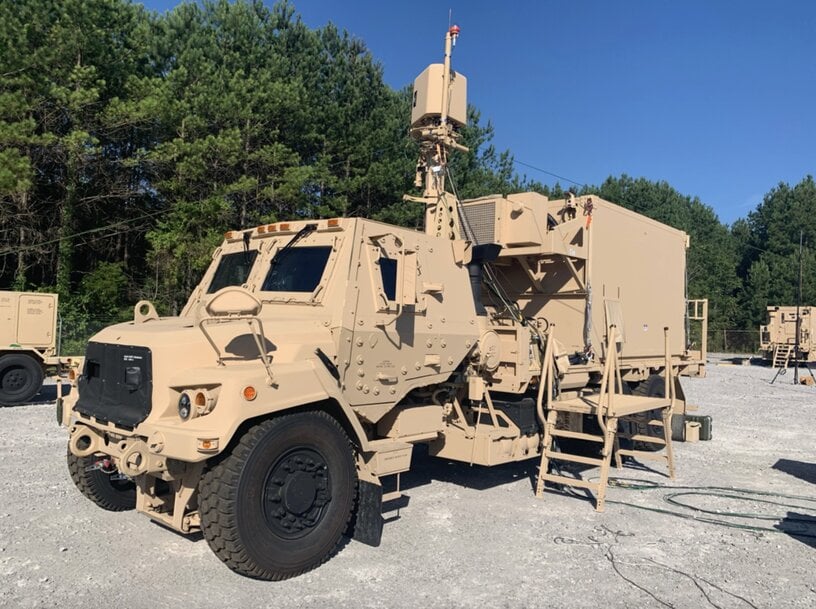
In October, the U.S. Army validated a network-enabled command and control architecture during a flight test at White Sands Missile Range, assessing its operational effectiveness for integrated air and missile defense in realistic tactical conditions.
Operational validation in a tactical environment
The flight test was conducted as part of Follow-on Operational Test and Evaluation (FOT&E), a formal phase used by the U.S. Army to assess whether systems meet operational requirements before broader fielding. During the event, Army Air Defenders operated the Integrated Battle Command System (IBCS), developed by Northrop Grumman Corporation, in a scenario designed to replicate real-world air and missile defense operations.
The test involved the detection, tracking, and engagement of two surrogate cruise missile targets. Multiple interceptors were employed, demonstrating the system’s ability to coordinate engagements across distributed sensors and shooters rather than relying on a single, platform-centric fire control chain.
Sensor fusion and joint interoperability
A central objective of the FOT&E event was to assess how effectively IBCS fuses data from disparate sensors into a single, fire-control-quality operational picture. During the test, the system integrated inputs from multiple sources and enabled coordinated engagements, reducing reliance on individual system limitations such as radar field of view or interceptor range.
The event also included participation from U.S. Navy assets, highlighting the system’s capacity to support joint operations. This cross-service integration is enabled by IBCS’s networked architecture, which allows systems from different domains and services to share targeting data in near real time.
Modular architecture and adaptability
IBCS is built on a modular open systems approach, a design principle intended to support long-term adaptability. Under FOT&E, the system is being evaluated not only against current threat profiles but also for its ability to incorporate new sensors, effectors, and software capabilities as requirements evolve.
This architecture supports incremental upgrades without requiring full system replacement, a key consideration for integrated air and missile defense systems facing rapidly changing threat technologies.
Manufacturing and production scale
Northrop Grumman is manufacturing IBCS under a full-rate production contract at a newly established manufacturing facility in Madison, Alabama. The facility is designed to scale production capacity and has the stated capability to double manufacturing output in the Huntsville area, supporting anticipated demand for integrated fires and command and control systems in the U.S. and allied markets.
Program status and development outlook
IBCS is a program of record for the U.S. Army’s integrated air and missile defense modernization effort. The results of the FOT&E activities, including the October flight test, will inform future development decisions and fielding schedules.
www.northropgrumman.com
