
www.aero-defence.tech
15
'26
Written on Modified on
RTX supplies Blue Canyon satellite platform for NASA Pandora
RTX delivers a Blue Canyon Saturn-class minisatellite for NASA’s Pandora mission, supporting high-precision exoplanet atmosphere observations through stable pointing and integrated spacecraft services.
www.rtx.com
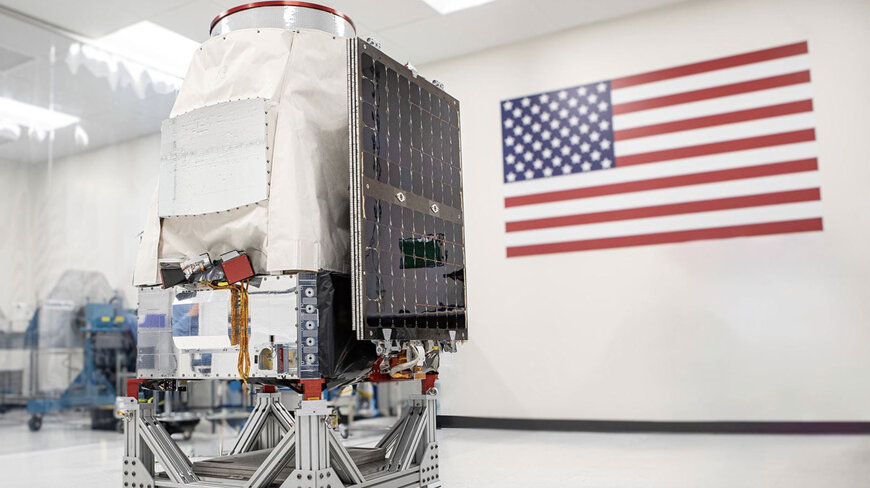
Pandora mission to utilize Saturn-200 minisatellite platform for exoplanet long observations
RTX has provided a Saturn-200 minisatellite developed by its subsidiary Blue Canyon Technologies to support NASA’s Pandora space science mission, which focuses on studying the atmospheres of planets beyond the solar system.
The spacecraft was successfully launched this week as part of the Pandora mission, which is designed to observe exoplanetary atmospheres and the activity of their host stars. Pandora will examine at least 20 exoplanets by monitoring planetary transits, during which a planet passes in front of its star and alters the starlight reaching the telescope.
Studying exoplanet atmospheres through transit observations
During transit events, portions of starlight are absorbed or scattered by a planet’s atmosphere. By analysing these spectral changes, scientists can infer atmospheric composition and structure. Pandora’s observations are intended to distinguish between planetary signals and stellar variability, a key challenge in exoplanet research.
The mission will focus in particular on identifying planets with atmospheres dominated by hydrogen or water, providing data relevant to understanding planetary formation and potential habitability.
Saturn-class platform and spacecraft integration
The Pandora spacecraft is based on Blue Canyon’s Saturn-200 platform, a minisatellite designed for missions requiring high pointing accuracy and stability. According to the manufacturer, the mission integrates the largest telescope payload yet flown on a Blue Canyon spacecraft, placing increased demands on attitude control and structural performance.
The satellite platform incorporates advanced guidance, navigation and control capabilities to maintain the precision required for long-duration astronomical observations. In addition to supplying the spacecraft bus, Blue Canyon supported launch vehicle integration and post-launch commissioning activities.
Mission management and collaboration
Pandora is a program of NASA’s Science Mission Directorate, led by the NASA Goddard Space Flight Center and managed by Lawrence Livermore National Laboratory. The mission brings together government research institutions and commercial space suppliers to deliver a dedicated astrophysics observatory on a small satellite platform.
Expanding small satellite flight heritage
With the launch of Pandora, Blue Canyon Technologies has now supported the deployment of 87 spacecraft. The growing flight heritage reflects increasing use of small satellite platforms for scientific missions that require precise pointing, thermal stability and long operational lifetimes.
The Pandora mission demonstrates how compact, high-performance satellite buses can support complex space science objectives traditionally associated with larger spacecraft, broadening access to astrophysics and planetary science missions.
www.rtx.com
RTX has provided a Saturn-200 minisatellite developed by its subsidiary Blue Canyon Technologies to support NASA’s Pandora space science mission, which focuses on studying the atmospheres of planets beyond the solar system.
The spacecraft was successfully launched this week as part of the Pandora mission, which is designed to observe exoplanetary atmospheres and the activity of their host stars. Pandora will examine at least 20 exoplanets by monitoring planetary transits, during which a planet passes in front of its star and alters the starlight reaching the telescope.
Studying exoplanet atmospheres through transit observations
During transit events, portions of starlight are absorbed or scattered by a planet’s atmosphere. By analysing these spectral changes, scientists can infer atmospheric composition and structure. Pandora’s observations are intended to distinguish between planetary signals and stellar variability, a key challenge in exoplanet research.
The mission will focus in particular on identifying planets with atmospheres dominated by hydrogen or water, providing data relevant to understanding planetary formation and potential habitability.
Saturn-class platform and spacecraft integration
The Pandora spacecraft is based on Blue Canyon’s Saturn-200 platform, a minisatellite designed for missions requiring high pointing accuracy and stability. According to the manufacturer, the mission integrates the largest telescope payload yet flown on a Blue Canyon spacecraft, placing increased demands on attitude control and structural performance.
The satellite platform incorporates advanced guidance, navigation and control capabilities to maintain the precision required for long-duration astronomical observations. In addition to supplying the spacecraft bus, Blue Canyon supported launch vehicle integration and post-launch commissioning activities.
Mission management and collaboration
Pandora is a program of NASA’s Science Mission Directorate, led by the NASA Goddard Space Flight Center and managed by Lawrence Livermore National Laboratory. The mission brings together government research institutions and commercial space suppliers to deliver a dedicated astrophysics observatory on a small satellite platform.
Expanding small satellite flight heritage
With the launch of Pandora, Blue Canyon Technologies has now supported the deployment of 87 spacecraft. The growing flight heritage reflects increasing use of small satellite platforms for scientific missions that require precise pointing, thermal stability and long operational lifetimes.
The Pandora mission demonstrates how compact, high-performance satellite buses can support complex space science objectives traditionally associated with larger spacecraft, broadening access to astrophysics and planetary science missions.
www.rtx.com
