
www.aero-defence.tech
26
'26
Written on Modified on
MAN Engines and Mavrik Marine Integrate CARB-CHC Compliant Marine Propulsion
MAN Engines and Mavrik Marine collaborate to deploy integrated low-emission propulsion and aftertreatment systems in commercial harbour craft to meet California Air Resources Board standards.
www.man.eu
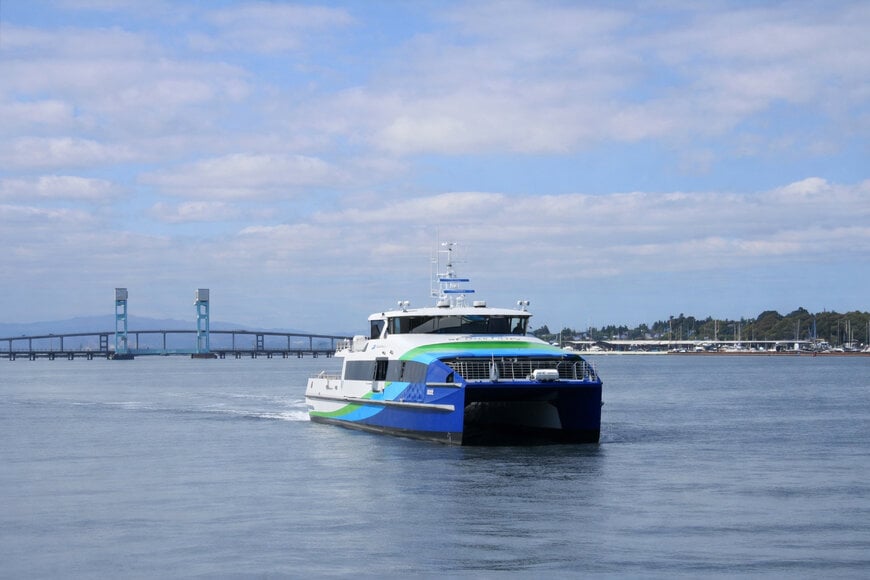
MAN Engines and Mavrik Marine are cooperating to implement fully certified marine propulsion systems that comply with the California Air Resources Board (CARB) Commercial Harbor Craft (CHC) In-Use Performance Standard. The work focuses on integrating factory-matched diesel engines with exhaust aftertreatment into vessels for ferry, research, and passenger service applications, addressing industrial emission control requirements in coastal operations.
Context of the Cooperation
MAN Engines, a marine division of MAN Truck & Bus SE, develops and manufactures high-power internal combustion engines with integrated emission control technology. Mavrik Marine, a U.S. naval architectural and vessel builder, designs and constructs commercial harbour craft. Both companies are addressing regulatory pressures from the updated CARB CHC regulation, which mandates stringent limits on particulate matter (PM) and nitrogen oxides (NOx) for in-use commercial harbour craft operating within California’s regulated waters.
The CARB CHC In-Use Performance Standard requires engines to be equipped at the factory with a diesel particulate filter (DPF) and selective catalytic reduction (SCR) system to receive full certification. This creates a technical challenge that spans engine design, aftertreatment integration, and vessel installation, necessitating cooperation between engine suppliers and ship builders.
Technical Solution and Responsibilities
The core of the technical cooperation is the deployment of MAN’s V12 marine engines based on EPA Tier 4 certified architectures, enhanced with fully integrated aftertreatment systems. The integrated solution combines a DPF to capture PM with an SCR catalyst to reduce NOx via urea-based reductants, achieving emission levels as low as 0.0067 g/kWh PM and approximately 1.8 g/kWh NOx, significantly below other international standards.
MAN Engines is responsible for engine configuration, aftertreatment calibration, and factory certification to the CARB CHC criteria. Mavrik Marine’s role is to accommodate these propulsion systems within vessel designs, including structural mounting, cooling systems, and integration with onboard electrical and control systems. This division of responsibilities allows for predictable performance and compliance at the system level.
Deployment and Implementation
The integrated systems have been deployed on multiple vessels constructed or outfitted by Mavrik Marine and other partners. Notable examples include the U.S. ferry “KARL” and the sister vessel “ZALOPHUS,” each powered by four MAN D2862 LE48B engines rated at 1,066 kW (1,450 hp). These vessels operate in the San Francisco Bay Area and serve as early references for industrial deployments of CARB CHC compliant propulsion.
Implementation phases involve factory engine delivery, hull outfitting with propulsion hardware, and commissioning tests to verify emission performance against CARB procedures. Integration with existing vessel infrastructure includes alignment with shafting systems, fuel supply, cooling circuits, and control networks managed by automation subsystems aboard the craft.
Applications and Use Cases
Target application areas include passenger ferries, research vessels, and commercial passenger craft such as whale-watching ships. The cooperation addresses operational requirements for reduced environmental impact in regulated harbour zones. Integrating emission control into industrial marine propulsion supports compliance with environmental regulations while maintaining power and reliability standards suitable for heavy- and medium-duty vessel operations.
Expected Impact
By coordinating engine manufacture and vessel integration, the cooperation enables measurable reductions in pollutant emissions from harbour craft operating in regulated waters. This supports industry compliance planning and adoption of low-emission marine propulsion systems, with benefits in air quality management and operational predictability under CARB’s regulatory framework.
www.mantruckandbus.com
