
www.aero-defence.tech
02
'26
Written on Modified on
Optical Satellite Link Targets Terabit Data Rates
Safran, CNES, Thales Alenia Space and Hellas Sat agree to develop a geostationary laser communications system with an optical ground station in Cyprus.
www.safran-group.com
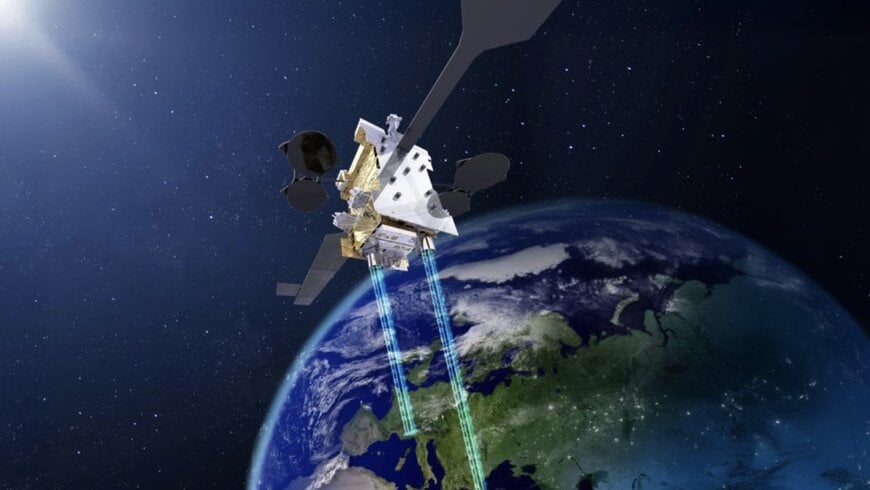
Safran, alongside Hellas Sat, the French Space Agency (CNES) and Thales Alenia Space, has signed a framework cooperation agreement to develop a next-generation free-space optical communications system. The system will be hosted on the future Hellas Sat 5 geostationary telecommunications satellite, with a dedicated optical ground station deployed in Cyprus.
The initiative aims to deliver ultra-high-throughput satellite data transfer services from geostationary orbit, supporting secure and resilient communications for critical governmental and strategic applications.
European Cooperation under France 2030
The project builds on CNES’s SOLiS program, led by Thales Alenia Space as part of the space component of the France 2030 program. Under the agreement, Thales Alenia Space will supply the SOLiS system and the onboard optical payload integrated into Hellas Sat 5.
Safran will provide a prototype commercial optical ground station, referred to as a pilot station, to be installed at Hellas Sat’s teleport in Cyprus (CyOGS). This station will operate in conjunction with CNES’s FROGS optical ground station located at the Côte d’Azur Observatory in France.
The system architecture is designed to ensure interoperability with other optical satellite communications systems currently under development in Europe, supporting future network expansion and cross-system compatibility.
The cooperation agreement was signed during the Battlefield Redefined 2026 Conference in Nicosia, Cyprus, an event co-organized with the European Commission’s DG DEFIS during the Cypriot Presidency of the European Union.
Free-Space Optical Communications from GEO
Free-space optical communications use laser links instead of radio-frequency (RF) signals to transmit data between satellites and ground stations. Laser-based systems offer significantly higher bandwidth and narrower beam divergence, increasing data security and reducing the probability of interception.
The planned system targets data rates on the order of one terabit per second, despite long transmission distances from geostationary orbit and the presence of atmospheric turbulence. Advanced optical terminals and adaptive optics are used to compensate for signal distortions introduced by atmospheric effects.
By operating from geostationary orbit, the system can provide continuous coverage over fixed regions, supporting large-volume, secure data transfer between ground nodes without reliance solely on terrestrial or subsea optical fiber infrastructure. This is increasingly relevant as terrestrial and submarine cables face growing vulnerability to physical disruption.
Strategic Connectivity and Network Resilience
The Hellas Sat 5 program is positioned to enhance secure connectivity for Greece and Cyprus while contributing to broader European digital sovereignty objectives. Optical satellite links from GEO complement terrestrial infrastructure by providing alternative high-capacity routes for intercontinental communications.
Through integration of space-based optical payloads and interoperable ground infrastructure, the initiative supports development of a resilient, high-throughput satellite communications architecture capable of serving governmental, defense and other mission-critical users.
By combining CNES-led optical research, Thales Alenia Space payload development and Safran’s ground station expertise, the partnership advances Europe’s capability in high-data-rate laser communications from geostationary orbit.
www.safran-group.com
