
www.aero-defence.tech
08
'26
Written on Modified on
ECRS Mk1 Airborne Radar Live Operations Testing Phase
HENSOLDT and Indra collaborate to test multi-channel active electronically scanned array radar systems for German and Spanish military aerospace applications.
www.hensoldt.net
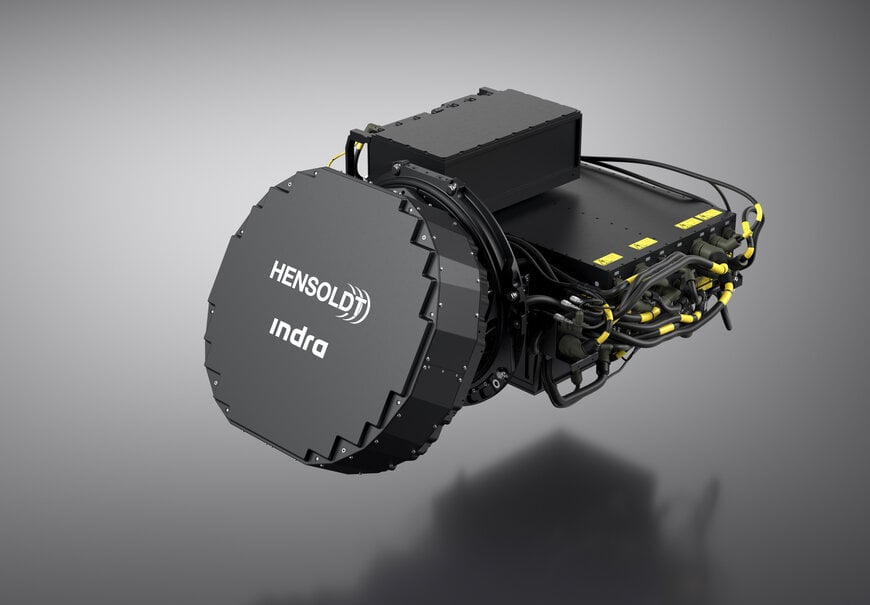
The Eurofighter Common Radar System Mark 1 (ECRS Mk1) consortium partners, primarily HENSOLDT, Indra, and Airbus, are collaborating to test the new radar system in live operations. The system is engineered for deployment in combat aircraft operated by the German and Spanish air forces, addressing military aerospace requirements for upgraded sensor and electronic warfare capabilities.
Cooperative Development Framework
The development program relies on the combined engineering resources of Airbus, Indra, and HENSOLDT. This collaboration coordinates the engineering requirements needed to integrate multi-channel Active Electronically Scanned Array (AESA) technology with high-performance processing hardware. The joint effort is structured to ensure the hardware and software architectures meet the operational parameters established by the participating nations. Following the initial contracts formalized in 2020, the consortium is executing the testing phases required prior to the scheduled final delivery in 2027.
Technical Architecture and Integration
The ECRS Mk1 system operates via an AESA configuration paired with a high-end electronic processor. This hardware architecture supports diverse fighter mission profiles, including Advanced Air-to-Air tracking and High-Resolution Air-to-Ground mapping. The system is also built to process both passive and active electronic warfare protocols. The multi-company collaboration specifically addresses the integration challenges of incorporating these sensor modalities into a single hardware platform capable of interacting with the existing Eurofighter avionics infrastructure.
Live Operations Testing Phase
As the engineering progresses through the 2026 airborne trial timeline, the consortium has initiated testing operations using physical targets. For this phase, the hardware is equipped with the latest software iteration. The system undergoes stimulation via live cooperative targets and targets of opportunity. This methodology allows engineers to analyze the software response in physical flight scenarios and verify the robustness of the system architecture under operational loads. Initial test results indicate stability in the hardware and software subsystems selected by the customer nations during the 2024 technical review.
Strategic Objectives and Industry Statements
Falko Firl, Head of Eurofighter Radar at HENSOLDT, stated that "this major step toward the delivery of ECRS Mk1 to Germany and Spain in 2027 is the result of an uninterrupted commitment of the ECRS Mk1 Industry Partners and a strong support of the German and Spanish Customers to the ECRS Mk1 Programme."
Representing Indra, Eurofighter Programme Director Mónica Pérez Fernández noted that the testing phase "marks a key milestone in equipping the Eurofighter with an AESA radar featuring advanced capabilities that will support the aircraft’s air superiority in the years ahead." The consortium emphasizes that shared engineering processes between European defense contractors streamline system integration and accelerate the deployment of functional military hardware to the respective armed forces.
Edited by an industrial journalist, Lekshman Ramdas, with AI assistance.
www.hensoldt.com
