
www.aero-defence.tech
12
'26
Written on Modified on
FEV Advances Hydrogen Fuel Cell Powertrains for Light Aviation
The innovation service provider is developing weight-optimized system architectures and foil-based bipolar plates to overcome energy density and thermal challenges in sustainable mobility.
www.fev.com
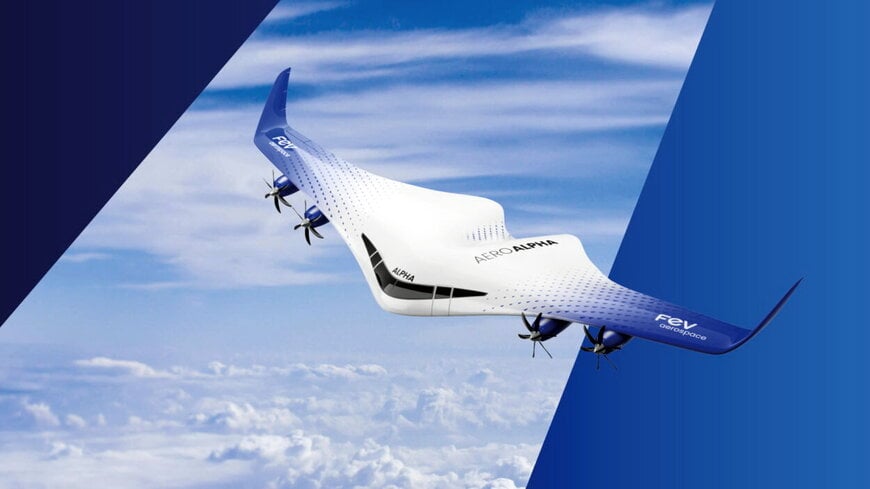
FEV is engineering next-generation fuel cell powertrains specifically designed to meet the rigorous energy density and thermal management constraints of light aircraft and gyrocopters. The technological development targets the specific requirements of the aerospace sector, focusing on reducing component weight and optimizing thermal dissipation to enable emission-free flight.
Aerospace Energy Density and Thermal Architecture Challenges
Implementing conventional, ground-based fuel cell systems into aviation applications presents significant engineering obstacles. A standard passenger aircraft configured for up to nine passengers requires approximately twice the volumetric and gravimetric energy density of current automotive or stationary fuel cell installations. FEV is addressing these limitations by redesigning the core system architecture to maximize power output relative to total mass.
Thermal management represents a secondary critical constraint in aerospace fuel cell design. Unlike internal combustion engines, which expel a substantial portion of waste heat directly through exhaust gases, fuel cell systems must reject nearly all thermal energy through the liquid coolant loop. This characteristic necessitates larger, heavier heat exchangers. Depending on the specific flight profile, the aerodynamic drag and mass of a conventional cooling installation can increase hydrogen fuel consumption by up to 30 percent. FEV utilizes internal benchmarking data from global fuel cell systems to develop intelligent control algorithms that dynamically regulate voltage, stack efficiency, and operational lifespan to mitigate these thermal penalties.
Foil-Based Bipolar Plates and Weight Optimization
To minimize the weight of the propulsion system, development is focused on structural optimization through the BiFoilStack consortium project. In collaboration with industrial and research partners, FEV is developing foil-based bipolar plates tailored for aviation environments.
These components integrate the corrosion resistance of metallic materials with the low gravimetric density typical of graphite. Manufactured via precise stamping and foil welding processes, these bipolar plates reduce overall stack weight while maintaining structural and electrical performance. This manufacturing methodology also reduces production costs by up to 20 percent compared to standard machining techniques.
The resulting propulsion technologies, along with the broader portfolio encompassing hydrogen combustion engines, sustainable aviation fuels, and high-voltage battery systems tested at the eDLP facility, were demonstrated at the ILA Berlin trade show from June 20 to June 25, 2026, in Berlin, Germany.
Additional Context: Technical Specifications and Competitive Benchmarking
Aviation fuel cell development requires a shift from current automotive standards to achieve viable flight ranges and payloads. State-of-the-art automotive fuel cell systems, such as those utilized in commercial passenger vehicles, typically deliver a stack power density of approximately 3.1 to 4.4 kW/L and a system-level gravimetric density of roughly 1.0 to 1.5 kW/kg. To meet the requirements for nine-passenger light aircraft, aerospace propulsion systems target a system-level gravimetric power density exceeding 2.0 to 2.5 kW/kg.
In the competitive landscape, alternative aerospace fuel cell developers are utilizing ultra-thin metallic bipolar plates and high-temperature proton exchange membrane technologies to operate at higher thermal gradients, which reduces the required radiator surface area. FEV’s integration of foil-based bipolar plates directly competes with these approaches by balancing the high mechanical durability of metals with a mass profile approaching that of composite graphite plates, aiming to overcome the traditional thermal-to-weight penalties associated with airborne liquid cooling loops.
Edited by Evgeny Churilov, Induportals Media - Adapted by AI.
www.fev.com
