
www.aero-defence.tech
15
'26
Written on Modified on
Siemens Showcases Industrial AI for Aerospace at Farnborough International Airshow
Siemens Xcelerator and industrial AI help aerospace manufacturers accelerate digital transformation, improve collaboration, and streamline engineering, production, and sustainment.
www.siemens.com
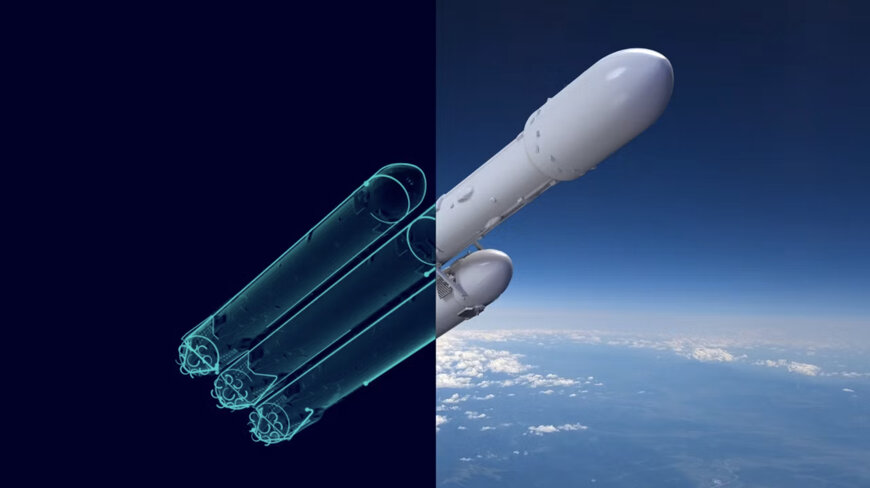
Siemens is utilising the Farnborough International Airshow, taking place from July 20-24, 2026, in Hampshire, England, to demonstrate how aerospace and defence organisations leverage the Siemens Xcelerator portfolio and industrial artificial intelligence to navigate supply chain volatility and rising development costs. By integrating engineering, manufacturing, and operational workflows through a comprehensive digital twin, the company provides a framework for accelerating program delivery and enhancing mission readiness.
Aerospace Engineering and Digital Twin Integration
The aerospace sector faces increasing complexity regarding program scale and sustainability requirements. Siemens addresses these challenges by establishing a continuous digital thread that connects product development with physical production. By utilizing multidisciplinary simulation combined with industrial AI, organizations can ensure auditable flight safety protocols from the initial design phase. This approach allows engineers to validate performance metrics before physical prototypes are manufactured, reducing the iterations required for complex defense platforms.
Manufacturing Efficiency and Supply Chain Resilience
In the manufacturing environment, Siemens focuses on accelerating production throughput and mitigating supply chain risks. The implementation of the Digital Twin Composer provides manufacturers with the ability to synchronize disparate data sets, allowing for the rapid identification of bottlenecks and production deviations. By maintaining a cohesive digital record throughout the manufacturing process, companies can transition more efficiently from conceptual design to full-scale production, ensuring that manufacturing outputs remain aligned with rigorous technical specifications.
Sustainment and Agentic AI for Operational Readiness
Operational performance is supported through the Intelligence Center X, which employs agentic and domain-scoped AI to manage long-term sustainment. This system analyzes contextualized data streams to facilitate proactive decision-making, allowing operators to anticipate maintenance requirements before failures occur. By providing insights into the lifecycle of an aircraft or defense platform, the technology helps minimize unplanned downtime and ensures that assets remain operational in demanding environments.
Additional Context:
This section details technical specifications and competitive benchmarking not included in the original product announcement
The Siemens Xcelerator portfolio competes within the Industrial Internet of Things (IIoT) and Product Lifecycle Management (PLM) market, characterized by competitors such as Dassault Systemes with its 3DEXPERIENCE platform and PTC with its Windchill and ThingWorx solutions. While these platforms all prioritize the digital twin concept, the Siemens approach distinguishes itself through the depth of its integration between factory automation hardware—such as programmable logic controllers (PLCs) and numerical controls (NC)—and its software layer.
Benchmarking of these systems often centers on interoperability standards, such as the ability to exchange data via the Open Platform Communications Unified Architecture (OPC UA). Siemens emphasizes a model-based systems engineering (MBSE) approach, which provides a higher degree of traceability across the digital thread compared to fragmented legacy systems. The use of agentic AI for predictive maintenance is a growing industry standard, with most major competitors now deploying similar domain-scoped machine learning models to analyze sensor data from industrial assets.
Edited by Natania Lyngdoh, Induportals editor, assisted by AI.
www.siemens.com
