
www.aero-defence.tech
23
'26
Written on Modified on
Airbus elevates hybrid-electric integration with LEIA Project
LEIA will be fundamental to advancing high-voltage generation and distribution for innovative electrical aircraft systems for short-to-medium range aircraft.
www.airbus.com
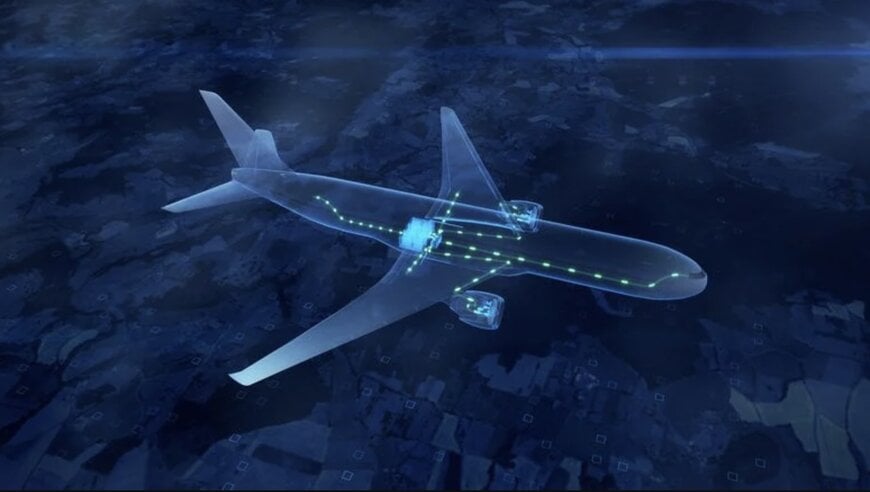
Airbus, alongside industrial and academic partners across the European Union, the United Kingdom, and the United States, has initiated the LEIA (Large Scale Integration Demonstrator of Hybrid Electrical Architecture) project. Supported by the EU’s Clean Aviation Joint Undertaking, the initiative focuses on advancing high-voltage generation, power distribution, and digital energy management for next-generation short-to-medium-range (SMR) aircraft.
Transitioning Powertrain Subsystems from SWITCH to LEIA
LEIA builds upon results achieved during the preceding Clean Aviation SWITCH (Sustainable Water-Injecting Turbofan Comprising Hybrid-Electrics) project. SWITCH concentrated on hybrid-electric powertrain subsystems, culminating in integrated laboratory testing completed by Collins Aerospace alongside consortium partners Pratt & Whitney, GKN Aerospace, and MTU Aero Engines.
The validated subsystems are transitioning to the Airbus Sustainable Technology and Engineering Projects (STEP) laboratory in Ottobrunn, Germany. At the Ottobrunn facility, engineering teams will conduct aircraft-level integration testing, covering structural design, battery management interfaces, and global energy supervision algorithms.
Electrical System Integration and Testing Milestones
Airbus is coordinating the physical and digital integration of advanced electrical hardware components, including:
- Scalable Motor/Generators: High-power density machines for energy extraction and electrical power injection.
- Next-Generation Controllers: Power electronics and digital control units for voltage regulation.
- Power Distribution Equipment: High-voltage primary and secondary distribution units and advanced wiring networks.
International Project Consortium
The LEIA project brings together an international consortium of 25 industrial aerospace suppliers, technology centers, and academic institutions. Key collaborators include AVL, Collins Aerospace, the European Aerospace Science Network (EASN), Fraunhofer-Gesellschaft, Liebherr Aerospace, Lynxeo, the Netherlands Aerospace Centre (NLR), Safran, SAFT, the University of Warwick, and Wroclaw University of Science and Technology.
Additional Context
This section details technical specifications not included in the original news release.
Conventional commercial aircraft utilize pneumatic bleed air from gas turbine engines to power environmental control systems (ECS) and hydraulic pumps for primary flight actuation. Non-propulsive energy (NPE) architectures replace these heavy mechanical and pneumatic off-takes with a More Electric Aircraft (MEA) high-voltage electrical network.
Transitioning to high-voltage direct current (HVDC) or alternating current (HVAC) power distribution allows the aircraft to extract mechanical energy electronically via megawatt-class shaft-driven generators. The generated power is dynamically allocated via software-driven Energy Supervisor units to electric ECS compressors, electro-hydrostatic actuators (EHAs), and wing ice protection systems. By eliminating high-pressure pneumatic ducting and optimizing engine power off-takes across different flight phases, non-propulsive electrical architectures improve turbofan cycle efficiency, reduce overall airframe weight, and lower total fuel consumption.
Edited by Romila DSilva, Induportals Editor, with AI assistance.
The LEIA project brings together an international consortium of 25 industrial aerospace suppliers, technology centers, and academic institutions. Key collaborators include AVL, Collins Aerospace, the European Aerospace Science Network (EASN), Fraunhofer-Gesellschaft, Liebherr Aerospace, Lynxeo, the Netherlands Aerospace Centre (NLR), Safran, SAFT, the University of Warwick, and Wroclaw University of Science and Technology.
Additional Context
This section details technical specifications not included in the original news release.
Conventional commercial aircraft utilize pneumatic bleed air from gas turbine engines to power environmental control systems (ECS) and hydraulic pumps for primary flight actuation. Non-propulsive energy (NPE) architectures replace these heavy mechanical and pneumatic off-takes with a More Electric Aircraft (MEA) high-voltage electrical network.
Transitioning to high-voltage direct current (HVDC) or alternating current (HVAC) power distribution allows the aircraft to extract mechanical energy electronically via megawatt-class shaft-driven generators. The generated power is dynamically allocated via software-driven Energy Supervisor units to electric ECS compressors, electro-hydrostatic actuators (EHAs), and wing ice protection systems. By eliminating high-pressure pneumatic ducting and optimizing engine power off-takes across different flight phases, non-propulsive electrical architectures improve turbofan cycle efficiency, reduce overall airframe weight, and lower total fuel consumption.
Edited by Romila DSilva, Induportals Editor, with AI assistance.
