
www.aero-defence.tech
30
'26
Written on Modified on
Maiden Flight of the Airbus A350F Widebody Freighter
Airbus initiates flight testing for its new widebody cargo platform, marking an operational milestone for the global air freight sector.
www.airbus.com
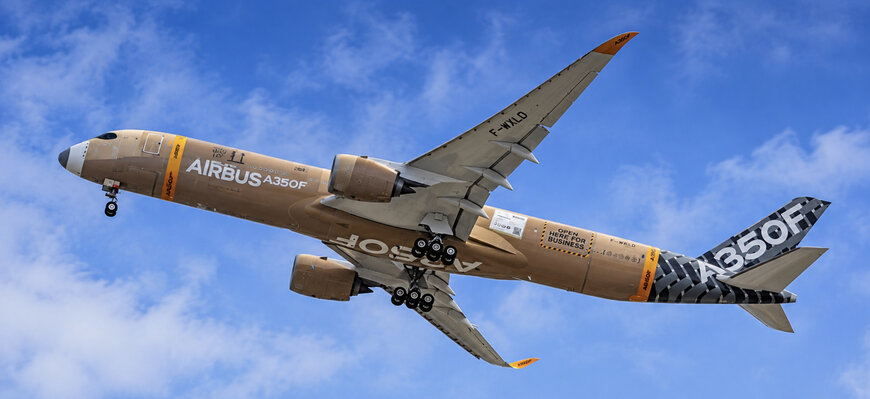
The inaugural sortie utilized the first test aircraft, registered as MSN 700 and fitted with specialized flight test instrumentation. The flight crew executed technical evaluations centered on fundamental flying qualities, basic airworthiness verification, and system response predictability. These tests initiate a flight test campaign scheduled to run for over nine months. A second test aircraft, MSN 701, is undergoing final assembly in preparation for entry into the paint shop.
Structural Design and Material Composition
Engineered for international long-haul operations, the A350F incorporates over 70% advanced materials in its structural makeup. This material composition yields a maximum take-off weight reduction of 46 tonnes compared with competing cargo aircraft models. The platform features a payload capacity of up to 111 tonnes and an operational range capability extending up to 8,700 kilometers, accommodating the long-haul requirements of the international air cargo market.
Propulsion and Environmental Standards
Propulsion is supplied by two Rolls-Royce Trent XWB-97 engines, delivering reduced fuel consumption and carbon emissions of up to 40% relative to comparable legacy freight platforms with similar payload-range profiles. The airframe complies with the latest International Civil Aviation Organization CO₂ emissions standards. Market uptake includes 115 confirmed orders from 14 disclosed customers as of late August 2026, representing a 59% market share in the large freighter category.
Additional Context:
This section details technical specifications and competitive benchmarking not included in the original product announcement
The A350F competes primarily with the Boeing 777-8F within the next-generation large widebody freighter segment.
- Maximum Structural Payload: The A350F is rated for up to 111 tonnes, whereas the Boeing 777-8F features a target structural payload capacity of 118 tonnes.
- Material and Weight Metrics: Airbus utilizes a carbon-fiber-reinforced polymer composite fuselage derived from the A350-1000 passenger variant, optimizing empty weight fractions for dense and general cargo mixes.
- Emissions Compliance: Both next-generation twins adhere to strict ICAO environmental baselines, though the A350F benefits from an earlier entry-into-service timeline within the decade.
Edited by Sucithra Mani, Induportals editor – adapted by AI.
www.airbus.com
www.airbus.com
