
www.aero-defence.tech
12
'26
Written on Modified on
Dual-Band Imaging Systems for Combat Vehicle Sensor Integration
Thales Defense & Security supplies the United States Marine Corps with combined thermal and visible imagers to upgrade amphibious military platforms.
www.thalesgroup.com
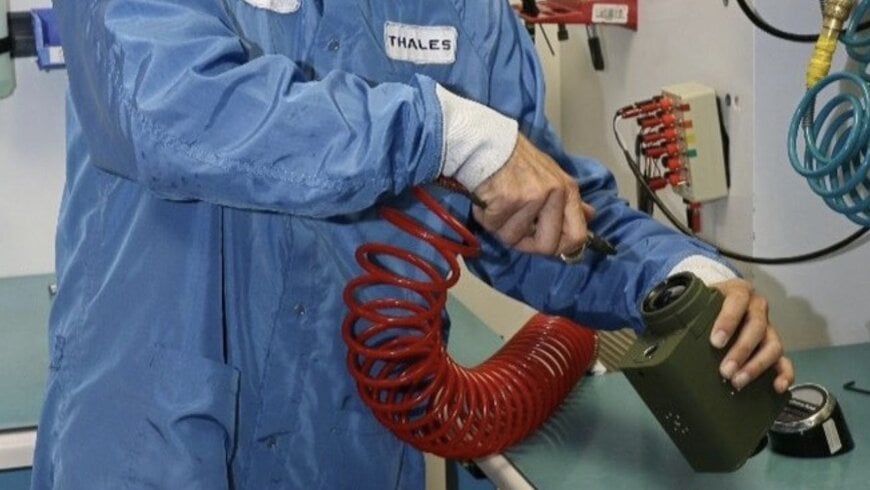
Thales Defense & Security, Inc. (TDSI) has received an order for more than 400 SharpView Dual Camera – Minerva imagers from the United States Marine Corps for integration into military combat vehicles. This deployment utilizes compact sensor technology to enhance visual navigation and obstacle detection within degraded operational environments for defense applications.
Participating Entities and Operational Challenge
The implementation involves TDSI supplying the sensor hardware and the United States Marine Corps deploying these systems on Amphibious Combat Vehicle Personnel (ACV-P) and Command (ACV-C) variants. The operational challenge involves maintaining visual data integrity when navigating through environmental obscurants such as dust, smoke, glare, and adverse weather. Upgrading legacy camera systems requires a hardware solution capable of consolidating multiple imaging feeds without necessitating extensive modifications to the existing digital infrastructure of the vehicles. The integration leverages TDSI's manufacturing capabilities in thermal imaging and the Marine Corps' field deployment framework to execute this fleet-wide modernization.
Technical Solution and Responsibilities
TDSI is supplying the SharpView Dual Camera – Minerva imagers, which function by merging uncooled thermal data with visible light imaging within a single sensor housing. This dual-band architecture allows the optical system to compensate for light spectrum limitations inherent in traditional single-band cameras. TDSI handles the engineering and military-grade ruggedization of the sensors, ensuring the hardware withstands extreme mechanical stress and continuous operation. The Marine Corps manages the physical integration of these imagers onto the ACV platforms, replacing older camera units with the unified sensor payload to standardize the vehicle interfaces.
Deployment and Implementation
The deployment phase focuses on retrofitting the ACV-P and ACV-C fleet with the new camera architecture. Because the sensor is designed for interoperability with modern combat vehicle architectures, the implementation relies on utilizing standardized camera mounts and data protocols across the fleet to interface directly with existing on-board displays. Additionally, the system is undergoing evaluation within the United States Army XM30 program to test sensor integration protocols for next-generation combat vehicles, expanding the testing parameters beyond amphibious platforms.
Applications and Use Cases
Targeting the defense and mechanized infantry sectors, this hardware deployment supports technical use cases such as low-visibility maneuvering, night navigation, and real-time obstacle detection. The primary application is providing continuous situational awareness for vehicle crews operating in environments where standard optics fail.
Results and Expected Impact
By digitizing and combining thermal and optical feeds into one localized stream, the system reduces the cognitive load on vehicle operators and decreases the latency in identifying ground hazards. This consolidation directly stabilizes field navigation and increases the maintainability of the vehicle's external sensor suite by reducing the total number of distinct camera housings required on the hull. Discussing the acquisition strategy, Chris Beauparant, Vice President, Sensors and Missile Systems, Thales Defense & Security, Inc., stated: "By leveraging a mature, proven solution, the Marine Corps can quickly field these enhanced capabilities without the time, cost, and risk associated with developing a new system."
Edited by Aishwarya Mambet, Induportals Editor, with AI assistance.
www.thalesgroup.com
