
www.aero-defence.tech
23
'26
Written on Modified on
Precision Strike Missile Increment 2
Lockheed Martin secures a $1.2 billion contract to produce Precision Strike Missile Increment 2 following successful maritime target engagement tests.
www.lockheedmartin.com
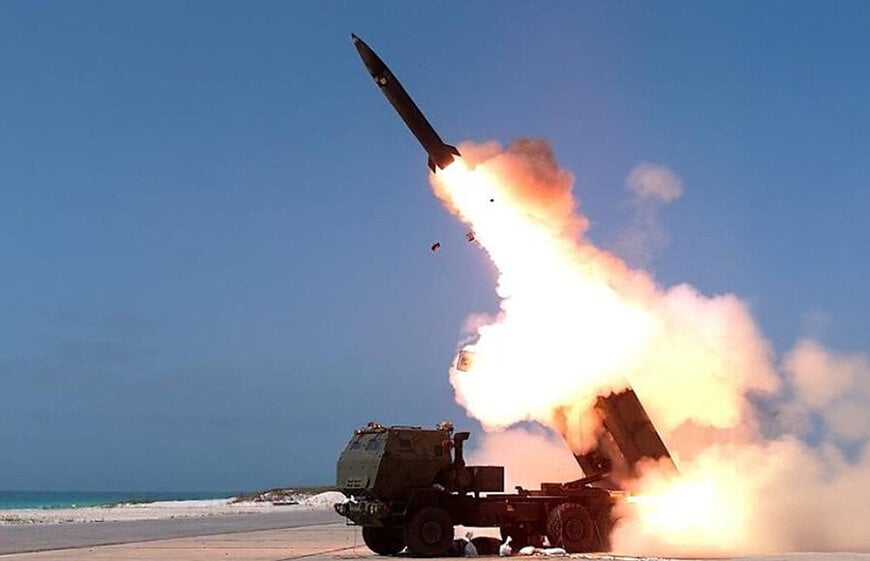
The modernization of long-range precision fire systems requires advanced guidance architectures capable of countering dynamic threats in contested environments. Lockheed Martin collaborates with the United States Army to develop and produce Precision Strike Missile Increment 2, integrating advanced multimode seeker technology. This initiative addresses the operational requirement to engage moving land and maritime targets efficiently from existing launcher platforms.
Technical Solution and Division of Responsibilities
The Precision Strike Missile Increment 2 system incorporates a multimode seeker and guidance package derived from advanced sensor development programs. Lockheed Martin maintains primary responsibility for missile design, system integration, manufacturing, and software development across its industrial base. The United States Army oversees operational testing, evaluation, and tactical deployment frameworks.
The technical architecture interfaces directly with High Mobility Artillery Rocket Systems. The guidance package utilizes multi-spectral sensor processing to acquire, track, and engage moving targets during terminal flight phases. Communication and telemetry systems capture flight performance parameters, aerodynamic stability metrics, and seeker acquisition data to verify operational readiness against complex maritime signatures.
Implementation and Integration
Deployment builds upon a series of flight tests conducted at designated proving grounds. Initial flight testing validates launch dynamics, trajectory control, and seeker functionality. Subsequent phases transition the system from developmental flight testing into initial rate production under an indefinite delivery, indefinite quantity contract vehicle. Manufacturing expansion activities scale component fabrication, final assembly, and quality assurance procedures across multiple facilities within the industrial base.
Applications and Operational Impact
Target application areas include long-range surface warfare, coastal defense suppression, and strategic land-attack operations. Concrete use cases involve neutralizing mobile high-value targets at extended ranges beyond the reach of legacy artillery systems. The primary operational benefit includes an expanded mission set for artillery units, enhanced target flexibility through autonomous seeker acquisition, and increased strike responsiveness in multi-domain operational scenarios.
Expert Perspective
"This award marks an important step in delivering PrSM Increment 2 to the warfighter," said Dave Griser, vice president, Precision Fires Launchers and Missile, Lockheed Martin. "We're ready to move from flight testing into production and provide the Army with an expanded long-range precision fires capability."
Edited by Sucithra Mani, Induportals editor – adapted by AI.
www.lockheedmartin.com
