
www.aero-defence.tech
24
'26
Written on Modified on
Distributed F-35 Simulators Link Across Multiple Bases
Tactical simulation architecture integrates geographically separated bases for multidomain rehearsal.
www.lockheedmartin.com
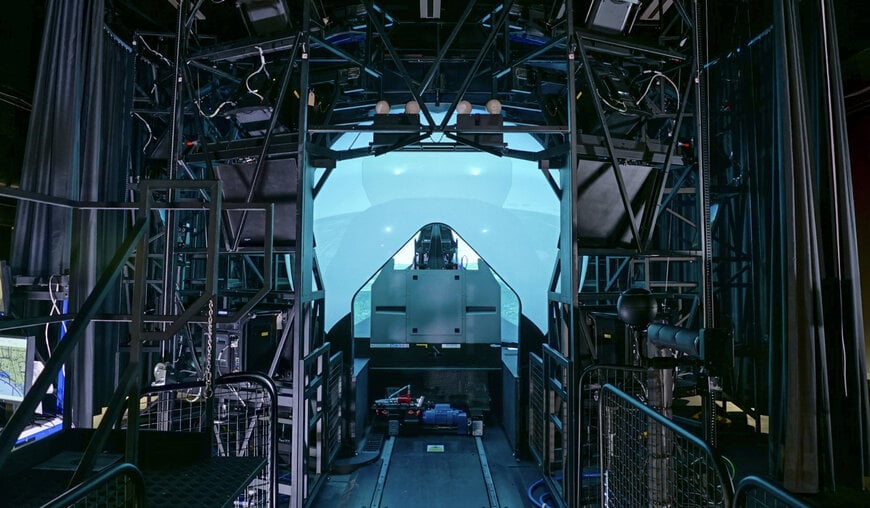
Lockheed Martin executed a two-hour distributed training event on September 21, 2026, linking 16 F-35 full mission simulators across four operating bases using a tactical environment simulation. The exercise incorporated units from Marine Corps Air Stations Yuma, Miramar, and Iwakuni, alongside Naval Air Station Lemoore, plus F/A-18 simulators and an E-2D Hawkeye controller from Naval Air Station Oceana. This deployment addresses the defense sector's demand for high-fidelity joint synthetic environments capable of scaling across multiple military installations.
Distributed Architecture and Tactical Scope
The training architecture established a synchronized multi-domain scenario spanning air, surface, and cyber domains. Maintaining consistent situational awareness across locations separated by intercontinental distances requires deterministic data exchange standards and low-latency network protocols. Participating nodes shared threat libraries, synthetic terrain databases, and real-time telemetry to ensure identical representation of tactical events for every crew.
The inclusion of an E-2D Hawkeye airborne early warning controller from Naval Air Station Oceana validated the system's ability to integrate command-and-control platforms with fifth-generation fighter simulators. This integration tests whether surveillance and battle management data can be processed through a synthetic network in a format compatible with controlling platforms.
Interoperability and Command-and-Control Benefits
By networking separated sites, the architecture allows operational units to rehearse complex joint formations without the logistics and fuel costs associated with physical asset relocation.
"This exercise enabled warfighters to train the way they fight. They complete complex missions in coordination across distances – their training should represent their missions," stated Ken Garrett, vice president of F-35 Training and Logistics.
The technical metrics tracked during the exercise focused on data exchange robustness, command-and-control stability, and network synchronization across disparate service branches and geographic time zones.
Additional Context:
This section details technical specifications and competitive benchmarking not included in the original product announcement
Distributed mission training systems rely on high-level architecture standards, such as IEEE 1516 (DMSO HLA), to facilitate object model mapping and time management across distributed nodes. Comparable military synthetic training frameworks, such as the United States Air Force Distributed Mission Operations (DMO) infrastructure and the US Navy's Common Synthetic Training Environment (CSTE), utilize similar networking protocols to link high-fidelity flight trainers.
Objective benchmarking of these distributed systems is measured by transport latency (typically required to remain under 100 milliseconds for realistic tactical engagements), packet loss tolerance, and database correlation accuracy across participating simulation hosts. Unlike local-area simulator pods, wide-area distributed architectures like Lockheed Martin's tactical environment simulation must incorporate rigorous encryption standards and cybersecurity protocols to protect classified operational parameters transmitted over network backbones.
Edited by Sucithra Mani, Induportals editor – adapted by AI.
www.lockheedmartin.com
