
www.aero-defence.tech
07
'26
Written on Modified on
Dual-Fuel Marine Propulsion Systems for Deep-Sea Container Vessels
Wärtsilä is supplying dual-fuel engines and advanced sealing systems to equip a new fleet of liquefied natural gas container ships in China.
www.wartsila.com
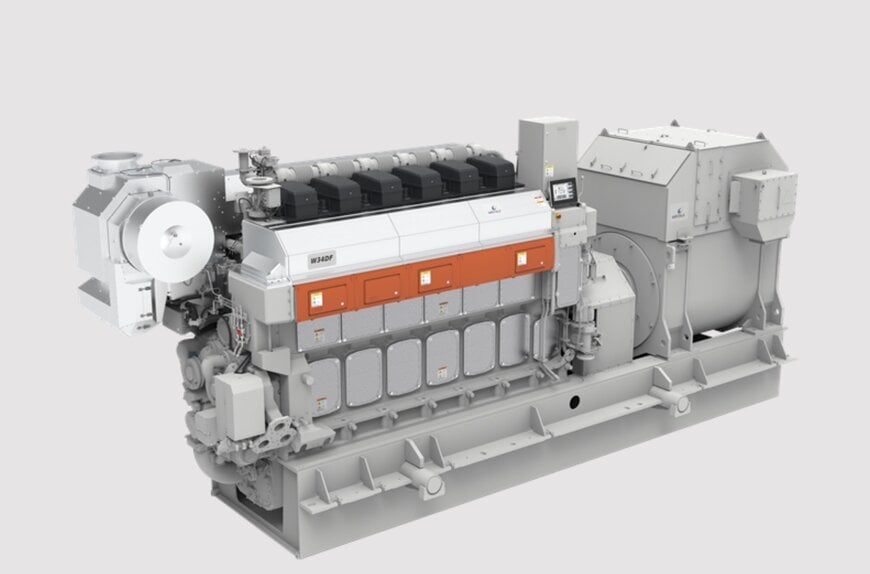
Wärtsilä and CMA CGM are cooperating to integrate dual-fuel marine propulsion technology and stern tube assembly systems into 12 new 18,000 TEU container vessels. This maritime deployment addresses the industrial challenge of scaling liquefied natural gas (LNG) operations to reduce emissions in deep-sea freight transport.
Industrial Challenge and Manufacturing Cooperation
Operating large-scale maritime logistics requires propulsion solutions that comply with developing environmental regulatory frameworks while managing lifecycle fuel costs. To equip 12 new high-capacity container ships being constructed at the Jiangnan Shipyard in China, the French transport operator selected the technology group for its specialized expertise in dual-fuel engine architectures and marine sealing technologies. The hardware is being delivered through the local joint venture, CWEC (Shanghai) Co. Ltd., to streamline manufacturing and shipyard integration.
Technical Solution and System Architecture
The core of the deployment consists of 36 dual-fuel engines optimized to operate primarily on LNG. The engine platform is engineered to maintain high thermodynamic fuel efficiency across a wide range of load profiles, which is critical for managing the variable power demands of deep-sea navigation.
In addition to the power generation framework, the system architecture includes oil-lubricated stern tube assemblies to support the propulsion shafts of the vessels. This mechanical package incorporates line shaft bearings, forward and after stern tube bearings, and a specialized sealing system designed to provide pollution-free tightness. This specific engineering mechanism contains the lubricating oil within the driveline, preventing environmental contamination while minimizing mechanical wear.
Deployment Phases and Expected Operational Impact
Delivery of the power supply and mechanical equipment to the shipyard is scheduled to commence in 2027. By transitioning these 18,000 TEU vessels to an LNG-primary propulsion model supported by the existing global bunkering network, the operator establishes a mechanism to systematically lower combustion emissions and optimize the total cost of ownership. The structural integration relies on empirical operational data from more than 160 identical dual-fuel engines already active within the operator's existing fleet, establishing a verified baseline for system maintainability and process stability.
Stefan Nysjö, Vice President of Power Supply at Wärtsilä Marine, outlined the technical alignment for this integration: "The Wärtsilä 34DF is a proven platform that provides reliable, efficient LNG operation backed by extensive fleet experience. These attributes make it a strong fit for operators navigating increasingly stringent environmental and economic requirements."
Edited by Aishwarya Mambet, Induportals Editor, with AI assistance.
www.wartsila.com
