
www.aero-defence.tech
12
'26
Written on Modified on
Counter UAS Data Integration in Advanced Battle Management System
SciTec expands defense contract with U.S. Air Force to integrate counter unmanned aerial system data streams into cloud-based command architectures.
fireflyspace.com
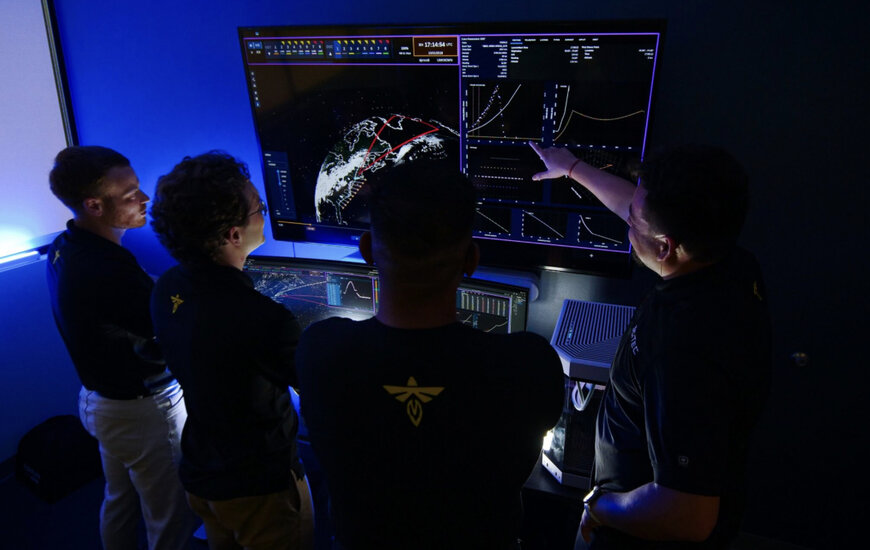
SciTec, a Firefly Aerospace company, has extended its Cloud-Based Command and Control contract with the U.S. Department of the Air Force Command, Control, Communications, and Battle Management by 1.5 million dollars, bringing the cumulative contract value to 31 million dollars. The technical project involves integrating a new class of counter unmanned aerial system sensor feeds into the Advanced Battle Management System to support military operations.
Architecture and Responsibilities
The collaboration addresses critical data fusion challenges in modern defense operations by incorporating disparate threat streams into a unified processing architecture. Because contemporary tactical environments generate high volumes of multi-source surveillance inputs, centralized processing frameworks require standardized ingestion pipelines to maintain low latency and operational reliability across mission partner networks. The technical division of labor relies on SciTec delivering the software data fusion layers while the U.S. Air Force provides the operational command-and-control testing infrastructure. The software architecture uses scalable cloud and edge processing protocols to ingest approved counter unmanned aerial system sensor feeds, normalize heterogeneous data types, and execute real-time threat characterization algorithms. This distributed processing model ensures that warfighters receive continuous updates without overloading legacy bandwidth constraints.
Deployment and Integration
Deployment involves integration within the Department of the Air Force Battle Network as part of the Combined Joint All Domain Command and Control framework. The implementation uses modular software interfaces to add new sensor data sources without disrupting existing command-and-control operational software runtimes. This integration approach allows system engineers to expand surveillance coverage rapidly while maintaining strict defense cybersecurity compliance standards. Target operational areas include tactical defense networks, airspace monitoring stations, and mobile command centers requiring real-time threat detection and tracking.
Operational Impact and Benefits
The primary operational benefit is enhanced situational awareness and accelerated decision-making cycles, as automated data fusion reduces manual data correlation burdens on operators. By standardizing sensor integration formats, the system ensures scalable software maintenance across distributed military facilities. Expected operational impact includes a measurable increase in threat tracking accuracy and reduced data processing latency across distributed nodes. Standards-compliant software integration ensures high system availability and lower maintenance overhead for defense mission partners.
As new mission needs arise, our scalable architecture is already designed to rapidly integrate additional sensors and data types to strengthen warfighter decision making, stated David Simenc, SciTec President.
Edited by Sucithra , Induportals editor – adapted by AI.
www.fireflyspace.com
