
www.aero-defence.tech
09
'26
Written on Modified on
Supersonic UAV Propulsion System for Defense Aerial Target Simulation
Safran Power Units equips UVAD Technologies Inc. Falcon supersonic UAV with turbojets for realistic missile defense training simulation.
www.safran-group.com
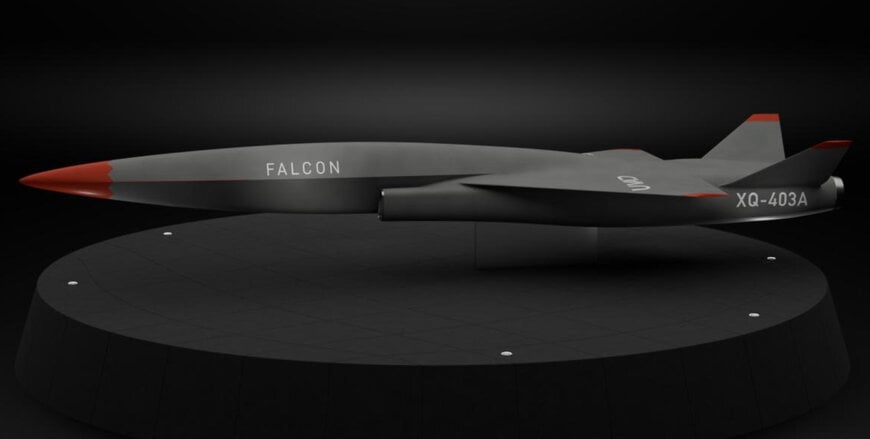
UVAD Technologies Inc. has partnered with Safran Power Units to integrate twin turbojet engines into the Falcon supersonic UAV, establishing a dedicated propulsion platform for high-speed aerial threat simulation. The cooperative engineering initiative provides military air, naval, and missile defense operators with reusable targets capable of sustained supersonic flight at low and medium altitudes.
Operational Challenge in Air Defense Simulation
Modern air and missile defense units require training systems that accurately replicate the aerodynamic profiles and velocities of incoming supersonic threats. Traditional target drones often lack either the speed necessary to simulate advanced anti-ship and cruise missiles or the service life required for repetitive, economical live-fire exercises.
To resolve the trade-off between flight performance and operating costs, UVAD Technologies Inc. required a compact, high-thrust propulsion package with an extended operating lifespan. Safran Power Units contributes specialized gas turbine expertise to deliver the required power-to-weight ratio without introducing prohibitive life-cycle expenditures.
Turbojet Integration and Technical Responsibilities
Under the partnership, Safran Power Units supplies two turbojet engines configured to power the Falcon airframe. The propulsion units deliver the thrust required to transition to and maintain supersonic velocities across varying atmospheric densities, while supporting rapid deployment workflows and recovery sequences.
UVAD Technologies Inc. oversees airframe design, structural integration, and avionics. The Falcon utilizes an autonomous flight control architecture and a modular payload bay, allowing integration into standard military telemetry and range tracking networks. The control architecture enables a single ground control station operator to manage multiple autonomous targets concurrently, expanding complex swarm simulation capabilities.
Test Program and Operational Implementation
Following ground testing benchmarks completed in 2026, the flight validation campaign will proceed in 2027. Flight evaluations will confirm propulsion integration, aerodynamic stability during supersonic transition, and engine reliability across repeated operational duty cycles.
David Birkett, UVAD Technologies Inc. CEO, confirmed the strategic objective to address "defence systems capable of addressing the challenges of the future, particularly those posed by supersonic threats."
The propulsion architecture supports frequent mission cycles for naval and ground-based radar tracking, missile engagement drills, and advanced electronic warfare testing. By combining serial engine manufacturing with a reusable airframe, the program delivers a high-speed simulation asset designed for extended operational deployment.
Edited by Natania Lyngdoh, Induportals editor, with AI assistance.
www.safran-group.com
