
www.aero-defence.tech
12
'26
Written on Modified on
Sea-Based Launch Platforms for Hypersonic Testing and Defense Missions
Kratos and Seagate Space agree long-term use of the Gateway offshore platform for mobile launch and target missions from 2027.
www.kratosdefense.com
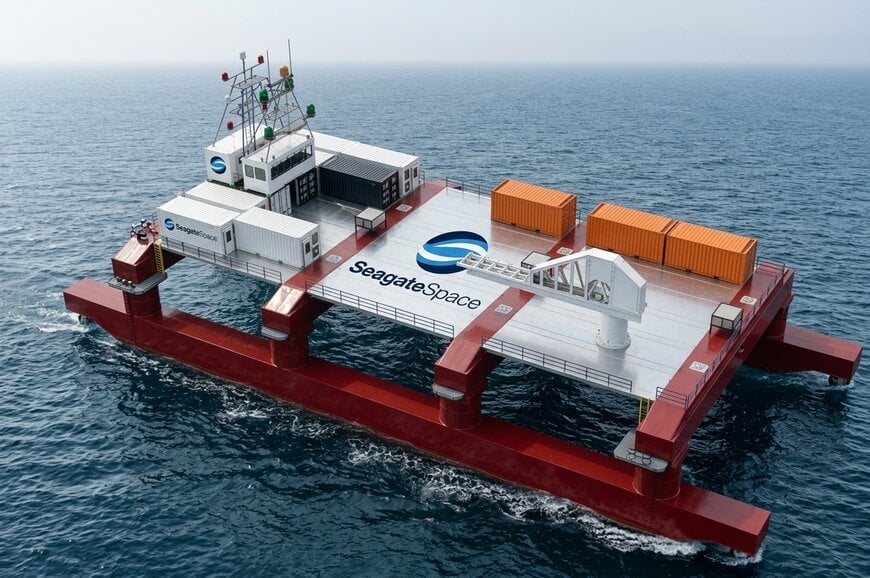
Kratos Defense & Security Solutions has signed a long-term agreement with Seagate Space to use the first Gateway mobile offshore launch platform. Kratos plans its first sea-based mission in 2027, followed by several more launches in later years. The cooperation covers defense launch, hypersonic testing and ballistic-missile target missions.
Why sea-based launch matters for defense testing
Launch and flight-test activity for national security programs is concentrated at a few fixed land-based ranges. At these sites, schedules, available flight corridors and safety zones limit how and when missions can fly. Hypersonic vehicles and ballistic-missile targets in particular need long, unobstructed flight paths, often over open water. A mobile offshore platform lets planners move the launch point to suit the trajectory, range access and timing of each mission, which reduces dependence on fixed terrestrial infrastructure.
Roles of Kratos and Seagate Space
San Diego-based Kratos develops hypersonic test vehicles, rocket systems, propulsion technologies and target vehicles, and it also provides launch services. In the partnership, Kratos supplies the vehicles and the mission requirements. Seagate Space supplies the maritime infrastructure: the Gateway series of modular, mobile vessels, designed as sea-based platforms that complement land-based launch sites and test ranges.
“Kratos brings real mission requirements and decades of defense experience, and Seagate Space is bringing the maritime infrastructure to support them,” said Sean Fortener, President, Chief Operating Officer and Co-Founder of Seagate Space.
Gateway platform design and mission profile
Gateway is being developed as a modular offshore system for government and commercial launch, testing and recovery missions. According to the companies, moving the platform at sea gives mission planners more flexibility in launch geometry, range access, and scheduling. Kratos plans to use the platform first for defense-related launch and target missions.
“Gateway has the potential to provide our customers with additional launch flexibility, expanded operating locations, and responsive access to mission-relevant test environments,” said Dave Carter, President of Kratos Defense & Rocket Support Services.
Construction status and implementation timeline
The agreement coincided with Seagate Space signing its first Gateway construction contract, which moves the platform into physical construction. The two companies will take the platform through construction, integration and operational-readiness activities before Kratos' first planned mission in 2027.
Expected operational impact
The companies expect the cooperation to form the basis for wider offshore operations as demand grows for hypersonic testing, ballistic-missile targets and responsive launch. For test programs, a second type of launch site that can be repositioned adds capacity outside the schedules of existing ranges. It also allows trajectories that fixed coastal sites cannot support. Kratos says its approach is to design systems from the outset for rapid production, operational deployment and scalable manufacturing.
“Sea-based launch infrastructure can provide flexibility, responsiveness, and operational choice—capabilities increasingly important to national security missions,” said Eric DeMarco, Kratos President and CEO.
Edited by Natania Lyngdoh, Induportals editor, with AI assistance.
www.kratosdefense.com
