
www.aero-defence.tech
18
'26
Written on Modified on
Lunar Orbit Demonstration of Combined GNSS and LunaNet Navigation Receiver
Firefly Aerospace will host QASCOM’s COLLINS payload on its Elytra orbiter to validate high-accuracy lunar positioning, navigation and timing for future missions.
fireflyspace.com
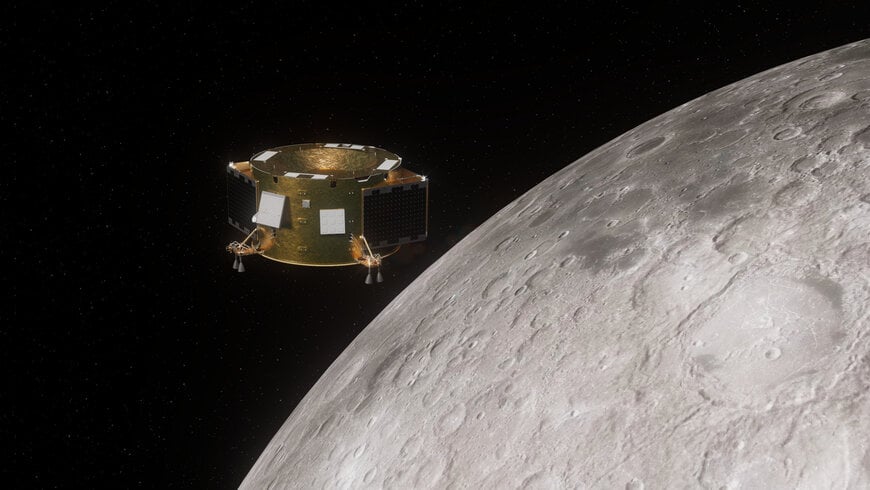
Rendering of Firefly’s Elytra Dark vehicle in lunar orbit with QASCOM’s COLLINS integrated on the side
Firefly Aerospace has signed a commercial payload agreement with QASCOM to operate the Cislunar Orbiting L-band and LunaNet Integrated Navigation System (COLLINS) on its Elytra vehicle in lunar orbit. The payload will fly as part of Firefly’s Blue Ghost mission to the Moon’s Gruithuisen Domes, which is targeted to launch no earlier than 2028.
GNSS and LunaNet Navigation Payload for Lunar Orbit
QASCOM developed COLLINS on behalf of the Italian Space Agency (ASI). Hosted on Firefly’s Elytra Dark vehicle, the payload is designed to demonstrate high-accuracy and robust navigation for future spacecraft using signals from the Global Navigation Satellite System (GNSS) and future LunaNet positioning, navigation and timing (PNT) services, including the European Space Agency’s Moonlight Lunar Communications and Navigation Services (LCNS).
“The deployment of QASCOM’s PNT technology on Firefly’s Elytra orbiter is a strategic step in validating ASI’s vision for next-generation lunar PNT services,” said Dr. Oscar Pozzobon, Co-founder, President and CEO at QASCOM. “By launching the first combined GNSS/LunaNet PNT technology into lunar orbit, QASCOM and Firefly will enable critical capabilities such as autonomous lunar navigation, mobility, and precision landing for future governmental and commercial missions.”
From GNSS Tracking on the Lunar Surface to Orbit
COLLINS builds on LuGRE, a joint ASI/NASA payload developed by QASCOM that flew on Blue Ghost Mission 1 and tracked GNSS signals on the Moon’s surface for the first time. LuGRE was contracted through NASA’s Commercial Lunar Payload Services (CLPS) initiative, whereas COLLINS is onboarded as a commercial contract with Firefly, as part of a public-private co-investment initiative between ASI and QASCOM. With this addition, the mission carries eight payloads in total, six of them through CLPS.
Elytra Mission Profile and Lunar Relay Operations
During the mission, Elytra will first deploy the Blue Ghost lander into lunar orbit. Blue Ghost will then land on the Gruithuisen Domes and support payload operations on the surface for approximately 14 days. While in lunar orbit, Elytra will provide a communications relay for the lander and complete six months of COLLINS operations, with an option to extend.
Elytra will then remain in lunar orbit for five years, capturing high-resolution imagery on and around the Moon as part of Firefly’s Ocula lunar imaging service. Following Firefly’s planned mission to the Moon’s far side, it will be the second Elytra vehicle deployed to lunar orbit, enabling faster revisit times for lunar mapping, resource detection and situational awareness.
Edited by Aishwarya Mambet, Induportals Editor, with AI assistance.
www.fireflyspace.com
