
www.aero-defence.tech
25
'26
Written on Modified on
GNSS-Free Autonomous Navigation for Unmanned Aircraft
Sener joins CATEC and Multiverse Computing in ARESIA to develop vision-based, quantum-inspired AI navigation for UAS flying without GNSS signals.
www.sener-group.com
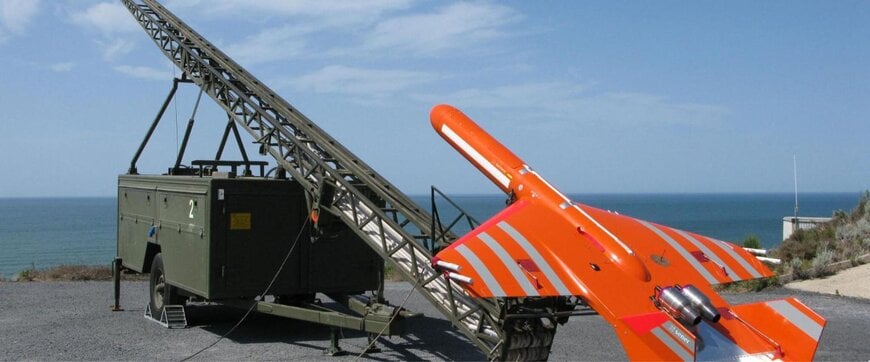
The Advanced Centre for Aerospace Technologies (CATEC), in a consortium with the Sener group and Multiverse Computing, has launched ARESIA (Resilient Navigation through Sensor and Image Fusion for High Dynamics). The project develops a navigation system that gives unmanned aerial systems (UAS) reliable positioning when global navigation satellite system (GNSS) signals are jammed, degraded or lost, with applications in defence and critical civilian missions.
Partners and Responsibilities
CATEC leads the project and contributes its expertise in avionics and navigation in GNSS-denied environments, as well as its flight test facilities. Sener brings its experience in guidance, navigation and control (GNC), systems architecture and integration, as well as in the design and operation of unmanned systems, and is responsible for integrating and supporting the flight test platforms. Multiverse Computing compresses and optimises the on-board artificial intelligence models.
Why GNSS-Independent Navigation Is Needed
Unmanned aircraft that depend on satellite positioning lose their position reference when signals are disrupted. ARESIA was selected under the Spanish Ministry of Defence's COINCIDENTE Programme for Cooperation in Scientific Research and the Development of Strategic Technologies (topic COINC-2025-PNT), with a budget of €1,113,190.
Visual Odometry, Map-Matching and Multisensor Fusion
The system integrates visual odometry, map-matching and advanced multisensor fusion. Images captured by on-board cameras are compared in real time with preloaded geospatial databases to estimate the aircraft's trajectory without external infrastructure. To meet weight, size and computing-power constraints during high-speed flight, Multiverse Computing applies AI compression techniques based on tensor networks and quantum-inspired computing, so that complex algorithms can run efficiently on board in real time.
Flight Validation at the ATLAS Centre
The project targets Technology Readiness Level (TRL) 6. Final operational validation will take place at CATEC's ATLAS Alpha Flight Test Centre in Villacarrillo, Jaén, Spain, using Sener's SCRAB II platform, a high-performance system with automatic flight capability and turbine propulsion.
Applications and Expected Impact
Beyond strengthening strategic autonomy and security in defence, the technologies developed in ARESIA are intended for critical civilian applications such as emergency missions, infrastructure inspection and advanced autonomous logistics. Validation in real flight trials at TRL 6 means the system is demonstrated as a prototype in a relevant operational environment.
Edited by Evgeny Churilov, Induportals Media - Adapted by AI.
www.group.sener
