
www.aero-defence.tech
13
'26
Written on Modified on
Elbit Systems secures $260 million PULS contract with European NATO member
The five-year agreement will deliver highly adaptable rocket artillery systems capable of launching precision munitions from existing vehicle platforms.
elbitsystems.com
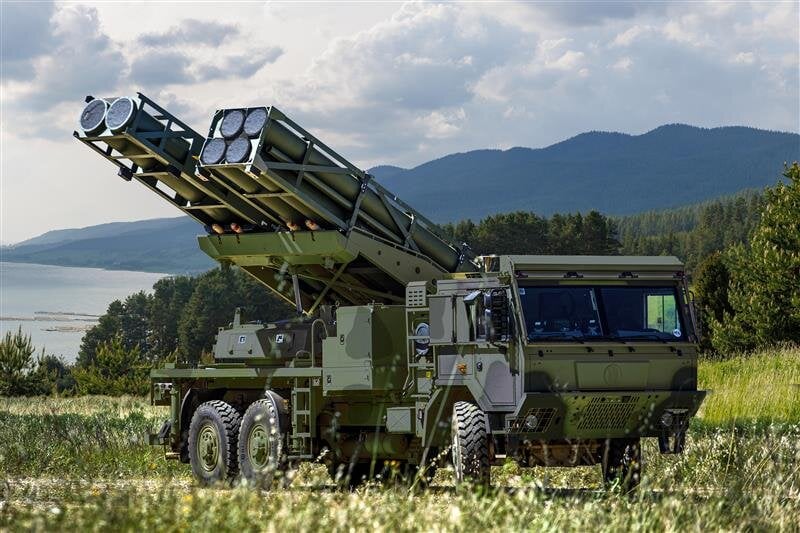
Elbit Systems has been awarded a contract valued at approximately $260 million to supply its Precise & Universal Launching System (PULS) rocket artillery systems and munitions to an unnamed European NATO member country. The contract will be performed over a period of five years.
Versatile integration and cost-effective deployment
The PULS system provides a comprehensive and cost-effective solution capable of launching unguided rockets, precision-guided munitions and missiles with various ranges. The launcher is fully adaptable to existing wheeled and tracked platforms, which enables significant reductions in maintenance and training costs.
According to Bezhalel (Butzi) Machlis, President and CEO of Elbit Systems, the continued selection of PULS by European and NATO customers reflects the system’s operational maturity, versatility and ability to address the evolving requirements of modern armed forces. He added that the contract further reflects Elbit Systems’ long-term partnerships with European customers and the company’s role in supporting major defense modernization programs across the region.
Additional Context:
This section explains general principles of pod-based rocket artillery and launcher navigation that are not included in the original press release.
Traditional multiple launch rocket systems (MLRS) often use fixed tube arrays that crews load rocket by rocket, a slow process that keeps the launch vehicle stationary and exposed to counter-battery fire. Pod-based launchers instead carry munitions in sealed, pre-loaded launch pod containers. Reloading becomes a matter of swapping an expended pod for a loaded one, which shortens reload times and reduces crew exposure.
Survivability also depends on "shoot-and-scoot" tactics: firing quickly and leaving the position before the enemy can respond. To do this, modern rocket launchers typically rely on an onboard Inertial Navigation System (INS), which uses accelerometers and gyroscopes to calculate the vehicle’s position and orientation without depending solely on GPS signals that can be jammed. This allows the fire control computer to compute firing solutions soon after the vehicle stops, so it can relocate before counter-battery radars trace the rockets back to their launch point.
Edited by an industrial journalist, Lekshman Ramdas, with AI assistance.
www.elbitsystems.com
