
Live Virtual Constructive Training Links Simulators to Fighters
Lockheed Martin and the U.S. Navy connected four F-35 full mission simulators at NAS Lemoore with six airborne F/A-18s using Link-Inject-to-Live ground stations.
www.lockheedmartin.com
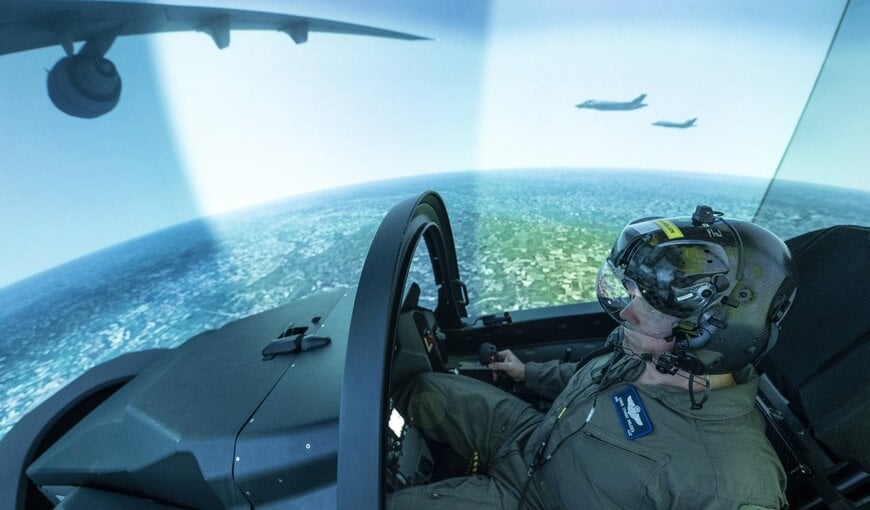
Lockheed Martin and the U.S. Navy have demonstrated real-time connectivity between four F-35 full mission simulators and six F/A-18 aircraft in flight at Naval Air Station Lemoore, California. The demonstration combined live, simulated and virtual forces in one training scenario for military aviation and mission rehearsal.
Why Combined Live and Simulated Training Is Needed
Modern fighter training has to cover threat densities and tactics that are difficult, costly or impossible to reproduce with live aircraft alone. Simulators provide repeatable, controllable scenarios and can represent advanced adversaries, but they cannot reproduce the physical load of high-G flight. Live sorties provide that physical realism but offer limited adversary numbers and scenario control. Connecting both environments allows pilots to train against virtual threats while flying alongside real and simulated aircraft.
Roles of the Partners
Lockheed Martin, manufacturer of the F-35 and its training systems, provided the F-35 full mission simulators. The U.S. Navy contributed the F/A-18 aircraft and its continuous training environment. The link between the ground-based simulators and the aircraft in flight was established through Link-Inject-to-Live ground station systems.
How the Connection Works
The purpose of this architecture is to bring the F-35 simulators operated at Lemoore into the same scenario as the airborne F/A-18s. The Link-Inject-to-Live ground stations connect the simulated environment with the live aircraft in real time, so that simulator pilots and aircrews in flight can train in one scenario that also includes virtual adversaries.
"When we connect live aircraft, high-fidelity simulators and virtual adversaries, we can build more realistic scenarios, test decision-making under pressure and get pilots better prepared for the moment it matters," said Ken Garrett, Vice President of F-35 Training and Logistics at Lockheed Martin.
Expected Impact on Training
No quantitative results were published. The operational logic of the approach is that a mixed formation of live and simulated aircraft enlarges the size and complexity of training scenarios without additional flight hours, while simulator participants contribute repeatable mission elements. Live aircraft keep the physiological and environmental conditions of real flight in the exercise. For training planners, this offers a way to rehearse multi-platform missions involving both F-35 and F/A-18 units within a single event.
Edited by Evgeny Churilov, Induportals Media - Adapted by AI.
